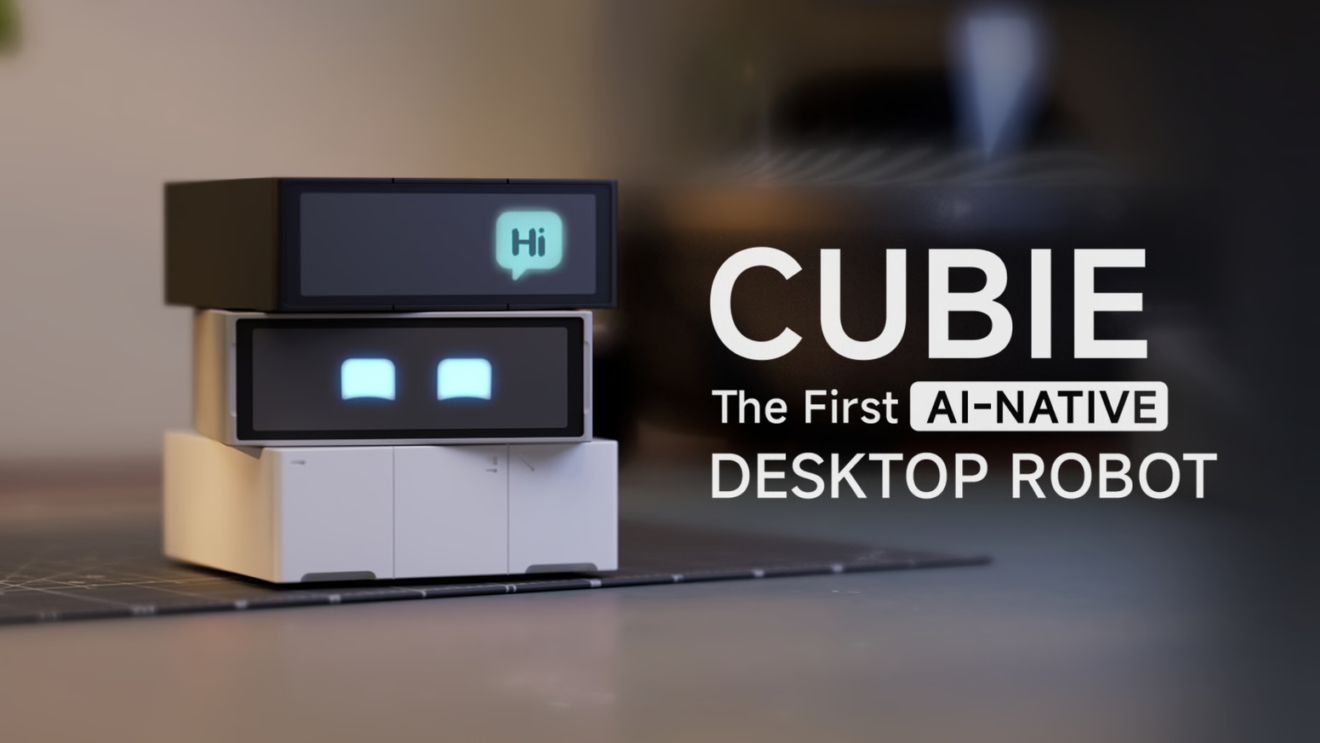
Cubie is an AI desktop companion robot designed to look like something out of a science fiction movie, intended to be placed on your desk and enjoyed. Created by the development team EgoScience, the robot is more than just an ornament. It is designed to be a “living device” that senses its user’s environment and responds emotionally.
- Product Overview: What is Cubie?
- Summary of key points (bulleted)
- rough conclusion
- Frequently Asked Questions (FAQ)
- Specifications Summary
- Review (Word of Mouth): The World’s Favorite “New Sidekick”
- Overall assessment: “Symbiosis on the desk” was pioneered by Cubie
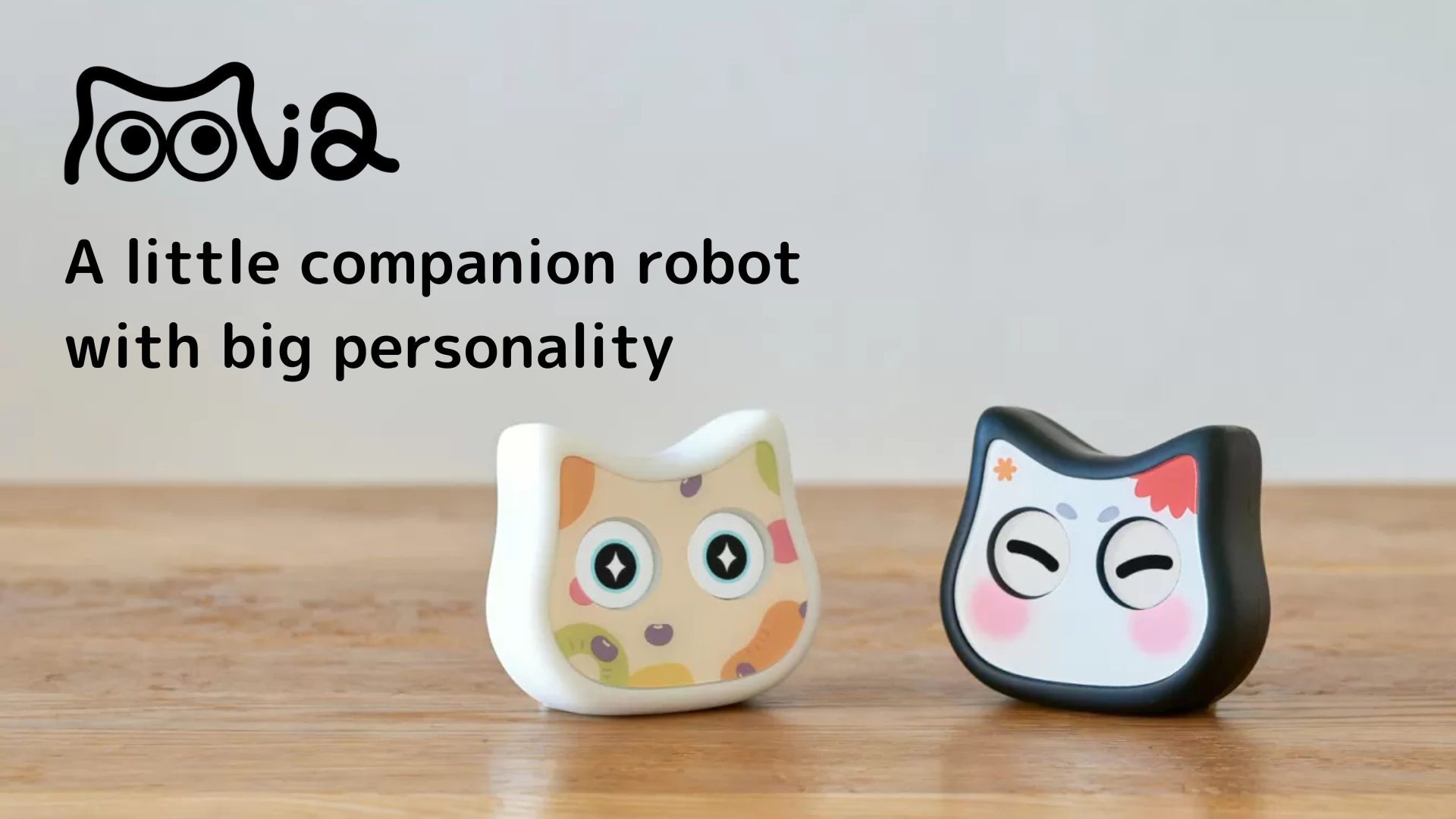
- Comparison with “Mia,” a talking cat-shaped robot
- In summary: Which future will you invite to your desk?
Product Overview: What is Cubie?
As its name implies, Cubie features a compact cube shape of approximately 9 cm on each side, and is a true “AI native” robot that integrates the latest LLM (Large Language Models) such as ChatGPT and Gemini with its local agent system. Cubie does not merely return words, but physically expresses its “thoughts” with movements on five movable axes and a rich display of facial expressions.
Its greatest feature is its independent, cloud-independent intelligence at the product level. Rather than simply “waiting for commands” like a conventional smart speaker, Cubie moves autonomously and begins to live at your desk with its own “rhythm” from the moment you turn it on. It offers a new symbiotic experience, as if a digital being has gained a physical body.

Summary of key points (bulleted)
What is Cubie?
- AI-native design: The latest LLM and physical 5-axis mobility are combined, and words and movements are linked.
- Ultimate compact body: palm-sized at 91 mm square, it blends naturally into any desk.
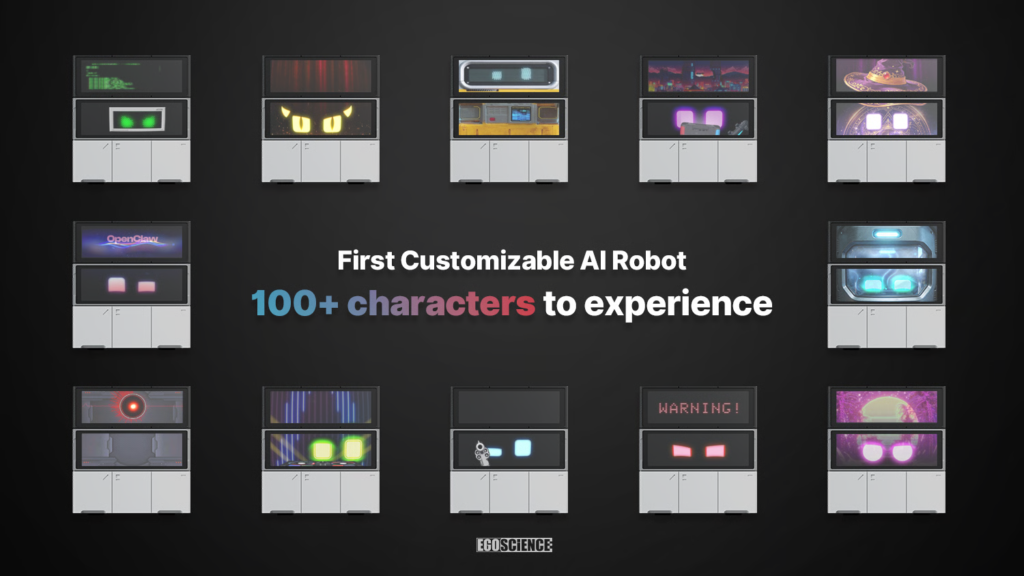
- Rich expressiveness: 5 degrees of freedom of movement and a dedicated display allow more than 100 emotional patterns to be expressed.
- Complete privacy: No cameras as standard, data processed locally whenever possible.
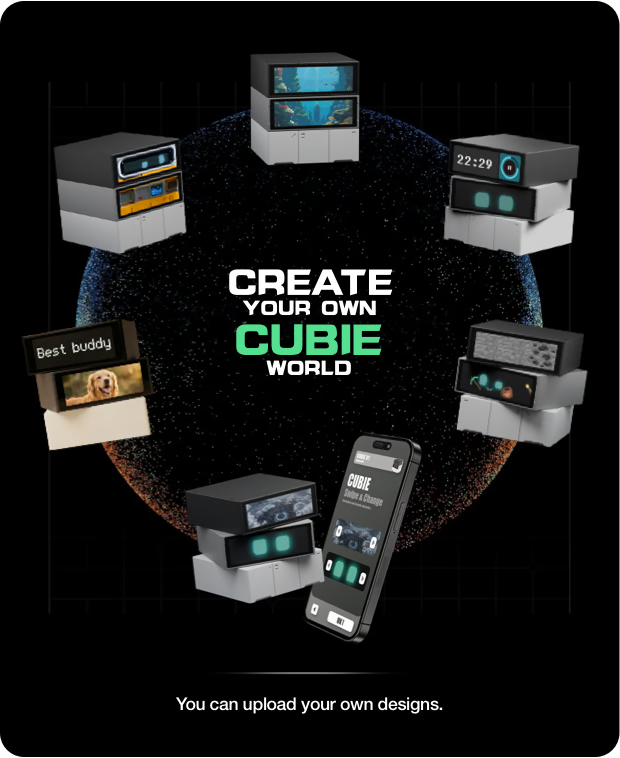
- Never-ending evolution: The Python API and community features allow users to develop their own functionality.
good point
- Life-like behavior: When you look at Cubie while working, there is a “healing” feeling as if Cubie is moving of its own volition.
- Depth of customization: Advanced engineers and novices alike can create AI personalities to their liking.
- Space-saving and high quality: The build quality is very high without overpowering the limited desk space.
- Peace of mind: The security of being physically “camera-free” is a major advantage in private spaces such as bedrooms.
points of concern
- Limitations of visual functions: If you want to enjoy face recognition and object detection, you will need an add-on camera sold separately.
- Native support for Japanese: English is the main language at the initial stage. Community plug-ins or your own settings are required to fully enjoy the site in Japanese.
- Waiting time to obtain the product: The product is scheduled to ship in 2026, so there is a frustrating period of time for users who want to get it now.
Users who may be suitable for
- People who care about their desk setup: gadgets, writing, robots. Those who want to change their desk into the “future”.
- Technology enthusiasts and engineers: creators who want to experiment with the latest technologies in AI at the physical interface.
- Remote workers: Those who want a “talker” or “attention” at a moderate distance while working in solitude at home.
rough conclusion
“A ‘living’ cube that gives AI a body and mind and shares a desk. It’s more than a tool, it’s the roommate of the future.”
Frequently Asked Questions (FAQ)
- Price: around $179-$219 on Kickstarter (early bird discount available).
- Size. Compact design: 91 mm wide, 91 mm deep, and 94 mm high.
- Shipping charges?: After the campaign ends, an additional approximately $15 (for Asian countries, including Japan) is required. *Including customs duties and consumption tax.
- What can it do? Conversation, emotional expression, sharing your work with the community, and extending it with Python.
- Safety?: Data is processed locally. No risk of theft because there is no physical camera.
What makes Cubie different from other AI robots?
Cubie is not just a “box with AI on it. While most robots are “passive devices” that use existing APIs, Cubie is built from the development stage so that the AI’s thought process and its 5-DOF physical movements are directly linked.
The biggest difference is that it can feel “autonomy” to move and change facial expressions on its own, rather than just waiting for commands. In other words, AI as software has been given a “body.
Can I enjoy it even if my English is not good?
Basic communication is English-based, but Cubie is an open platform that exposes a Python API. It is very likely that the Japanese LLM will be integrated and localized by volunteers from the community.
Even if you do not understand the language, the 91mm square Cubie is designed to be endearing enough just by the gestures of tilting its head or making a troubled face in its display. Nonverbal interaction that transcends language is one of the charms of Cubie.
Are there any privacy risks?
Cubie is designed to eliminate privacy concerns about today’s smart devices. In its standard state, it has no camera and zero risk of being physically “seen”.
Furthermore, the voice recognition and decision-making process is done as much as possible by a local agent in the device, so there is no need to worry about unlimited private conversations being sent to the cloud. The design concept is consistent with the idea that the device should be placed in the most private spaces, such as offices and bedrooms.
Can the hardware be customized?
Yes, Cubie incorporates a “modular” approach. For example, there will be “add-ons” such as camera modules that can be retrofitted as needed. We also plan to expand through the community to include accessories to customize the look and feel of the device, and to distribute data for 3D printers. This is a platform that will continue to “grow” not only as software but also as hardware.
Specifications Summary
Detailed hardware specifications for Cubie based on image analysis and official website information.
| (data) item | Details |
| Product name | Cubie |
| Manufacturer | EgoScience (innovative consumer robotics team) |
| Body size | 91mm (W) x 91mm (D) x 94mm (H) |
| shape | Cube-shaped design with the golden ratio on the desk |
| AI Core | LLM (ChatGPT/Gemini/Claude etc.) + own local agent |
| moving shaft | 5 degrees of freedom (5 DoF) to express emotions in all directions |
| display | High-definition full-color emotion display screen |
| Input sensor | LLM (ChatGPT/Gemini/Claude, etc.) + own local agent |
| privacy | Standard camera not included, local encryption process |
| augmentability | Python API, community libraries, module extensions |
| communication | Wi-Fi 6 / Bluetooth 5.2 |
| Shipping & Taxes | Shipping cost in Asia approx. $15 (including duties and taxes) |
Review (Word of Mouth): The World’s Favorite “New Sidekick”
Gadget communities around the world, including Kickstarter and Reddit, are enthusiastically debating Cubie’s “AI native” concept.
What Reddit users are saying: “Most of the robots I’ve seen so far have bored me after a few days. But Cubie is amazing at creating an idle state where you don’t have to do anything but be there. It’s phenomenal that a robot of this size and design can feel like a real pet on your desk.”
(Source: Reddit – r/kickstarter )
A technical blogger says: “The fact that the Python API is open to the public is the best of both worlds for engineers. It would be possible to extend it in such a playful way that you could link it to your own workflow, and have Cubie head with you when you find a bug in your code.”
(Source: Kickstarter – Community Section )
General supporter’s expectation: “The lack of a camera was a deciding factor in my decision to purchase Cubie. In this day and age, I want an AI robot but don’t want to feel like I’m constantly being watched, and Cubie’s ‘voice and movement’ should be enough to make its presence felt.”
Overall assessment: “Symbiosis on the desk” was pioneered by Cubie
Cubie may not be the right choice for those who are looking for a mere convenience tool or an office voice assistant. But for those who want to “warm up to technology” and create their own little world on their desk, there is no better choice.
The EgoScience team’s goal is a fusion of function and personality: Cubie’s five degrees of freedom of movement are mathematically calculated to be “cute” and “willful. It is also a new form of mental support, a digital entity that pops out of the screen and watches over your work with substance.
Comparison with “Mia,” a talking cat-shaped robot
A detailed comparison was made between Mia, which focuses on familiarity with the user’s lifestyle, and Cubie, which is full of technological ambition.
| Comparison items | Cubie | Mia |
| concept | AI Native Platform | Healing partner who speaks dialect |
| design | 91mm square sci-fi cube shape (mechanical) | Cat-shaped, plush warmth (pet) |
| customize | Advanced program development in Python | Easy personality and voice settings in the app |
| Dialogue Features | Free and complex conversations with the latest LLMs | Warm daily conversation in the dialects of 47 prefectures |
| Operating Style | Aggressive expression by 5-axis movement | More than 100 rich facial expressions to express emotions |
| sense of installation | A “moving sidekick” on your desk | Quiet healing” that fits in any place. |
| privacy | Emphasis on no camera and local processing | No server required, simple and secure design |
| Price | Approx. 30,000 yen and up (CF price, shipping not included) | From 9,800 yen (tax included) |
Key points of comparison: Mia emphasizes “warmth that accompanies daily life. With its unique Japanese dialect of speech and affordable price of less than 10,000 yen, it is a suitable choice for those who want to easily incorporate everyday healing and familiarity.
👇 Talking cat-shaped robot “Mia” that speaks 47 dialects nationwide
In summary: Which future will you invite to your desk?
Cubie is “a platform that continues to evolve through the power of shared imagination and community. It is a great investment for users who are passionate about sharing ideas with other users around the world and building the future of AI robotics together, rather than just buying a product and calling it a day.
If you are looking for a more affordable price (from 9,800 yen), a relaxing atmosphere, and a uniquely Japanese emotional “dialect” of healing, our “Mia” is also a very good and accessible option.
A sci-fi future brought to you by a 91mm cube or a warm daily life brought to you by a cat that speaks to you in dialect? The day will soon come when the perfect companion will arrive at your desk.
👀 Also read this article.
👉 [2026 Edition] 6 Latest Pet Robots to Heal Pet Losses – Thorough Comparison of Cat, Dog, and Healing Models
👉 [2026 Edition] Recommended pet robots for under 10,000 yen.
👉 [Latest in 2026] Thorough Comparison of Monthly and Maintenance Costs of Pet Robots: List of Running Costs of Popular Models such as Moflin, LOVOT, Mia, etc.
👉What is Mia, an AI pet robot that speaks 47 dialects nationwide?