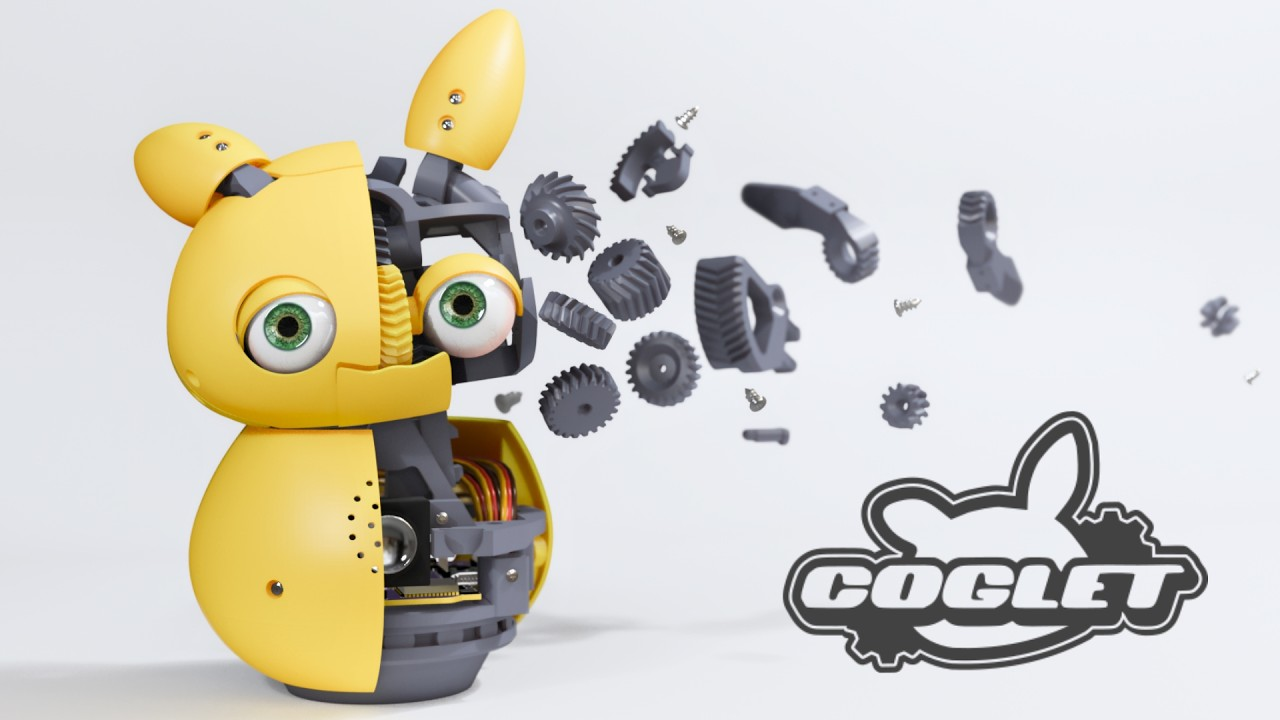
Coglet is an amazingly expressive next-generation robot kit that combines 3D printing technology with the wisdom of the open source community to create your very own little buddy for your desktop.
Product Overview
Coglet is a desktop open source robot developed by Will Cogley (NMRobotics), a very popular robot maker on YouTube, after years of research. Coglet specializes in expressing emotions as if it were possessed by a soul through “movement of physical parts” and “elaborate mechanisms,” rather than through symbolic expressions on an LCD screen, as in the case of movie heroes such as “WALL-E” and “R2-D2.
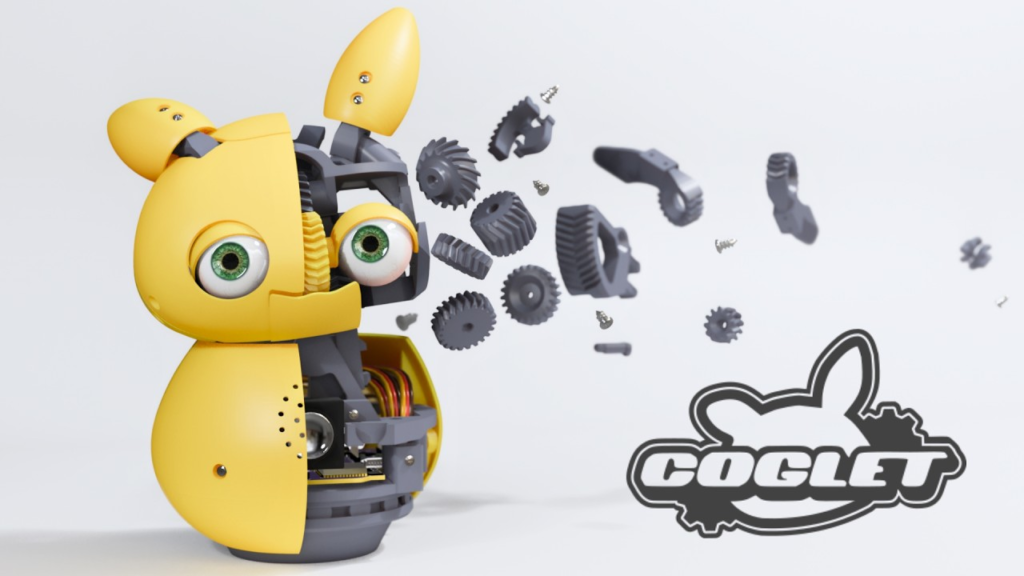
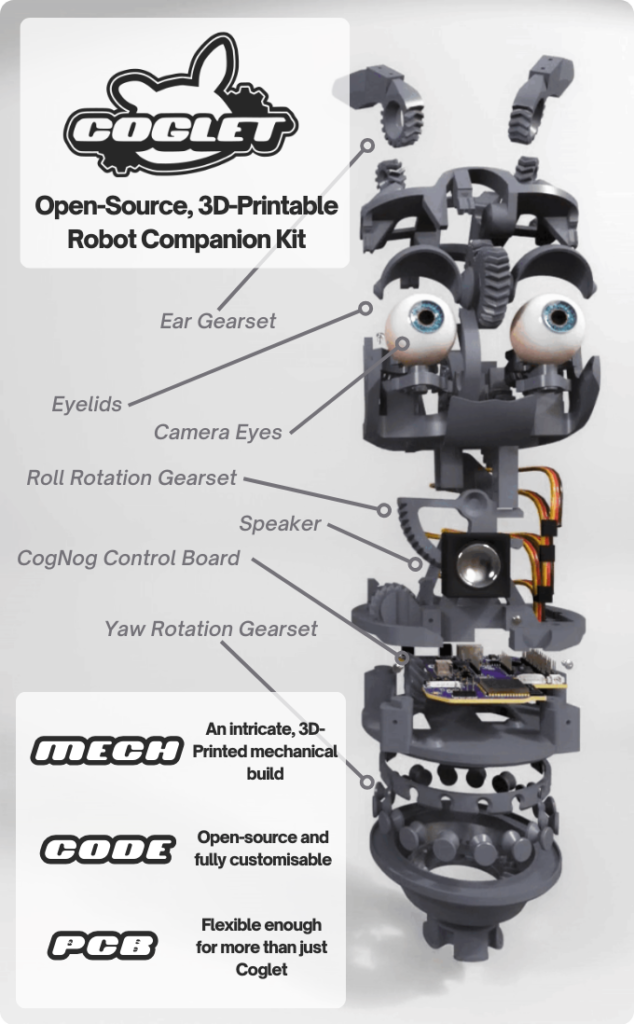
The most distinctive feature is the extremely precise linkage mechanism boasting 9 degrees of freedom (9 DoF). The multi-axis movement of the eyes, ears, mouth, eyelids, and neck is intricately interlocked, and 16 gears mesh with each other to create an “organic oscillation” that cannot be reproduced digitally. The core of the control system is the ” CogNog,” a custom board newly designed for this project, which uses a dual microcontroller configuration of Raspberry Pi RP2040 (for real-time control) and ESP32-S3 (for communication and AI) to achieve stable operation and advanced cloud integration in a single unit. Raspberry Pi RP2040

Summary of key points
- What is Coglet?: An assembled advanced robotic platform with more than 60 3D printed parts condensed into a 22cm tall body.
- Good point:
- Overwhelming sense of life: The physical crackling of the eyelids and the slight tilt of the neck create a “sense of presence.
- Integrated power of CogNog board: Wi-Fi, audio input/output, and multi-axis servo control are integrated on a single board, eliminating wiring complexity.
- Hybrid vision system: Two cameras, one AI camera dedicated to object tracking and the other for cloud analysis.
- Points of concern:
- High assembly difficulty: requires more precision than advanced LEGO Technic models and soldering skills.
- Barrier to print accuracy: Because gear meshing is critical, adjustment (calibration) of the 3D printer is essential.
- Users who may be suitable:
- Enthusiastic makers who want to build a robot from scratch and understand how it works.
- Engineers who want to utilize Python to program “personalities” and “movements” of their own liking.
rough conclusion
A “living” device for makers where the fun of engineering and the attachment to handmade products intersect.
Frequently Asked Questions (FAQ)
We will go into more detail and depth on what you need to know before implementing Coglet.
- Price: Kickstarter support starts at about £75 (approx. ¥15,000). Full sets and finished products are set separately.
- Can do: face tracking, voice interaction, object detection with images, solving formulas, creating custom motions.
- Supported environment: Wi-Fi environment required. Setup is done through a dedicated web dashboard on your smartphone or PC.
- Demerit: Unlike ready-made products, maintenance and inspection (retightening screws and cleaning gears) are left to the user.
- Extensibility: Both hardware and software are available on GitHub, making it easy to create your own parts and make modifications.
How long does it take to assemble?
It is realistic to expect 30-50 hours total for the output of 3D printed parts and 10-20 hours for assembly and adjustment. This is not a simple task, but suitable for those who can enjoy the process like a “bonsai”, checking the movement of each gear one by one as they go along.
Can you program your own “personality”?
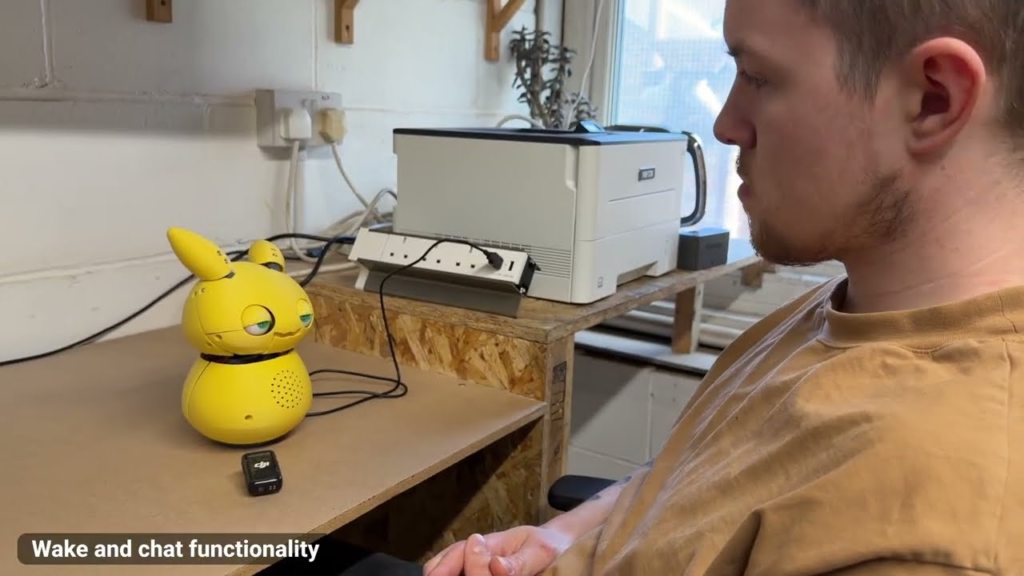
Yes, it is possible; Coglet runs in MicroPython, and you can freely modify the source code on GitHub. For example, you can define your own reactions, such as “flapping its ears when it sees a certain face” or “looking down in embarrassment when its name is called.
Is there a fee for voice recognition or AI features?
Coglet itself uses an open source platform called XiaoZhi AI. Basic functionality is available for free or for a fee (pay-as-you-go) to use the API of each LLM provider (OpenAI, Google, etc.). Since it is not tied to a specific service, it is also possible to set up and control your own server in the future.
Specifications Summary
| (data) item | Detailed specifications |
| Movable axis (DoF) | 9 axes (eye left/right, eyelid up/down, ear left/right, mouth, neck pitch/roll, base rotation) |
| Structural components | Approx. 60 3D printed parts (PLA/PETG recommended), 16 precision gears |
| Control Heart | CogNog custom board (dual core configuration: RP2040 & ESP32-S3) |
| vision system | Eye 1: Grove Vision AI V2 (human detection) / Eye 2: ESP32 Camera (cloud integration) |
| audio | Built-in digital microphone, built-in amplifier, and speaker output |
| Power Specifications | USB Type-C (5V / 3A or more recommended) |
| customize | Open source (both CAD data and firmware are publicly available) |
Official GitHub repository: will-cogley/Coglet
Reviews (Word of mouth)
Here is some of the enthusiastic feedback we have received from the worldwide maker community.
When Coglet tilts his head to look at you, there is indeed physical communication taking place. This is the desktop of the future.”
(Source: Kickstarter – Coglet Project Comments)
The newly developed CogNog board is revolutionary. It is a revolutionary board. It is like we have never had to work so hard to connect disparate modules with jumper wires before. It’s compact, but has all the features you need for a robot.” (Source: Reddit r/3Dprinting)
The gears won’t turn unless the 3D printing setup (especially the elephant-foot countermeasure) is perfect. Beginners may have a bit of a hard time, but nothing beats the thrill of overcoming that and getting it working for the first time.” (Source: YouTube – NMRobotics Community)
comprehensive evaluation
The essence of Coglet is that it is not a “product” to be consumed, but a “partner platform” that grows together. The developer, Will Cogley, was concerned that many smart robots would be out of service in a few years and become “ornaments,” so he chose an open-source design that would work stand-alone.
The beauty of the mechanism, the depth of programming, and the exterior customization through 3D printing. All these elements push Coglet to be more than just a gadget. The construction hurdles are not low, but that is what makes Coglet the ultimate adult play experience of “creating life with your own hands.
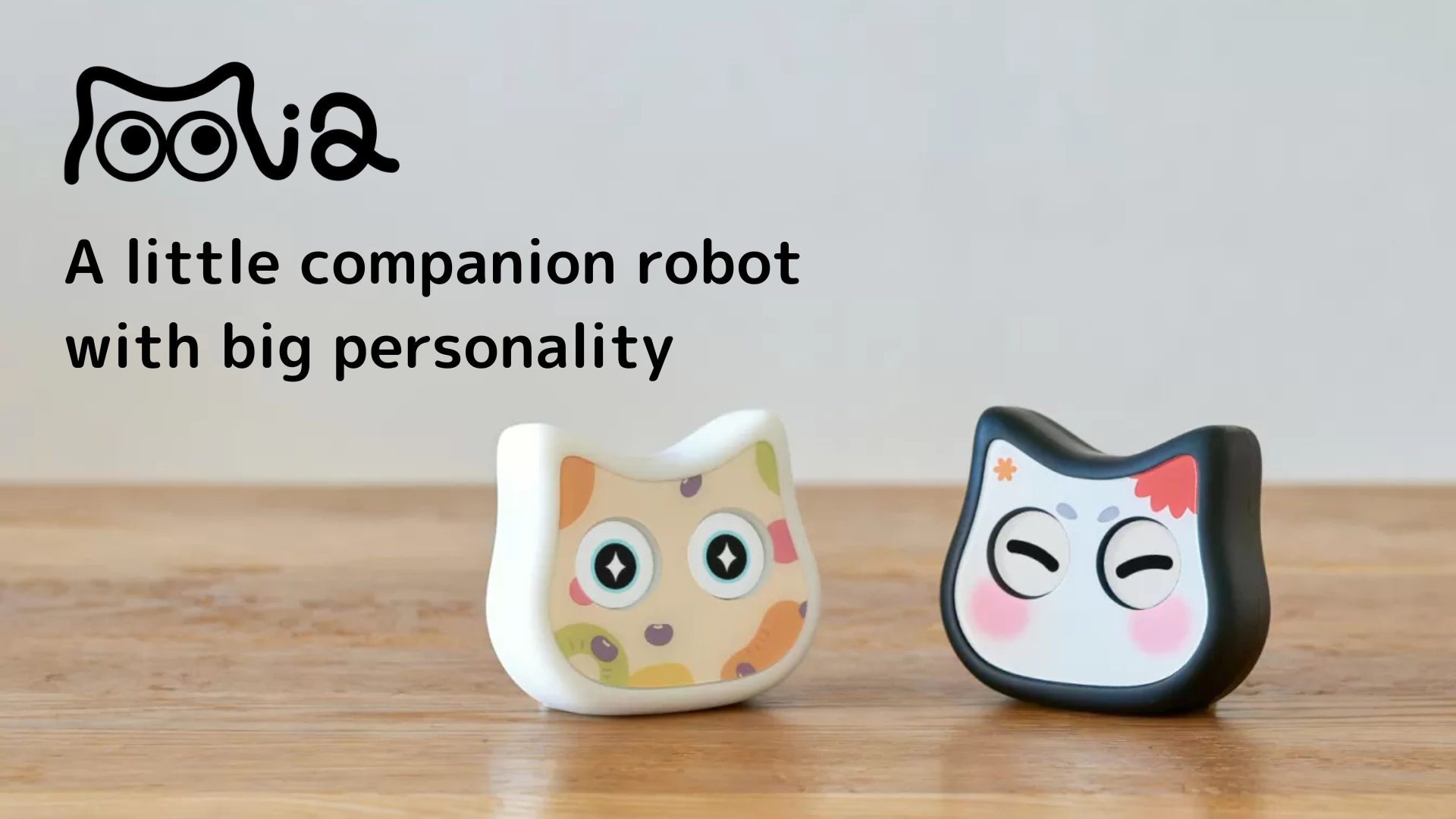
Comparison with “Mia,” a talking cat-shaped robot
We compared two robots that add color to our lives with different approaches from an objective point of view.
| Comparison items | Coglet | Mia |
| Appearance and Design | Mechanical skeleton. A beautifully shaped piece that reveals the internal mechanism. | Plush and secure. Rounded cat-shaped design. |
| Introduction Style | DIY (assembled). enjoy 3D printing and crafting. | Finished product (ready to use). Just open the box and set up. |
| communication | Mainly uses “movement” for expression, and can also be used for advanced dialogue through AI collaboration. | Specializes in emotional dialogues in “the language (dialect)”. |
| target demographic | A group that is technically curious and enjoys modifications. | People who want to get healing easily in their busy daily lives. |
| maintenance | DIY-like maintenance, such as lubricating gears and adjusting screws. | Mainly maintenance-free with software updates. |
Key points of comparison: Mia emphasizes “warmth that accompanies daily life. With its unique Japanese dialect of speech and affordable price of less than 10,000 yen, it is a suitable choice for those who want to easily incorporate everyday healing and familiarity into their daily lives.
👇 Talking cat-shaped robot “Mia” that speaks 47 dialects nationwide
summary
Coglet is the perfect teaching aid and companion for those who do not simply want a “moving machine,” but who love the “process itself of giving a robot a soul.
Definition of target audience:
- Creative Makers: People who want to change the 3D printer from a “tool” to a “life-making machine.
- Educators/Learners: Students and engineers who want to learn the latest AI technology (LLM) and mechatronics at the same time.
- Character enthusiasts: people who are attracted to physical personalities that clatter and move rather than inorganic screens.
👀 Also read this article.
👉 [2026 Edition] 6 Latest Pet Robots to Heal Pet Losses – Thorough Comparison of Cat, Dog, and Healing Models
👉 [2026 Edition] Recommended pet robots for under 10,000 yen.
👉 [Latest in 2026] Thorough Comparison of Monthly and Maintenance Costs of Pet Robots – List of Running Costs of Popular Models including Moflin, LOVOT, Mia, etc.
👉What is Mia, an AI pet robot that speaks 47 dialects nationwide?