Product Overview: Features and Basic Structure
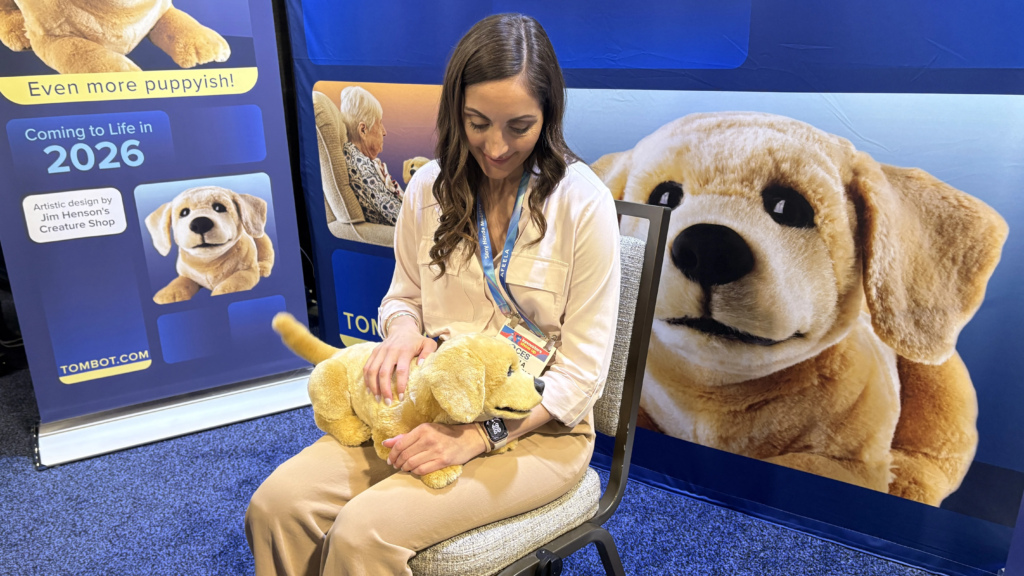
Jennie is the world’s most realistic golden retriever-shaped care robot developed by Tombot. More than just a toy, Jennie is designed to provide “emotional support” for the elderly with dementia or loneliness, or for those who cannot afford a real pet due to housing conditions or allergies.

As its basic structure, it is packed inside with multiple touch sensors, a microphone, and the latest in robotics. It reacts to places where people pet it, such as the head, neck, and back, and makes adorable dog-like noises, head-shaking movements, and tail-wagging reactions. It should be noted that “Jim Henson’s Creature Shop,” known for its special effects technology for Hollywood movies, is in charge of the sculpting. High-grade faux fur that replicates the fur of a real dog is used, and even the feel and weight of the skeleton when held in the arms are thoroughly recreated.

Summary of key points
Who is Jennie?
- Care robot based on a scientific approach: It is intended for dementia care and animal therapy, and helps relieve loneliness and anxiety.
- Hollywood-quality realism: Life-like movements supervised by a studio renowned for puppet productions such as “Sesame Street”.
- Maintenance-free: No need to worry about feeding, walking, or illness, and can be introduced even in nursing homes with strict hygiene controls.
good point
- Unparalleled emotional satisfaction: The realistic fur and moderate weight stimulate the secretion of oxytocin (a happy hormone) just by holding the animal.
- Realistic acoustic experience: Sampling and use of actual golden retriever sounds, not synthesized sounds.
- Ease of use: No complicated operations are required. Just turn on the power and stroke it, and anyone can touch it intuitively.
points of concern
- Restricted range of motion: The patient is unable to walk independently and is basically confined to his knees or in bed.
- Maintenance: To maintain realism, regular brushing and attention to delicate electronic components are required.
- Cost: The initial cost is about 70,000 yen or less, which is more expensive than a typical pet robot.
Users who may be suitable for
- Care for family members suffering from dementia: those seeking relief from peripheral symptoms (BPSD) and the opportunity to speak.
- Those who have experienced pet loss: Those who want to live with an animal again but are concerned about whether they will be able to take responsibility for the animal until the end.
- Facility residents: Those seeking the warmth of animals in an environment where animals are not allowed.
rough conclusion
It is “a modern-day therapy partner that removes the responsibility and burden of pet ownership and maximizes only pure ‘healing and attachment.
Frequently Asked Questions (FAQ)
- Price: $449 on the official website (about 65,000-70,000 Japanese yen). Customs duties and shipping fees may be charged separately.
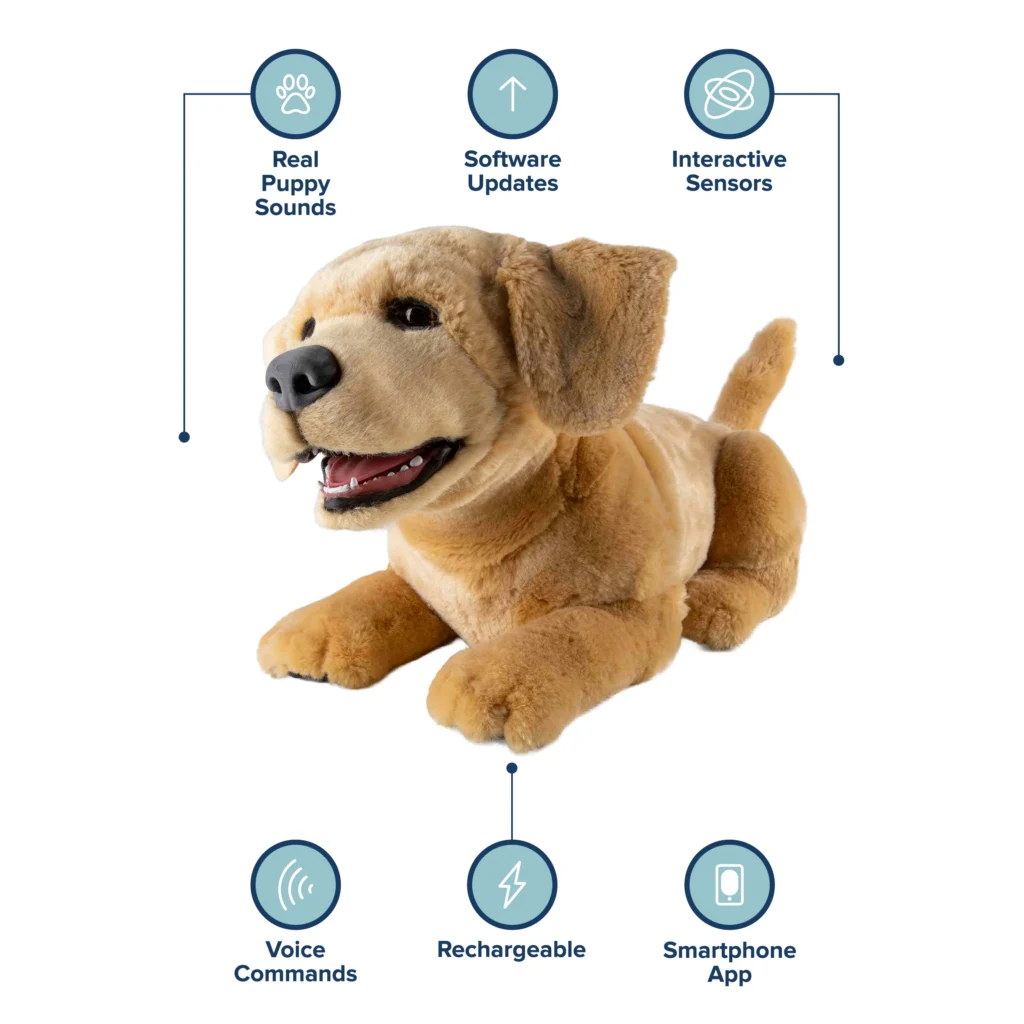
- What can it do?: responds to petting, tapping, and talking to you, has a movable neck, ears, and tail, and fine-tuning of personality through apps.
- What operating systems are supported? The app for setup is compatible with iOS/Android, but basic operations can be completed without the need for internet access.
- Disadvantages.: It is not suitable for those who want to play actively together, as it does not have a walking function.
- What about software updates? Yes: There is an update feature that connects to Wi-Fi via your phone and adds new squeaks and response patterns.
Pricing and How to Buy
The base price for Jennie is $449 (approx. $68,000). This price includes advanced robotics and Hollywood-grade modeling technology. Currently, Jennie is primarily for the U.S. market, but can be purchased from Japan with international shipping.
What Jennie can do and main functions
Jennie responds realistically to where she is petted, thanks to sensors in 16 locations throughout her body. Jennie is also equipped with a voice recognition function that allows her to respond to her name (which can be set via an application) and to tilt her head in response to specific commands. Subtle vibrations that give the impression of a heartbeat, and other innovations that give the device a “life-like” feeling, have been incorporated throughout the device.
Supported OS and App Linkage
Settings are made using a dedicated smartphone app, available for both iOS and Android, that allows users to adjust volume, set sensor sensitivity, update software, and even customize Jennie’s “personality” to make small changes.
Disadvantages to know
The biggest difference is that it does not walk. This is a deliberate design to eliminate the risk of elderly people chasing after the robot and causing it to fall over, but it may not be enough for those who expect AIBO-like autonomous movement. In addition, the faux fur is easily soiled, so regular care to keep it clean is essential.
Software Updates and Future Prospects
Jennie can be connected to the cloud via a smartphone to update its firmware on a regular basis. This allows for new movement patterns and more natural response algorithms to be added even after purchase, keeping the user engaged for an extended period of time.
Development Background and Objectives
Tom Stevens, founder of Tombot, conceived of the robot after the tragedy of his own mother developing Alzheimer’s disease and having to give up her beloved dog. He realized how the loss of a real dog can diminish an elderly person’s quality of life, and decided to use technology to fill the “hole in the heart”.
Although Jennie is not a “medical device,” clinical trials suggest that it significantly reduces patients’ loneliness and anxiety and reduces the number of interventions by nursing staff. More than just a toy, Jennie is expected to be a scientific solution to the social problem of loneliness among the elderly.
On Motion Sounds and Realism
Many users are concerned about mechanical noise (servo noise), but Jennie has succeeded in making the latest models much quieter. If you listen carefully in a quiet room, you can sometimes hear the motor running, but many users like to think of it as “the sound of a real dog breathing.
The sound of the golden retriever’s squeak is also surprisingly natural, as it is not a digitally synthesized electronic sound, but an actual golden retriever sound played back through high-quality speakers. This “realism” of sound is a factor that creates a deep attachment not only visually, but also aurally.
Specifications Summary
| (data) item | Details | supplement |
| Size | Total length: approx. 50-60 cm | Equivalent to a 10-week-old puppy |
| weight | Approx. 2.3kg | Weight that is easy for the elderly to continue to carry |
| Exterior Material | High quality synthetic faux fur | Not washable (clean with special spray) |
| sensor | 16 touch sensors throughout the body | High-quality synthetic faux fur |
| number of hours worked | Approx. 4-6 hours | Battery not replaceable, rechargeable |
| accessory | Charging cable, special brush | Brushing keeps the fur in place. |
Reviews (Word of mouth)
Good review: Bringing families back together
“My father had stopped communicating with us, but after Jennie arrived, he started talking to the ‘dog’ and then eventually to us. It’s like a bridge that It’s like a bridge that reconnected our family.”
(Dad had stopped talking to us, but after Jennie arrived, he started talking to the ‘dog’ first, and eventually to us. It’s like a bridge that reconnected our family.)
Neutral and Dissatisfied Reviews: Gap between Expectations and Reality
“I expected it to walk like an AIBO, so I was disappointed at first. however, the feeling of the fur and the way it looks at you is superior to any other robot. Just be aware it’s for ‘cuddling’, not ‘playing fetching’.”
(I was disappointed at first because I expected it to walk like an AIBO. However, the feel of its fur and the gestures it makes as it gazes at you are better than any other robot. You have to understand that it’s not meant to play “fetch,” but to “cuddle.”)
comprehensive evaluation
Jennie’s greatest asset is its “warmth without feeling high-tech. It is the opposite of the latest AI-equipped smart speakers and robots with acrobatic movements; it specializes in simply being there and cuddling.
Attractiveness: Overwhelming formative beauty and a sense of psychological security.
Challenges: Battery life and full localization into Japanese (e.g., optimizing voice recognition) are points that await further development.
Comparison with “Mia,” a talking cat-shaped robot
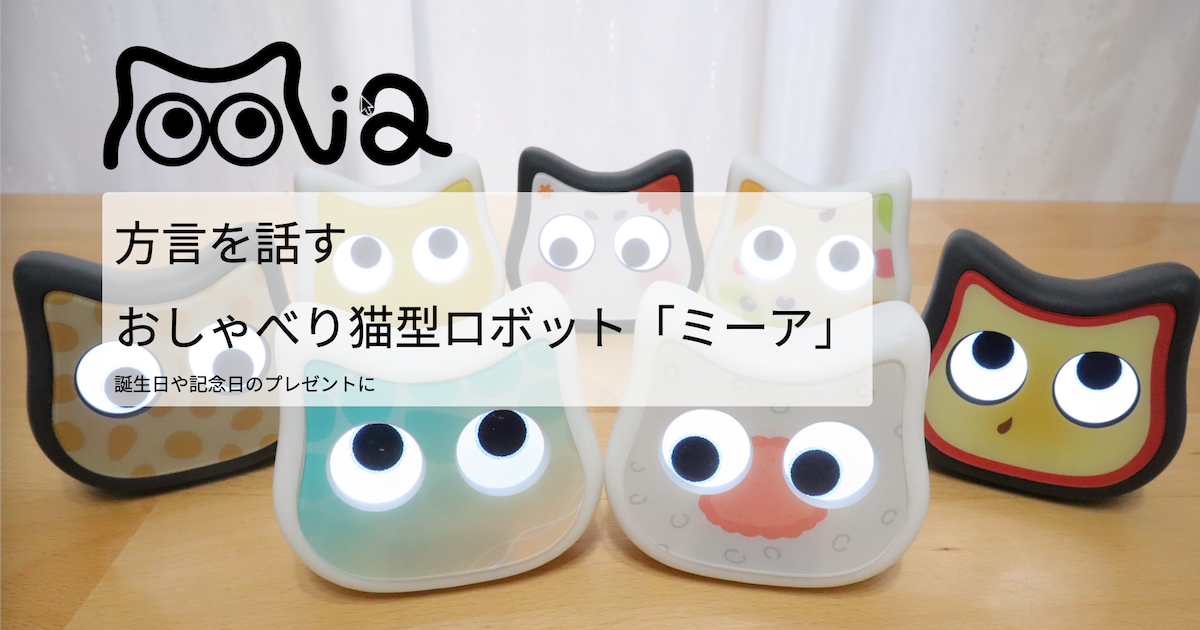
| point of view | Jennie (Tombot) | Words in the dialects of the 47 prefectures |
| appearance | Realistic big dog puppy | Deformed adorable cat |
| communication | Squeals and gestures (non-verbal) | Words” in the dialects of the 47 prefectures |
| Main Functions | Therapeutic effects of tactile sensation | Relief of loneliness and brain training through conversation |
| price range | Approx. 65,000 yen and up (expensive) | From 9,800 yen (tax included) (easy to install) |
| Size | Large, knee-size | Compact size that fits in one hand |
| Strengths | Deep healing for patients with severe dementia | Conversations to distract from the loneliness of living alone |
Key points of comparison: Mia emphasizes “warmth that accompanies daily life. With its unique Japanese dialect of speech and affordable price of less than 10,000 yen, it is a suitable choice for those who want to easily incorporate everyday healing and familiarity into their daily lives.
👇 Talking cat-shaped robot “Mia” that speaks 47 dialects nationwide
In summary: Which would you choose?
Jennie is a “quiet robot” suitable for those who seek deep healing through “touch. Mia, on the other hand, is a “dynamic robot” that brightens people’s lives through conversation.
- Who should choose Jennie: People who have difficulty communicating verbally or who prefer the feel of an animal above all else.
- Who should choose Mia: Those who feel they talk to themselves too much or want to smile with the warmth of dialect.
Check out more details on the official website: Tombot Official Website
👀 Also read this article.
👉 [2026 Edition] 6 Latest Pet Robots to Heal Pet Losses – Thorough Comparison of Cat, Dog, and Healing Models
👉 [2026 Edition] Recommended pet robots for under 10,000 yen
👉 What is “Mia”, an AI pet robot that speaks 47 dialects nationwide?