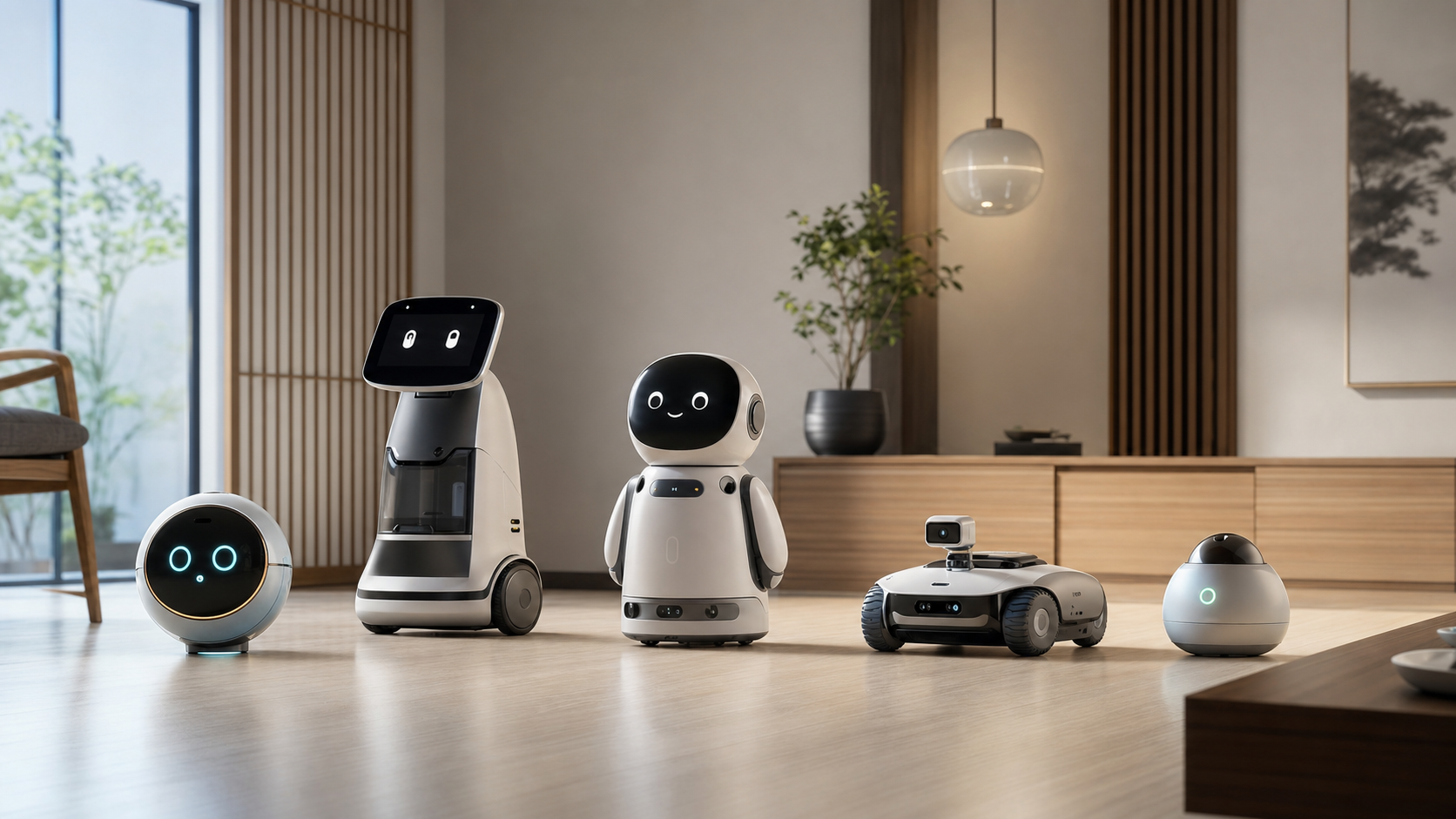
- What Is a Mobile AI Home Robot?
- Key Takeaways
- Comparison Table: Five Mobile AI Home Robots
- FrontierX Aura: Best for Building AI Agents
- Amazon Astro: Best for Monitoring and Alexa Integration
- Samsung Ballie: Best for Smart Home and Projection Concepts
- MISA: Best for Family Use
- Moripet: Best for Pet and Room Monitoring
- Which One Should You Choose?
- Buying Cautions for Mobile AI Home Robots
- If You Do Not Need a Moving Robot, Mia May Be Easier
- Rhem Is Worth Knowing for Elder Monitoring
- PawMe Is Also Worth Comparing for Pet Monitoring
- Summary
What Is a Mobile AI Home Robot?
A mobile AI home robot is a robot that can move around the home instead of staying in one fixed place like a smart speaker or security camera. Depending on the product, it may support conversation, monitoring, smart home control, family communication, video calling, or AI agent behavior.
As of 2026, this category is still early. But products such as FrontierX Aura, Amazon Astro, and Samsung Ballie show that "AI that moves around the home" is becoming a real consumer category.
This article compares five products:
- FrontierX Aura
- Amazon Astro
- Samsung Ballie
- MISA
- Moripet
A newer entry in this category is Zeroth M1, a bipedal/wheeled hybrid home robot unveiled at CES 2026 that leans on Google Gemini-powered conversation and elder-focused features like fall detection. It's worth checking out alongside the five robots compared here.

Mia is not a self-driving home robot, so it is not included in the main comparison table. Instead, Mia appears later as a fixed conversational companion option for people who do not need a mobile robot.
Key Takeaways
Quick Positioning
| Product | In short | Best for |
|---|---|---|
| FrontierX Aura | A mobile AI agent and development platform | People interested in AI agents, smart home automation, and custom skills |
| Amazon Astro | A moving Alexa-style home monitoring robot | People who value home monitoring, Ring/Alexa integration, and remote checking |
| Samsung Ballie | A spherical AI home agent | People interested in smart home control, projection, and Samsung ecosystem features |
| MISA | A multifunction family robot | Families who want education, entertainment, communication, and daily support |
| Moripet | A self-driving AI monitoring camera robot | People who want to check pets or rooms remotely |
Simple Recommendation
- Choose FrontierX Aura if you want to build and customize AI agents.
- Choose Amazon Astro if monitoring and Alexa/Ring integration matter most.
- Choose Samsung Ballie if you want a spherical smart home AI agent.
- Choose MISA if you want a family-oriented multifunction robot.
- Choose Moripet if pet or room monitoring is the main goal.
- Choose Mia if you want an affordable robot for daily voice prompts and conversation.
Comparison Table: Five Mobile AI Home Robots
| Comparison | FrontierX Aura | Amazon Astro | Samsung Ballie | MISA | Moripet |
|---|---|---|---|---|---|
| Main direction | AI agents, development, smart home | Monitoring, Alexa, Ring | Smart home, projection, AI home agent | Family robot | Self-driving monitoring camera |
| Mobility | Indoor movement | Indoor movement | Indoor movement | Autonomous movement | Self-driving movement |
| Conversation | LLM and agent functions | Alexa-based | AI assistant style | Family conversation features | Calling and monitoring focus |
| Monitoring | Depends on agents | Strong | Depends on use case | Family support focus | Strong |
| Smart home | Extendable through AuraOS | Alexa/Ring integration | Samsung ecosystem expected | Daily support focus | Monitoring focus |
| Development / customization | Strong | Consumer-oriented | Consumer-oriented | Family-oriented | Limited |
| Price feel | VIP Price shown as Lite $499, Basic $1,299, Pro $1,999 | High-priced | Final price needs checking | Mid to high | Check campaign or purchase terms |
| Japan usability | Check Japanese support, shipping, warranty | Japan support needs checking | Check release region and Japanese support | Check sales terms | Check campaign and support terms |
| Main cautions | Specification changes, delivery timing, AI fees | Steps, privacy, high price | Release timing, final specs | Broad features need clear use cases | Focused mainly on monitoring |
FrontierX Aura: Best for Building AI Agents
FrontierX Aura is a mobile AI agent robot for the home. Its key idea is AuraOS, which lets users create skills, routines, and custom agents.
Aura is less like a cute talking robot and more like a physical AI app platform. It can be understood as a robot body for AI agents, smart home routines, cooking support, party effects, and contextual home behavior.
The cautions are price, shipping timing, Japanese-language support, warranty, and potential AI model costs. Prelaunch.com lists VIP Price levels of $499 for Aura Lite, $1,299 for Aura Basic, and $1,999 for Aura Pro.

Amazon Astro: Best for Monitoring and Alexa Integration
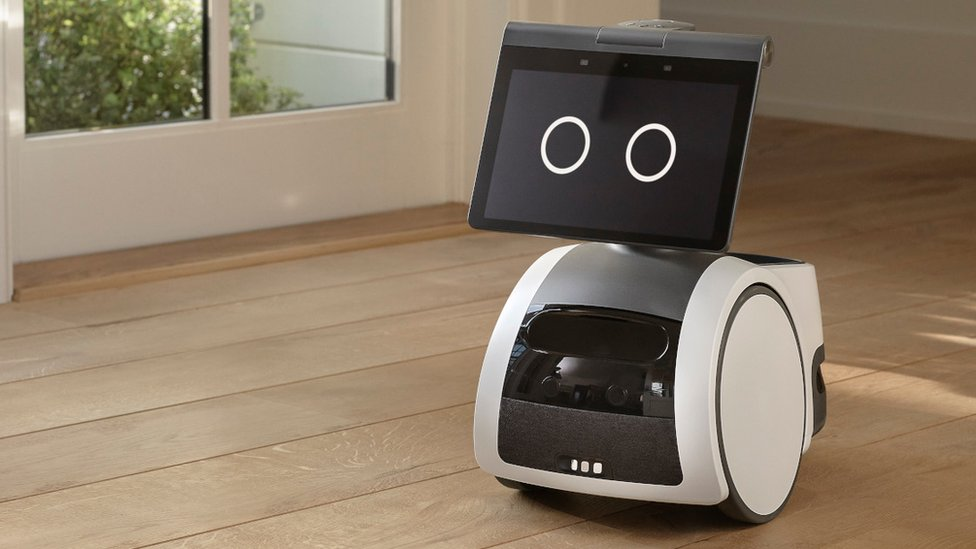
Amazon Astro is often described as Alexa on wheels. It can move around the home, support remote monitoring, video calling, and Ring-related home security functions.
Its strength is that it can check places a fixed camera cannot see. If you want to look around your home while away, check pets, or combine robot movement with Alexa, Astro is one of the clearest examples of this category.
The tradeoffs are physical and privacy-related. Steps, rugs, cables, furniture, and room layout matter. A moving robot with cameras and microphones also needs careful family discussion.

Samsung Ballie: Best for Smart Home and Projection Concepts
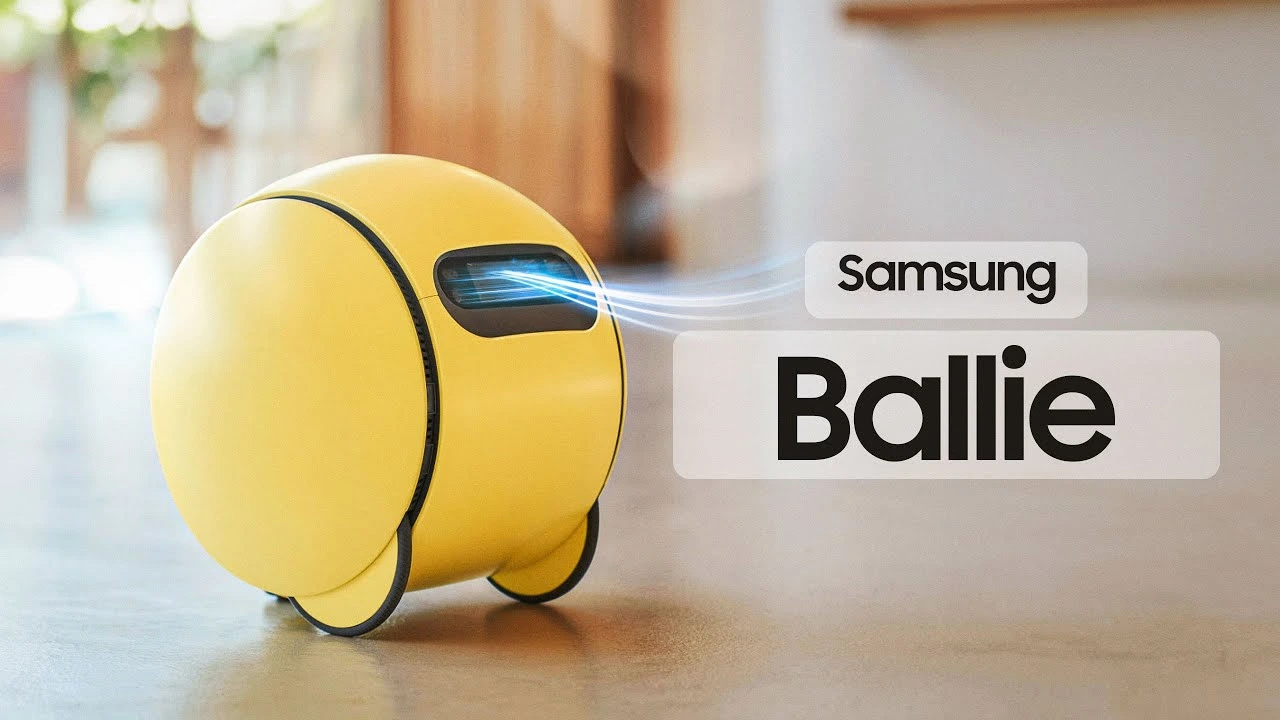
Samsung Ballie is a spherical AI home agent. It is associated with smart home control, everyday assistance, information display, and projection-based experiences.
Like FrontierX Aura, Ballie has a round mobile form. But Ballie is easier to understand through Samsung's smart home and appliance ecosystem, while Aura is more strongly positioned around AI agents and customization.
Before buying, check release timing, target countries, Japanese support, actual compatible devices, and final price.
MISA: Best for Family Use
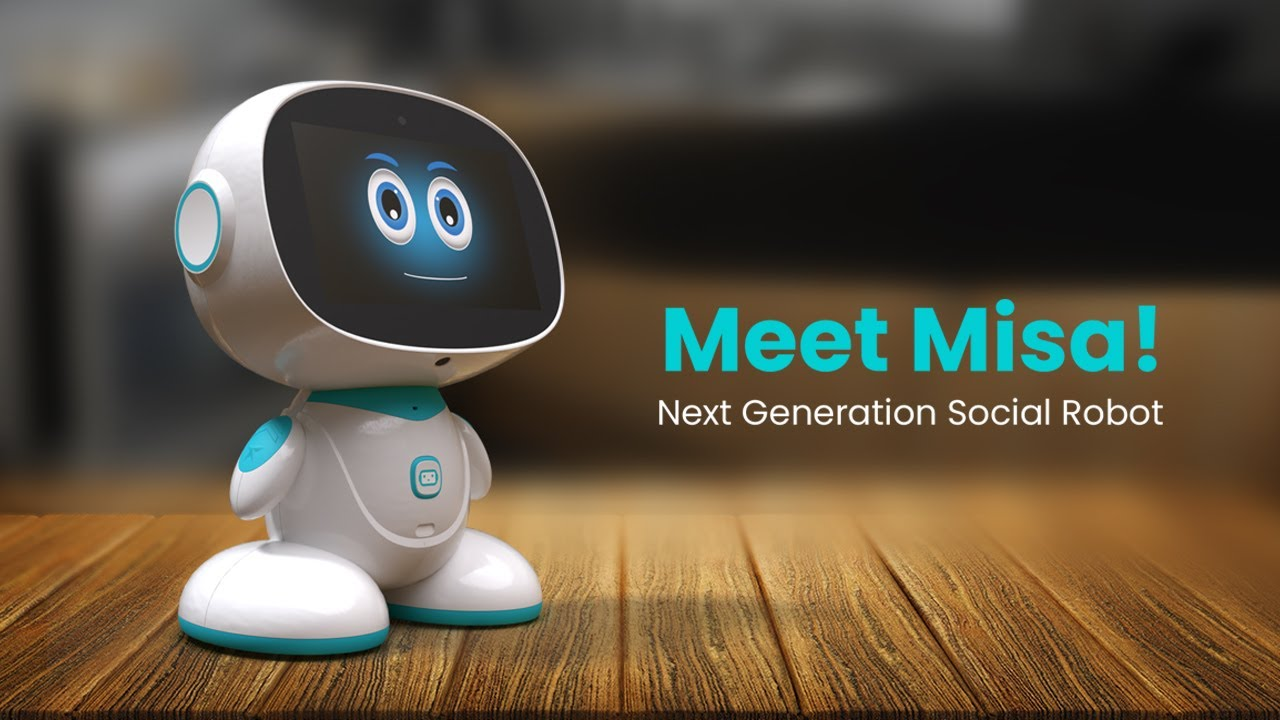
MISA is a multifunction family robot. It is positioned around education, entertainment, family communication, and everyday support.
If FrontierX Aura is more of an AI agent development platform, MISA is easier to understand as a family-friendly robot for broad daily use.
MISA may suit households with children or families who want one robot for several roles. The important point is to decide which functions your family will actually use every day.
Moripet: Best for Pet and Room Monitoring
Moripet is easiest to understand as a self-driving AI monitoring camera robot. It is designed for people who want to check rooms, pets, or home conditions from outside.
Unlike FrontierX Aura or Ballie, Moripet is less about a broad AI home agent concept and more about moving the monitoring camera around the home.
If pet monitoring, room checking, and remote voice interaction are the main goals, Moripet is easy to evaluate. If you want AI agents and smart home customization, Aura may be the better comparison.

Which One Should You Choose?
For Monitoring: Amazon Astro or Moripet
If you want to check your home remotely, monitor pets or family members, or reduce blind spots from fixed cameras, Amazon Astro and Moripet are the easiest candidates to understand.
Astro is broader and tied to Alexa/Ring. Moripet is more clearly focused on self-driving monitoring.
For Smart Home: Ballie or FrontierX Aura
If you want a robot that can connect to home routines, lighting, music, and room context, Ballie and FrontierX Aura are the stronger candidates.
Ballie is more of a consumer smart home concept. Aura is more developer- and AI-agent-oriented.
For AI Agent Customization: FrontierX Aura
If you want to create skills, automate behavior, connect services, and experiment with AI agents in physical space, FrontierX Aura is the most relevant product here.
The tradeoff is complexity. A development-platform robot is not the same as a simple comfort companion. It is best for people who enjoy setup, testing, and customization.
For Family Use: MISA
If your goal is a family robot that can support children, learning, entertainment, and broad daily use, MISA is a natural candidate.
Just be careful with "does many things" products. The more functions a robot has, the more important it is to decide which ones matter in your home.
Buying Cautions for Mobile AI Home Robots
1. Floor Compatibility
Mobile robots are affected by steps, rugs, cables, furniture legs, pets, and children.
Unlike a smart speaker, a moving robot may require you to keep the floor clear. Think of it a little like preparing a room for a robot vacuum.
2. Camera and Microphone Privacy
Many mobile home robots use cameras and microphones for monitoring, calls, or spatial understanding.
Check recording rules, cloud storage, notifications, remote control, camera on/off controls, and physical privacy features before buying.
3. Japanese Support and Local Availability
Many AI home robots are first introduced outside Japan. If you plan to use one in Japan, check Japanese voice support, Japanese UI, shipping, warranty, repair, wireless compliance, and app availability.
For family or older-adult use, Japanese-language support is especially important.
4. Long-Term Cost
AI robots can involve more than the device price. Cloud AI, video storage, monitoring subscriptions, model credits, or add-on skills may affect the long-term cost.
Do not judge only by a deposit price or early-bird price. Check what the robot may cost after one or two years.
If You Do Not Need a Moving Robot, Mia May Be Easier
All five products above are valuable because they can move around the home.
But many people may feel:
- A mobile robot is too expensive
- They do not need cameras or monitoring
- Their floor layout is not robot-friendly
- Overseas product support is uncertain
- They mainly want daily voice prompts and friendly conversation
In that case, a fixed conversational robot may be the better starting point.
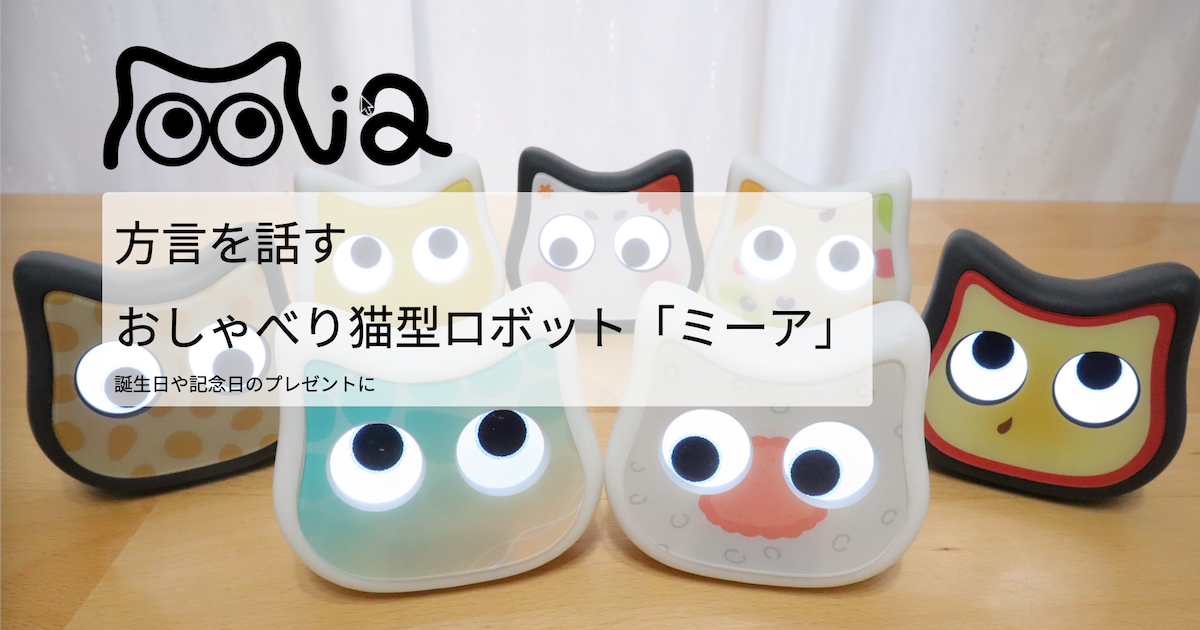
Mia does not drive around the home. Instead, it is easy to place on a desk, shelf, or living room surface. It is designed for daily voice prompts, family communication, and a friendly cat-shaped presence.
Mia starts from 9,800 yen including tax. It supports 47 Japanese dialects, facial expressions, voice interaction, Google Calendar integration, weather notifications, and 15 English characters.
If you do not need a robot that patrols the whole home, and you mainly want a small companion that talks to you every day, Mia may be the more realistic choice.
Rhem Is Worth Knowing for Elder Monitoring
This guide has focused on robots that move around the home. For health-focused monitoring, a new tabletop robot from the U.S., Rhem, is also worth a look.
Rhem does not roam. It sits on a table and combines blood pressure, heart rate and SpO₂ logging, family-app sharing, AI agents that handle phone and web errands, and a radar-based Halo fall detector.
- Price: $1,099 (Cloud) or $1,299 (Local), with one Halo included
- Availability: U.S. preorders only, shipping from January 2027
- Languages: English, Chinese, Spanish and French (Japanese not listed)
- Caution: Rhem states its readings are not for diagnosis or medical decisions
Unlike Astro or Moripet, which move through rooms, Rhem is built around the user's health data and sharing it with family. It cannot be bought in Japan, so it is not in the comparison table, but it shows where elder-focused monitoring robots are heading.

PawMe Is Also Worth Comparing for Pet Monitoring
If your main reason for considering a mobile AI home robot is pet monitoring, PawMe is also worth comparing alongside Moripet.
PawMe is an AI pet robot that combines an FPV camera, two-way audio, laser play, feeding and water-related care, temperature sensing, and skin monitoring. If you want a broader home patrol robot, Amazon Astro or EBO X may be more relevant. If you want a moving monitoring camera, Moripet is easier to understand. If you mainly want to care for a dog or cat while away from home, PawMe becomes a closer comparison.
The cautions are also different. Because PawMe involves camera, microphone, feeding, and health-monitoring features, check subscription costs, app availability, Japanese support, shipping, wireless compliance, privacy settings, and whether your pet accepts a moving robot before buying.

Summary
Mobile AI home robots may become an important category for monitoring, smart home control, AI agents, and family support.
But in 2026, the category still has many cautions: high prices, overseas availability, floor compatibility, privacy, Japanese-language support, and ongoing AI or subscription costs.
The best choice depends on the job:
- FrontierX Aura for AI agent customization
- Amazon Astro for monitoring and Alexa integration
- Samsung Ballie for smart home and projection concepts
- MISA for family-focused multifunction use
- Moripet for pet and room monitoring
- Mia for affordable daily conversation and voice prompts
Before choosing a mobile robot, ask whether you really need movement. If the main goal is conversation, reminders, weather, and a friendly presence, a fixed robot like Mia may be easier to start with.
👀 You may also like:
👉 2026 Guide: AI Pet Robots for Elderly Loneliness – A Comparison of 10 Companion Robots
👉 2026 Edition: 9 Recommended Pet Robots Under $150 – Cheap, Cute, and Healing Models
👉 Monthly and Maintenance Costs of Pet Robots: Moflin, LOVOT, Mia, and More
👉 Mia – Your Chatty AI Cat Companion Robot with 100+ Expressions