Overview: What Is Mori?
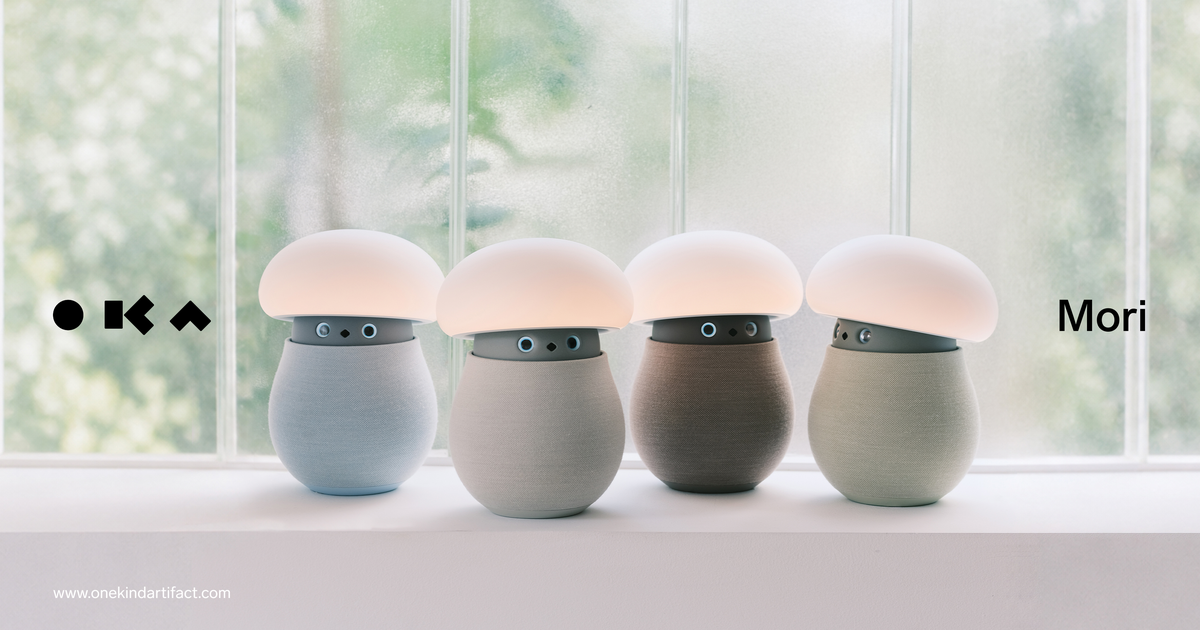
Mori is a mushroom-shaped AI companion robot that OKA (One Kind Artifact) announced on October 22, 2026.
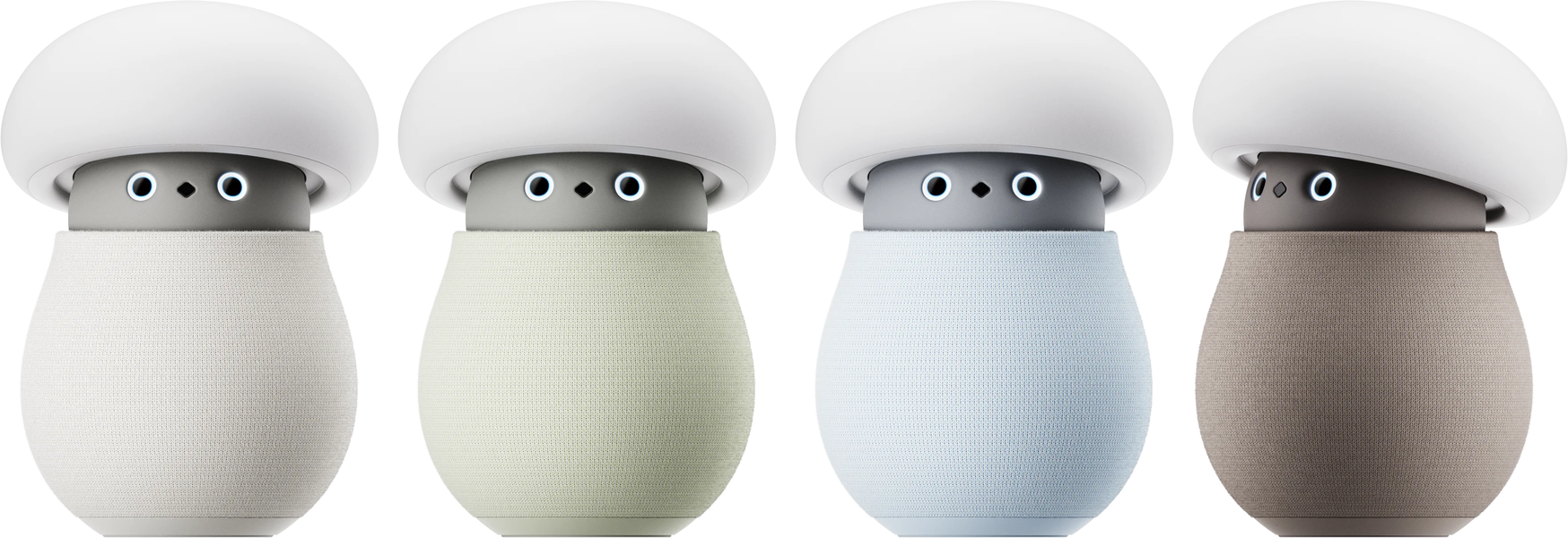
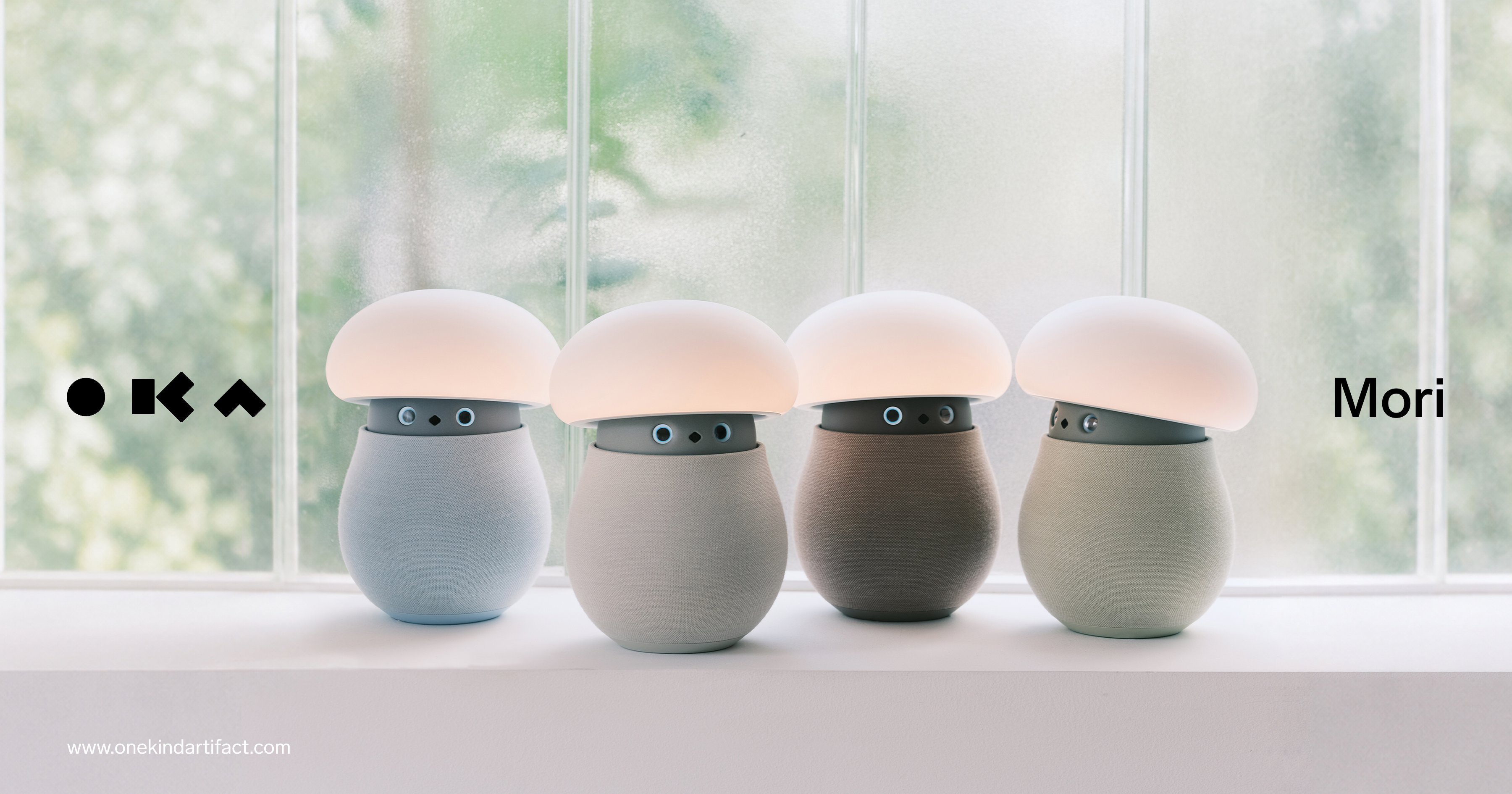
It looks like a cross between a glowing mushroom lamp, a fabric-covered smart speaker, and a Furby, with a small face peeking out from under the cap. The name "Mori" echoes the Japanese word for "forest."
The defining trait is that Mori does not speak. It also has no screen. It reacts to the people and the room around it through head and eye movements, changing colors of light, sounds, and small chirps. It is not a robot that answers questions or controls appliances. It is built to simply be present in a room.
Mori waking up in a morning room (OKA official footage)
The company is OKA Technology Pte. Ltd. Mori is the first of five "Artifacts" the company says it will make in total (model ARTIFACT-01). CEO Hua Wang framed the launch around one question: what if technology gave some attention back to people instead of asking for more of it?
Key Takeaways
What is Mori?
- A mushroom-shaped AI companion robot announced by OKA in October 2026
- It does not use words. It reacts with movement, light, sound, and expressions, and has no screen
- A camera and microphones sense the surroundings, and Mori remembers faces and treats familiar people differently from strangers
- Placing both hands on the base starts a guided breathing session, and patting the head retracts the cap to turn Mori into a lamp
- Includes "Nature Time," which plays nature soundscapes such as forest, rain, and campfire with soft light
- The First Access price is $649
Strengths
- No need to talk to it, and no voice-assistant pressure
- A mushroom form that fits a nightstand or living room
- Images and audio are processed on the device and then discarded (the company's description)
- First Access units have a 180-day return window and need no subscription for any current feature
- Intended for homes with pets or children
Things to consider
- The price is high. The regular price is $849, and the feature list is short
- It does not answer questions, give the weather, control smart lights, or play music from streaming services
- Shipping currently covers the contiguous US states and Washington, D.C. (the UK has separate terms). Nothing is announced for Japan
- Independent long-term reviews are still scarce, so day-to-day behavior in real homes is not yet well established
Who it fits
- People who want a quiet presence rather than a talkative robot
- Buyers looking for an atmospheric object for a bedroom or desk
- Early adopters interested in expressive robotics and nature-themed sound and light
Quick Verdict
Mori is not a robot that makes life more efficient. It adds presence to a room.
It does not manage schedules, read out the weather, or control appliances. Instead, it notices people and turns its head, acts shy when complimented, and sways to music. CNET Japan's hands-on piece compares the feeling to talking to a friend's dog.
The price is $649 even at the First Access rate, and $849 at the regular price. A speaker and a lamp can cover part of what it does, so the decision comes down to whether you will pay for personality and presence.
Availability matters too. Delivery currently covers the contiguous US states and Washington, D.C., with separate terms for the UK, and nothing is announced for Japan. Until more reviews appear, Mori is best treated as an interesting overseas product to watch.
OKA's official channel has an introduction video that shows Mori's movement and mood.
Price and How to Buy
Pricing (First Access and Preorder)
Mori can be bought through First Access or Preorder. Terms have shifted several times since launch, so check OKA's store for the latest before ordering.
| Option | Device price (before tax and shipping) | Main terms |
|---|---|---|
| First Access | $649 ($200 off the $849 regular price) | Single payment. 180-day returns. All current features, including Nature Time, with no subscription. One unit per email address |
| Preorder | $749 | $99 deposit up front, with the balance due 45 days before planned dispatch. Up to four units per email address. Free shipping. Delivery estimated January to March 2027 |
| Regular price (reference) | $849 | The base price before the First Access discount |
At launch, the press release listed a limited Founder Edition at $649 and standard preorders at $799 with a $79 deposit. The preorder price on OKA's page has since changed to $749 with a $99 deposit.
Subscription terms
The subscription terms have changed since launch.
- At launch: The Founder Edition included two years of subscription service. Early coverage reported $17 per month or $80 per year after that.
- First Access now: No subscription, with every current feature including Nature Time.
- Preorder: One month of Nature Time free. It does not convert automatically to a paid plan, and any future paid plan needs a clear price and a separate consent.
- For all orders: Basic device functions do not require a paid Nature Time plan.
Right after launch, readers questioned why a lamp would need a subscription. The terms for First Access units have since moved to no subscription.
Shipping and where it ships
- First Access delivery is estimated as November 30, 2026 in one place on OKA's page and late December 2026 in another
- Shipping covers the 48 contiguous US states and Washington, D.C. (Alaska, Hawaii, Puerto Rico, and other territories are not yet covered). The UK has separate sales terms
- Accepted payment: Visa, Mastercard, American Express, UnionPay, Apple Pay, and Google Pay
Shipping to Japan is not listed. Buying through a forwarding service raises questions about warranty, returns, power (a 20 V, 2.5 A charger), and radio certification for Wi-Fi and Bluetooth.
Key Features and How to Use Them
"Attentive Intelligence": reacting without words
Mori uses a camera, microphones, and sensors to read its surroundings and decide when to react and when to stay quiet. OKA calls this "Attentive Intelligence."
- Turns its head and follows with its eyes when someone enters the room
- Notices new objects and sounds
- Sways along with music
- Treats familiar people and strangers differently
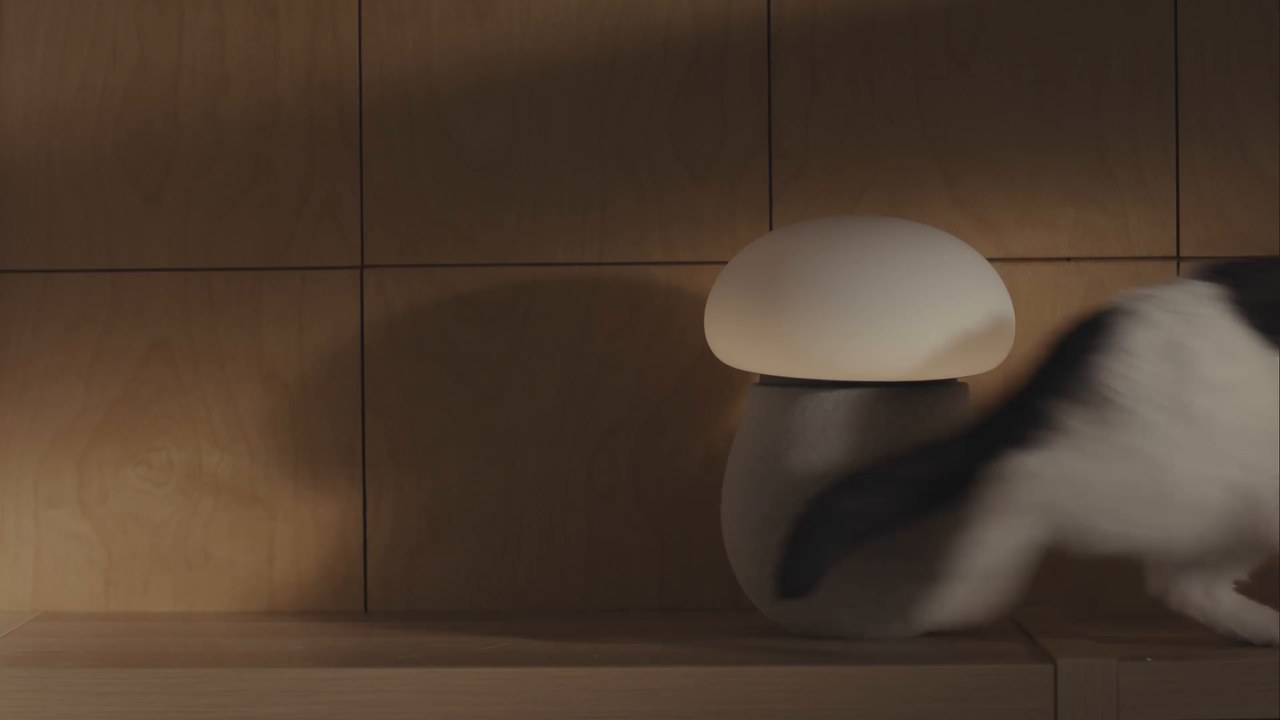
Mori turning toward a cat that passes by (OKA official footage)
Mori turning toward someone who has just come home (OKA official footage)
You can talk to it, but it answers with sounds, light, and movement rather than words. In CNET Japan's demo, Mori made a shy, pleased sound when complimented on its cuteness, and a displeased sound when asked whether it had a Bluetooth music mode.
"VIBE": an inner state that shifts over time
Mori has an inner state called VIBE (Vitality, Interaction, Bonding, Emotion) that changes over time, according to the launch press release. It sets Mori's energy, mood, and appetite for company.
Time spent together shapes its reactions, so each unit develops its own personality. If a future "Artificat 02" arrives, the plan is to carry a Mori's personality over to the new body.
Guided breathing and Lamp mode
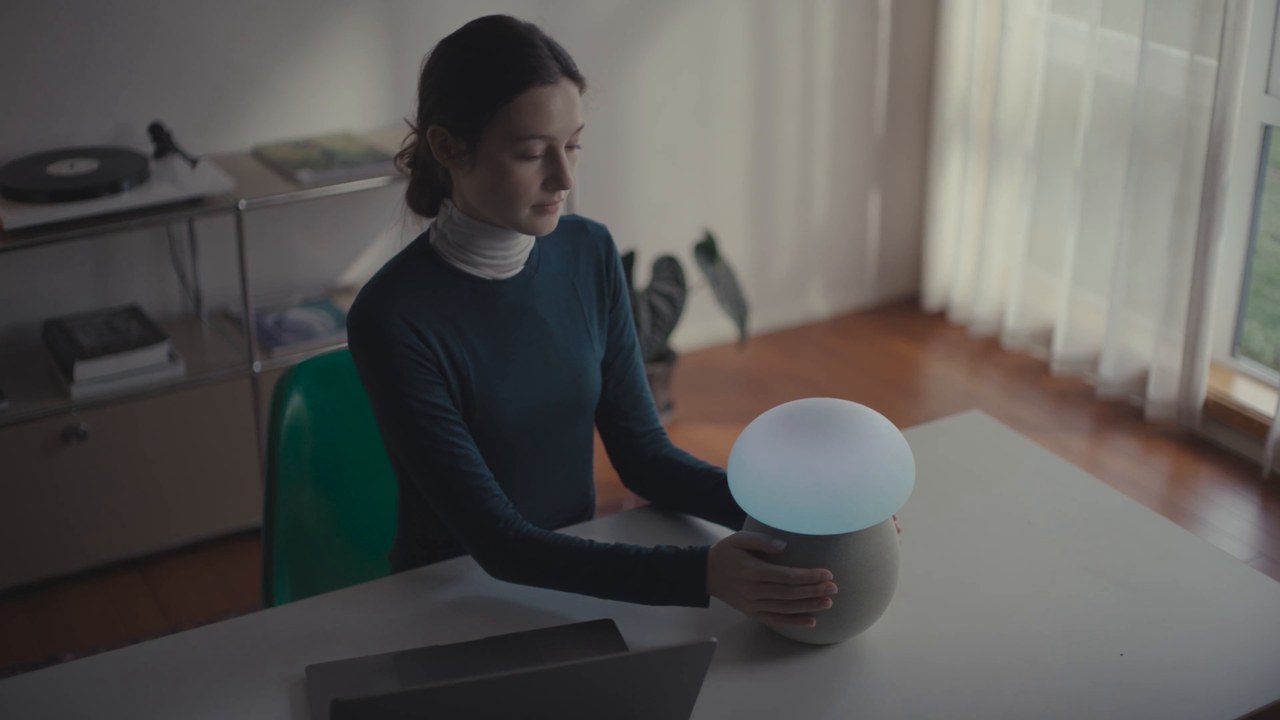
- Guided breathing: Placing both hands on the base starts a breathing session that follows the rhythm of nature. It does not require a paid subscription.
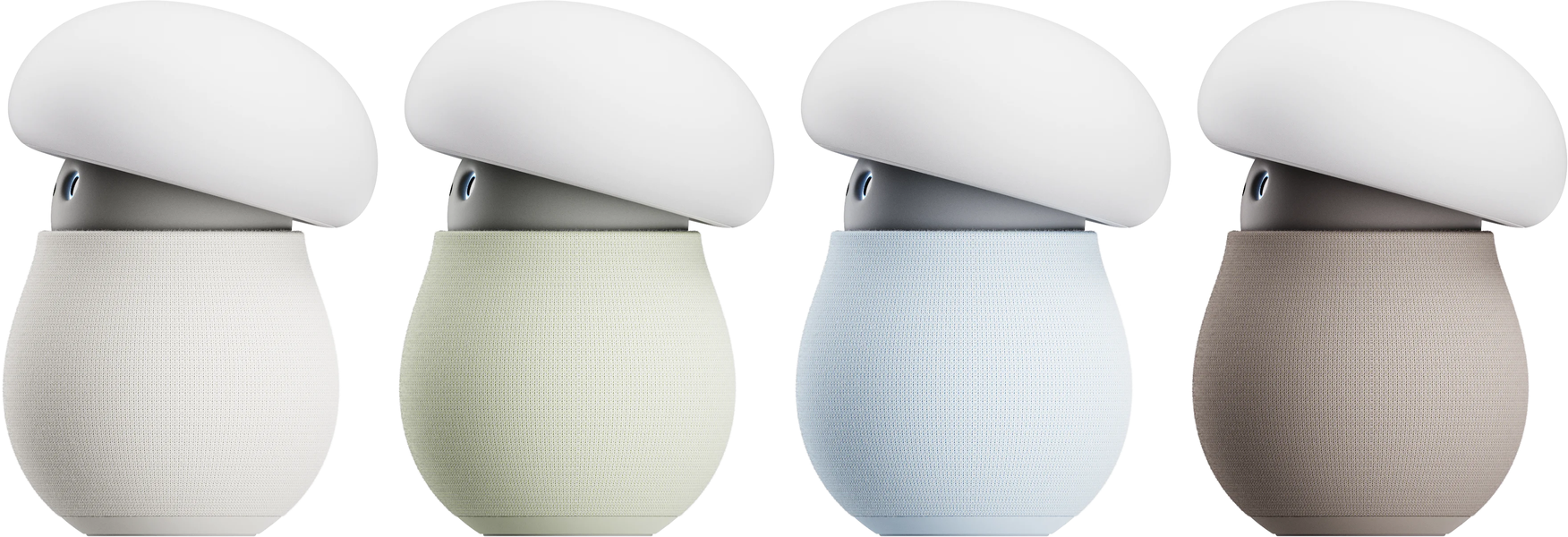
- Lamp mode: Patting the head retracts the cap and leaves Mori quietly present with a soft glow. The face is hidden and most companion reactions are reduced.
Placing both hands on Mori to begin a breathing session (OKA official footage)
Nature Time (soundscapes and light)
Nature Time plays soundscapes themed on forests, rain, campfires, and more, paired with soft light. It shifts slowly through morning, afternoon, dusk, and late night in real time. Mori can also notice your state and invite you into Nature Time at a good moment. The library of themes is planned to keep growing.
A touch starts a nature scene of light and sound (OKA official footage)
Light themes inspired by forest, water, and campfire (OKA official footage)
OKA's official channel also has a film showing the nature-themed world of Mori.
Music playback is limited to this kind of meditative sound with light. You cannot pick tracks from a streaming service.
How Mori Looks in Everyday Life
These scenes from OKA's official footage show how Mori is meant to sit in a home.
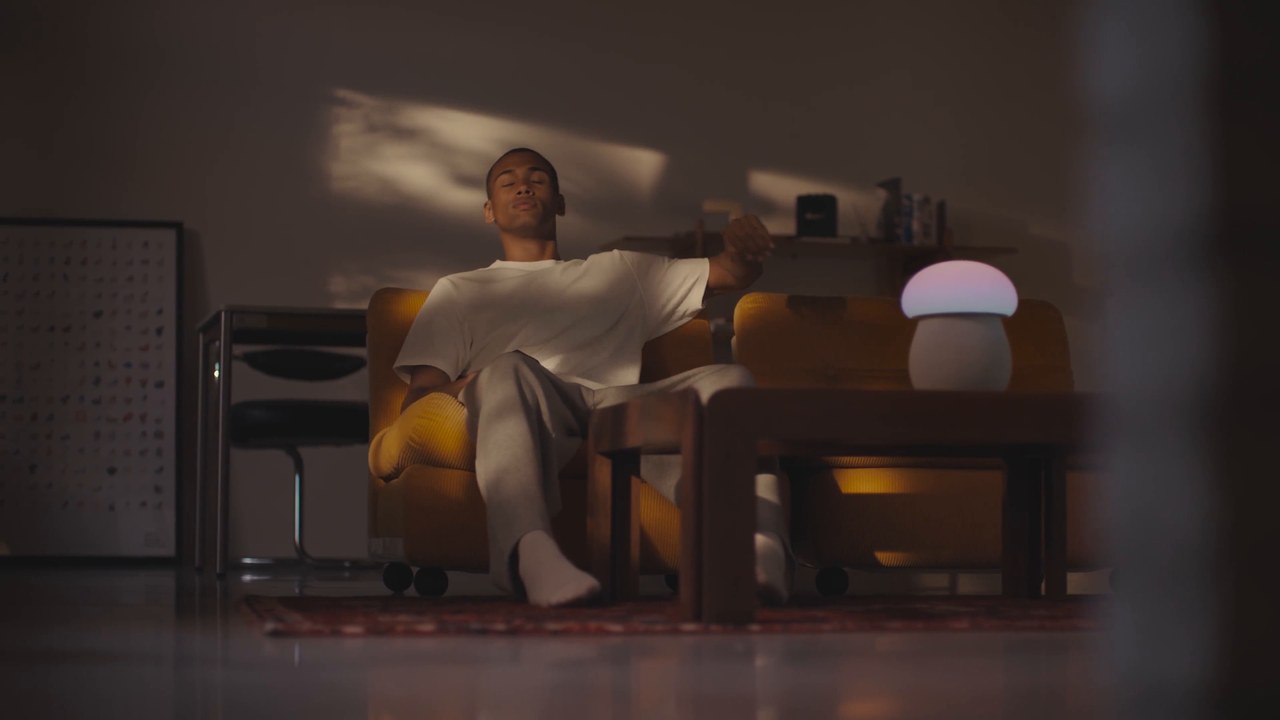
Mori glowing softly in an evening room (OKA official footage)
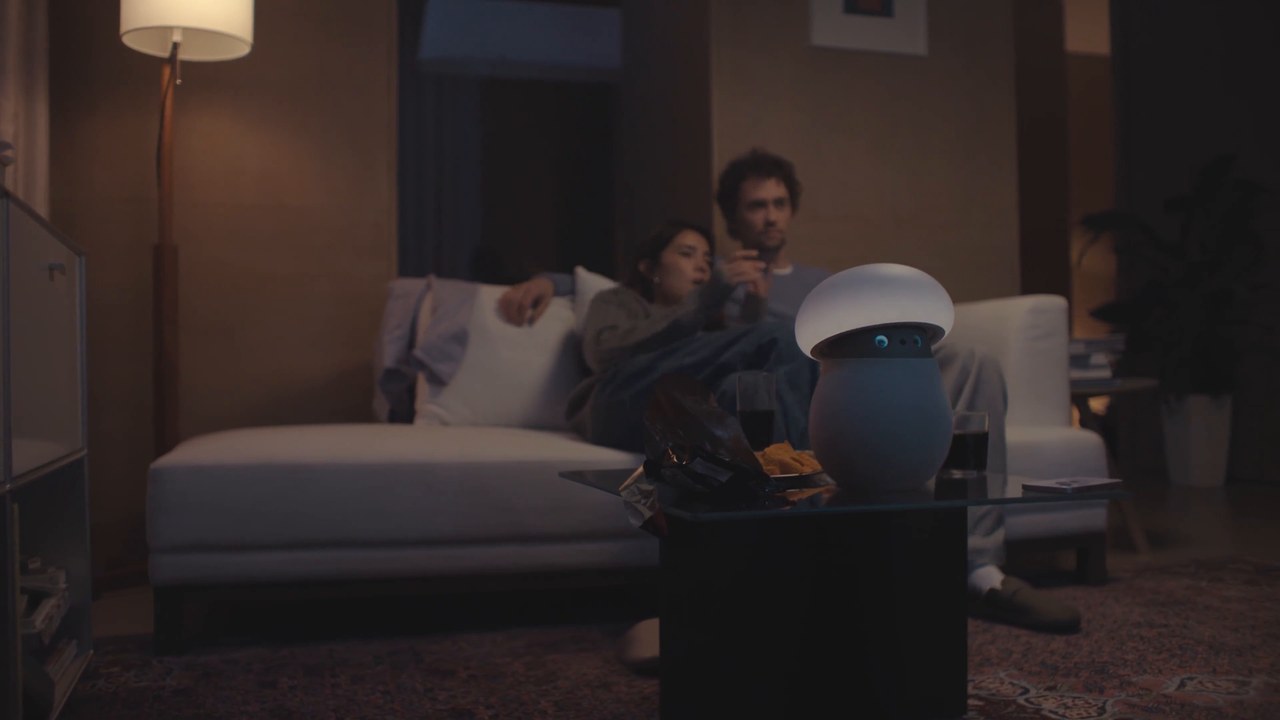
Mori with only its eyes showing next to two people watching a movie (OKA official footage)
The muted colors that blend into a room and the restrained reactions stay consistent across the official footage. This is staged footage prepared by the company, though, and real homes will differ.
What It Does Not Do
Mori is not a replacement for a smart speaker.
- Answering questions, including weather questions
- Controlling smart lights or household appliances
- Playing specific songs from music streaming services
- Timers and reminders
These omissions are deliberate. Overseas reviews broadly see Mori as a product that chose being present over being useful.
It is also meant for personal indoor use. It is not a medical, safety, security, or emergency device, and no clinical evidence shows it improves sleep or reduces stress.
What Reviews and Community Reactions Show
Mori has only just launched, and long-term hands-on reviews are still rare. The points below come from demo impressions, launch coverage, and community discussion, and show where opinions split.
Positive reviews
Design and the choice not to speak draw the most praise. A Yanko Design writer says a mushroom is a better fit for a bedside table than a small humanoid.
an easier sell for my nightstand than a miniature humanoid
Source: Yanko Design (October 23, 2026)
That is a view of the robot as something you can display. The same piece says the lack of speech "might be its most attractive feature," which suits people who do not want a bedside object that creates conversational obligations.
A demo write-up praises how natural the reactions feel.
a robot that doesn't want to be useful, only present.
Reactions that depend on context, such as shyness after a compliment or displeasure at a question, felt richer than a classic Furby to the author. They took Mori's "no need to be useful" stance as part of its charm.
The Gadgeteer sums up how to think about it.
Think of it as a lamp with a little personality, not another voice assistant.
Source: The Gadgeteer (October 23, 2026)
Critical reviews
Price is the most common complaint.
At $649, that personality is the main draw.
Source: The Gadgeteer (October 23, 2026)
With few practical features, the personality and atmosphere are what the money buys. A speaker and a lamp can cover the basics, so the value depends on how much you care about movement and room-aware reactions.
The demo write-up is cautious about the price.
$849 is a lot for a mushroom that chirps.
It also raises whether the charm lasts once the novelty fades. Yanko Design takes the same view, calling Mori "an expensive experiment in companionship" and saying everyday behavior matters more than first-day charm.
A robot-enthusiast forum showed a similar split on price and subscriptions.
Overpriced for its capabilities
Source: Robots Around the House (October 25, 2026, user post)
The same thread included several posts questioning a subscription for a lamp at launch. After First Access moved to no subscription, reactions were mixed: some welcomed it, and others said that at $849 they would still expect more.
Pre-purchase checks drawn from reviews
- Does it give enough presence on a desk or bedside table to justify the price?
- Will you be satisfied enjoying its presence rather than talking to it?
- Could its movement and light disturb sleep or quiet time at night?
- Are you comfortable with a camera and microphones in the room (check how to turn them off first)?
- Can you accept the warranty, return, and certification risks of using an overseas product in Japan?
Privacy and Safety
Because Mori has a camera and microphones, privacy handling deserves a look. The company describes it this way:
- Images and audio are processed on the device and discarded afterward
- Data used to recognize faces is encrypted and kept on the device, not uploaded
- Wi-Fi is used for firmware updates
- Retracting the head hides the camera, and double-tapping the top turns off the microphone
These are the company's own statements and have not been independently verified. Account, device, and diagnostic data may also be collected separately, so read the privacy policy and app permissions before buying.
FAQ
How much does Mori cost?
First Access is $649, Preorder is $749, and the regular price is $849, all before tax and shipping. Terms changed soon after launch, so check the official store before buying.
Does Mori talk?
It does not speak in words. It reacts through movement, light, sound, and expressions, including small chirps reminiscent of a baby's voice.
What features does it have?
Reactions to people and objects, face recognition, guided breathing, Lamp mode, and Nature Time (soundscapes with light). It cannot answer questions, control appliances, or play specific songs from streaming services.
Is there a monthly fee?
First Access has no subscription and includes every current feature, including Nature Time. Preorder includes one month of Nature Time, and any paid plan afterward needs a stated price and separate consent. Basic functions work without a paid plan.
Can I buy Mori in Japan?
Sales and shipping to Japan are not announced. Delivery covers the contiguous US states and Washington, D.C., and the UK has separate terms.
Who is it for?
People who want a quiet, screen-free robot with a calm presence. It works in homes with pets or children. It does not suit people who want practical features or a conversation partner.
Are there downsides?
The high price, the short feature list, no sales in Japan, and a shortage of long-term reviews.
What should I check before buying?
- The return window (180 days from delivery for First Access) and that return shipping is paid by the buyer
- The warranty is a one-year limited warranty that excludes accidents, liquid damage, misuse, and normal wear of the fabric shell
- First Access delivery dates are not consistent within OKA's own page
- Certification and power requirements if you use it in Japan
Specifications
| Item | Details |
|---|---|
| Product | Mori (model ARTIFACT-01) |
| Maker | OKA Technology Pte. Ltd. (OKA / One Kind Artifact) |
| Announced | October 22, 2026 |
| Design | Mushroom shape with a face under the cap and a fabric body. Four colors |
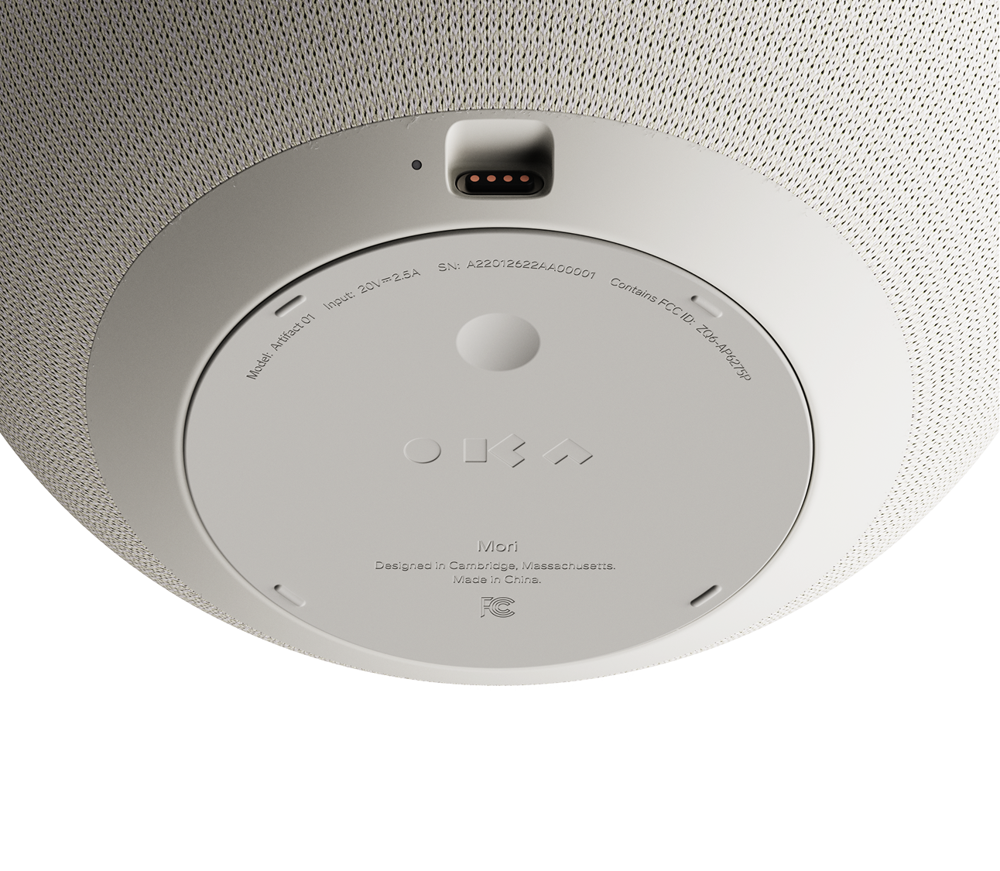
| Size | 26.4 to 29.8 cm tall, up to 20.91 cm in diameter |
| Weight | 2.5 kg |
| Battery | 36 Wh. Up to 2.5 hours to reach 80% |
| Input | 20 V, 2.5 A (quick-release charger) |
| Connectivity | Wi-Fi (2.4 GHz / 5 GHz), Bluetooth |
| Operating temperature | 0 to 35 °C (32 to 95 °F) |
| Screen | None |
| Language | Does not speak words (reacts through movement, light, sound, and expressions) |
| Main features | Reactions to surroundings, face recognition, guided breathing, Lamp mode, Nature Time |
| In the box | Mori, quick-release charger, quick start guide, user manual |
| Warranty | One-year limited warranty from delivery |
| Price | First Access $649, Preorder $749, regular $849 |
| Monthly fee | None for First Access. One free month of Nature Time for Preorder |
| Availability | Contiguous US states and Washington, D.C.; UK under separate terms. Nothing announced for Japan |
| App language | Not announced |
Overall Assessment
Mori pushes AI robots toward being quieter instead of more useful.
There is no screen and no speech, and it does not follow orders. Its reactions center on noticing people, acting shy, swaying to music, and shifting a room with nature sounds. The mushroom shape fits almost anywhere, including a bedside table.
The price is $649 even at First Access and $849 at the regular price. With so few functions, you have to be comfortable paying for presence itself. With no sales in Japan and few independent long-term reviews, Mori is a product to watch rather than one to buy right now.
Comparison with Mia, the Talking Cat Robot
Mori and Mia are both companion robots for the home, but they split on whether the robot talks.
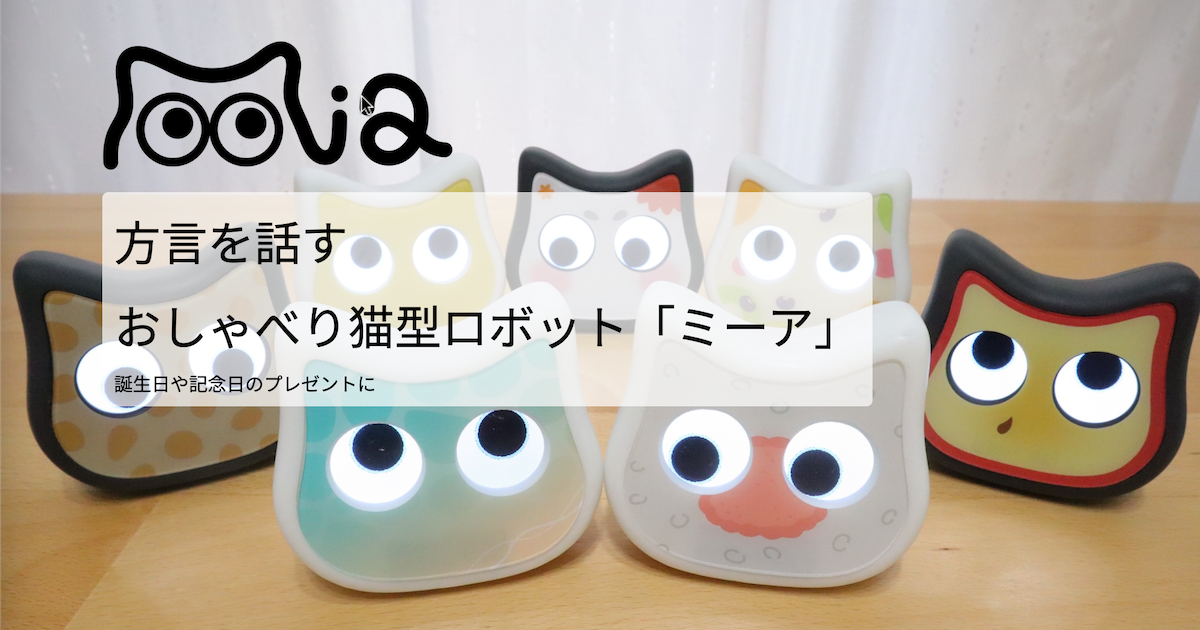
Mori conveys presence through light and movement without words. Mia is a talking cat robot that speaks with 47 Japanese dialects and responds with facial expressions.
| Item | Mori | Mia |
|---|---|---|
| Main use | Quiet presence, nature sound and light, guided breathing | Conversation partner, everyday check-ins, schedule and weather updates |
| Look and form | Mushroom shape with a fabric body and glowing cap | Cat shape, compact and easy to place |
| Conversation | Does not speak (chirps, light, movement) | Voice conversation. 47 Japanese dialects and 15 English characters |
| Expressions | Eye movement and light | Facial expressions on screen |
| Daily life | None (no assistant functions) | Google Calendar integration and weather announcements |
| Monthly fee | None for First Access; one free month for Preorder, then undecided | Basic features at ¥0 per month |
| Price | From $649, regular $849 | From ¥9,800 (tax included), about $61 at ¥160 per dollar |
| Availability | Contiguous US and UK. Nothing announced for Japan | Sold in Japan |
| Best for | Early buyers who value quiet presence and atmosphere | People who want conversation and dialect check-ins at an accessible price |
If a quiet presence and a room with nature sound and light are your priorities, Mori is an interesting product.
If you want a conversation partner, daily check-ins for an older relative, a remedy for living alone, or a gift, Mia is the easier fit. Mia starts at ¥9,800 (tax included) and offers 47 Japanese dialects, facial expressions, voice conversation, Google Calendar integration, weather announcements, and 15 English characters.
👇 Mia, the talking AI cat companion robot with dialects and a big personality
Summary
Mori is a cute mushroom-shaped AI companion robot that conveys presence without speaking. It has guided breathing, Lamp mode, and Nature Time, and it reacts to people and the room around it.
The price is high at $649 for First Access and $849 regular, and it does not act as an assistant. There is no announced sale or shipping to Japan, and long-term hands-on reviews are limited.
If you are interested, check shipping regions, return terms, warranty, subscription terms, and how the camera and microphones work on OKA's latest official pages, and keep an eye out for any Japan-specific rollout.
👀 You may also like:
👉 2026 Guide: AI Pet Robots for Elderly Loneliness – A Comparison of 10 Companion Robots
👉 2026 Edition: 9 Recommended Pet Robots Under $150 – Cheap, Cute, and Healing Models
👉 Monthly and Maintenance Costs of Pet Robots: Moflin, LOVOT, Mia, and More
👉 Mia – Your Chatty AI Cat Companion Robot with 100+ Expressions