"My parent seems more forgetful lately." "I wonder if my mother living alone is talking to anyone during the day." Many families eventually face these concerns.
Dementia is not something a household robot can diagnose, treat, or prevent by itself. But daily habits matter for cognitive health, and one of the most practical habits is conversation.
This article explains why daily conversation can be meaningful for older adults, why modern living makes conversation harder to maintain, and how Mia, a cat-shaped AI robot, can help create a small voice routine at home.
- What Dementia Means in Everyday Terms
- Why Conversation Works Like Everyday Brain Training
- Why Older Adults Lose Conversation Opportunities
- How Mia Can Support Daily Conversation
- How Families Can Use Mia Together With Care
- A Sample Day With Mia
- Tips for Making Conversation a Habit
- How Mia Differs From Other Devices
- FAQ
- Mia Price and Features
- Summary
What Dementia Means in Everyday Terms
Dementia is a general term for symptoms caused by changes in the brain that affect memory, judgment, language, and daily functioning. Alzheimer's disease is the most common type, followed by vascular dementia and other forms.
Risk factors discussed in dementia research include high blood pressure, diabetes, smoking, hearing loss, and social isolation. Social isolation means having fewer chances for communication, stimulation, and interaction over time.
Older adults who live alone, have family far away, or find it difficult to go out may be especially vulnerable to this lack of daily stimulation.
Why Conversation Works Like Everyday Brain Training
Conversation Uses Many Brain Functions at Once
Ordinary conversation may look simple, but the brain is doing many things at the same time:
- Hearing and recognizing sound
- Understanding words and meaning
- Holding context in working memory
- Choosing a response
- Producing speech
- Reading tone and emotion
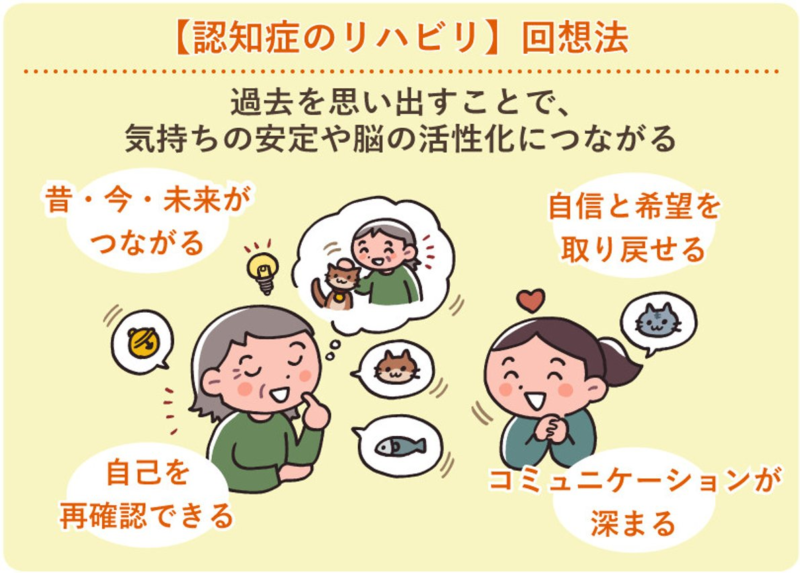
That is why conversation is often described as one of the easiest forms of daily brain training. It uses language, memory, attention, emotion, and social response together.
Small Daily Stimulation Matters
A long phone call once a week can be valuable. But from a habit-building perspective, small daily stimulation is also important.
Morning greetings, short weather conversations, questions about meals, or bedtime phrases can create repeated opportunities to speak and respond.
Speaking Helps People Notice Their Own Condition
When someone says, "I slept well," "My knee hurts," or "I ate breakfast," they are organizing their own condition in words.
This kind of self-monitoring can be especially useful for older adults. Speaking out loud helps turn physical feelings and daily events into something that can be noticed and shared.
Why Older Adults Lose Conversation Opportunities
More People Live Apart From Family
Many older adults now live alone or far from their children. Even caring families cannot always call every day because of work, distance, and family schedules.
Day Services Do Not Cover Every Day
Even when someone uses day services or local community programs, those activities may happen only a few days a week. The remaining days at home may still be quiet.
Going Out Can Become Difficult
Mobility, transportation, weather, infection concerns, or stopping driving can reduce chances to meet people outside the home.
Family Calls Alone May Not Be Enough
Remote caregiving often depends on phone calls. But even two or three calls a week leave several days with little conversation.
How Mia Can Support Daily Conversation
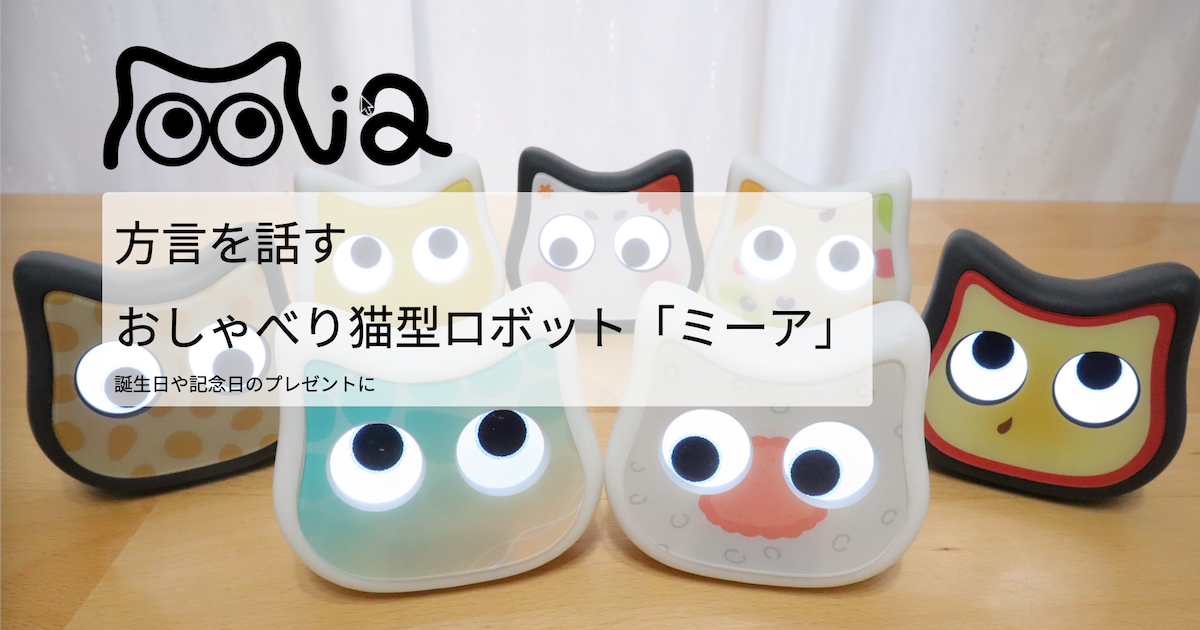
Mia is a cat-shaped AI robot designed for everyday voice interaction.
It does not replace family, medical care, or caregiving. Its role is smaller but practical: creating a daily voice presence in the home.
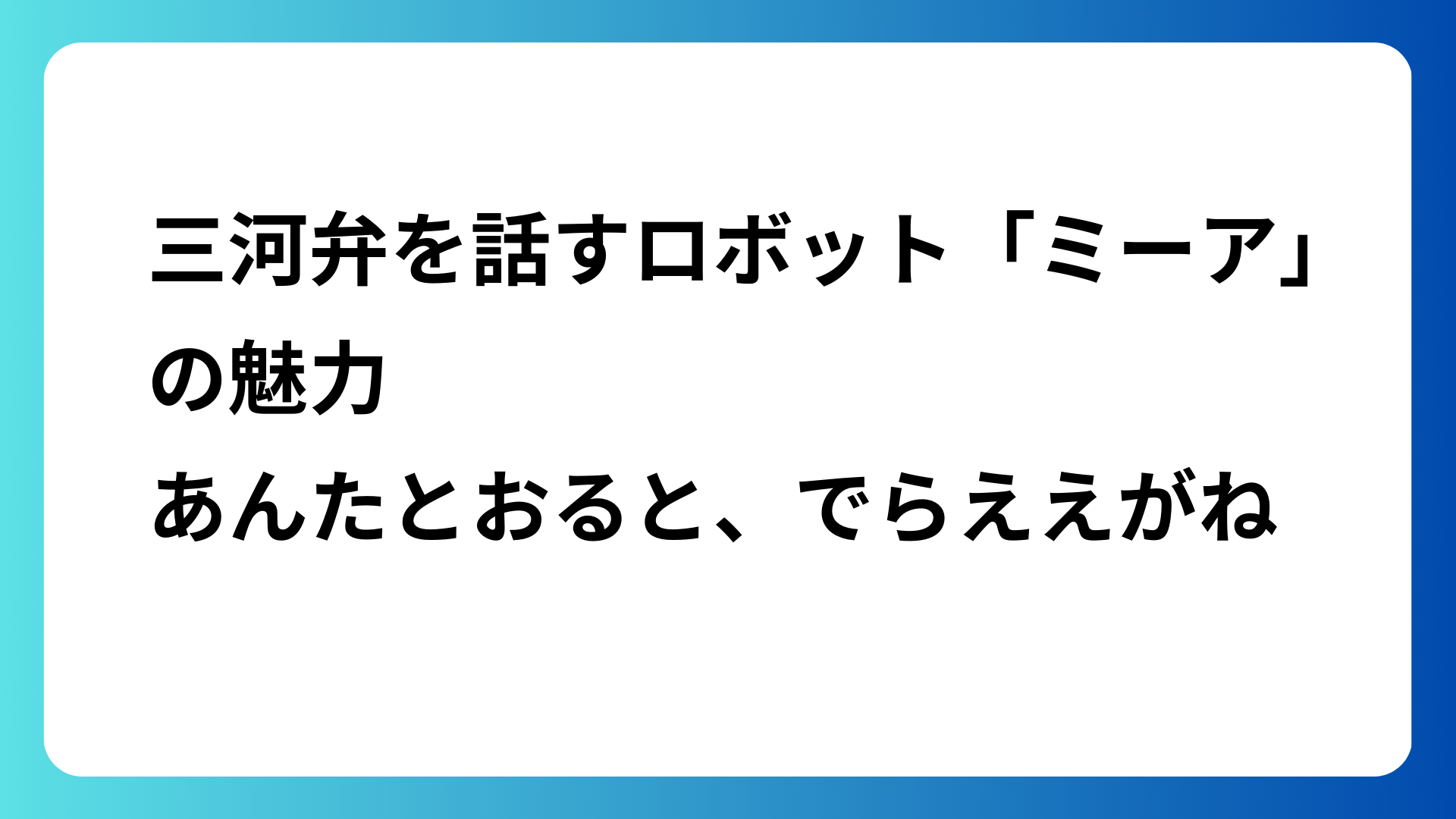
Mia Can Speak First
One important point is that Mia is not only a device waiting for commands.
A robot that speaks first can lower the barrier to conversation. For someone who does not naturally start talking to a device, a small prompt such as "Good morning" or "How was your day?" can make interaction easier.
Voice Interaction Is Easier Than App Operation
Many older adults are not comfortable using complicated smartphone apps.
Mia's value is that voice interaction can happen without turning every exchange into a screen task. Family members may still help with setup, but daily use can feel more natural.
Expressions Make the Exchange Feel More Responsive
Mia's cat-like face and changing expressions help create a sense of response.
The goal is not to make the robot human. The goal is to make speech feel acknowledged, so the user feels that speaking out loud has a response.
It Can Be Present During Quiet Hours
Evening and nighttime can feel lonely or anxious for some older adults. A small familiar voice in the room may provide reassurance, though it should not be treated as emergency support.
How Families Can Use Mia Together With Care
Fill the Gaps Between Family Calls
If a family member can call only on weekends or a few evenings per week, Mia can help create small voice interactions on the other days.
During family calls, Mia can also become a topic: "Did Mia say anything today?" or "Did you talk to Mia this morning?"
Notice Changes Indirectly
If a parent stops interacting, says they have not used Mia, or reports unusual confusion, that may become a reason for family to check in more carefully.
Mia should not be treated as a diagnostic tool. But conversation routines can sometimes make changes easier to notice.
Support Days Without Day Service
For people who attend day service a few days per week, Mia may help provide small stimulation on home days.
The point is not to replace human care. It is to reduce the number of completely silent days.
A Sample Day With Mia
Morning
Mia says good morning. The older adult responds with a few words. The first spoken words of the day happen naturally.
After Breakfast
Mia shares weather information. This may become a prompt for a short walk or a conversation about the day.
Afternoon
The user hears something on television and says a short comment to Mia. Speaking turns a passing thought into words.
Evening
Mia asks about dinner or the day. The user talks about a family member, a meal, or a memory.
Bedtime
The user says good night. A small ending routine can make the day feel more complete.
Tips for Making Conversation a Habit
Focus on the First Week
New habits are easiest to lose early. Family members can help by asking, "Did you talk with Mia today?" during the first week.
Place Mia Where It Is Seen Every Day
Good locations include the dining table, TV area, bedside shelf, or another place the user already visits daily.
Connect Mia to Family Conversation
If the parent talks about what Mia said, the robot becomes part of family communication rather than a separate gadget.
How Mia Differs From Other Devices
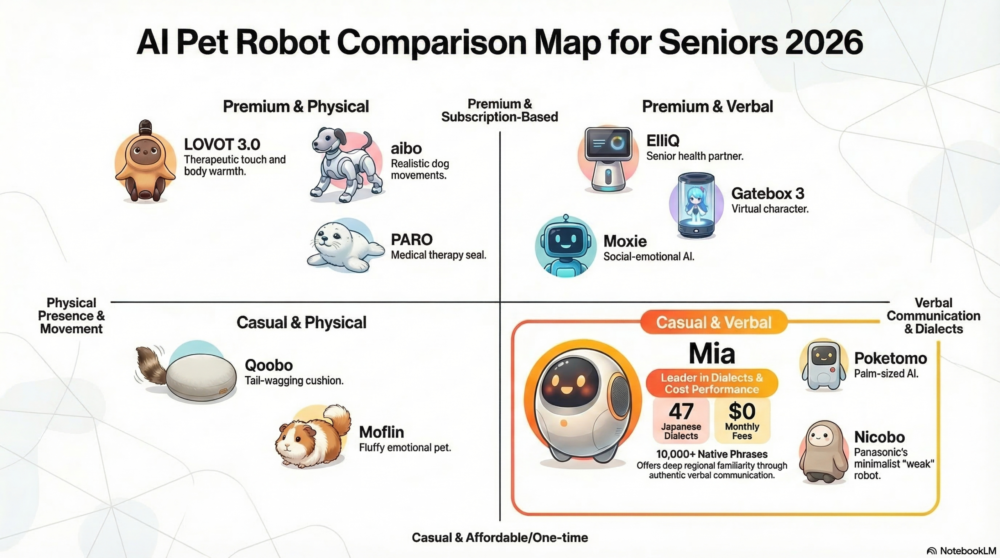
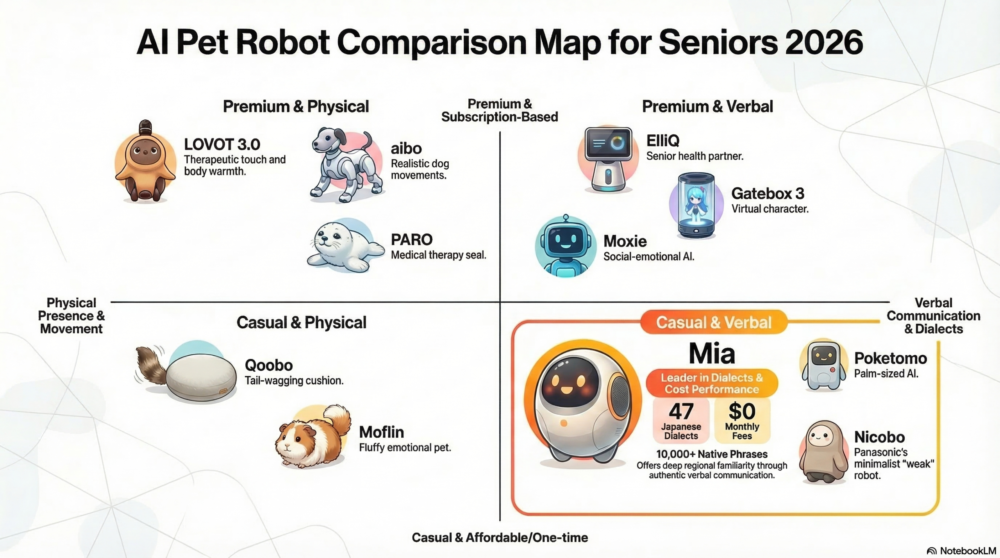
Compared With High-End Companion Robots
High-end companion robots can offer rich physical interaction, but they often require a much higher device price and ongoing service fees.
Mia starts from 9,800 yen including tax and does not require a monthly fee, making it easier to try as a daily voice companion.
Compared With Therapeutic Robots
Therapeutic robots used in care settings can be valuable, but they may not focus on voice conversation.
If the goal is a daily speech habit, a talking robot like Mia has a different role.
Compared With Smart Speakers
Smart speakers are useful, but many require the user to speak first with a command phrase.
Mia's advantage is that it is designed as a small companion, not only as a voice assistant. For older adults who do not naturally use command-based devices, that difference can matter.
FAQ
Can Mia Prevent Dementia?
No. Mia is not a medical device and cannot prevent, diagnose, or treat dementia.
Mia can support daily conversation habits, which may be one helpful part of a broader lifestyle and care plan.
Can People With Dementia Use Mia?
Some people in early or middle stages may still enjoy voice interaction, but suitability depends on the person. Families should introduce it with support and consult professionals when needed.
Is Mia a Medical Device?
No. Mia is a consumer companion robot, not a medical device.
Is Setup Difficult?
Daily use is designed around voice interaction, but initial setup may require family help, especially for Wi-Fi or app-linked features.
Does Mia Have a Monthly Fee?
No. Mia does not require a monthly fee.
Mia Price and Features
Mia is a cat-shaped AI robot developed by EarBrain.
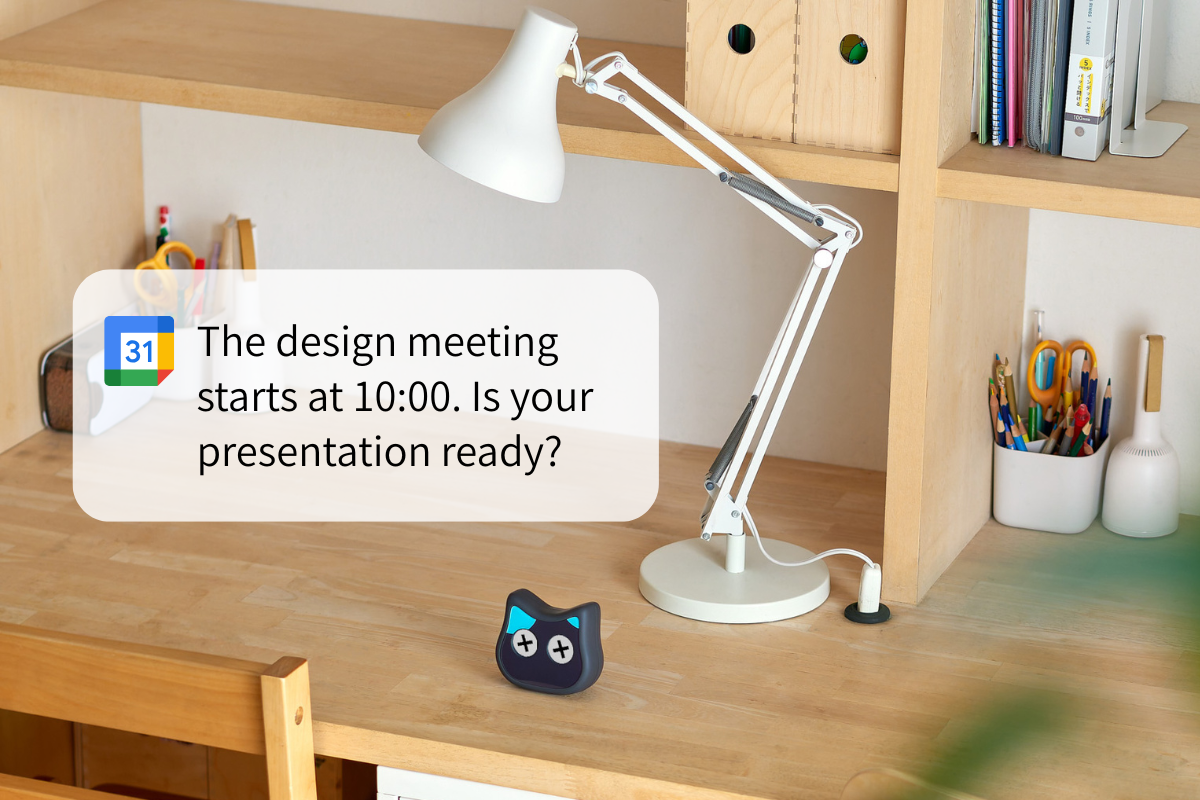
It starts from 9,800 yen including tax and is designed for voice interaction, expressions, family messages, Google Calendar reminders, weather updates, and everyday companionship.
Summary
Daily conversation is a simple but meaningful habit for older adults. Modern life can make that habit harder to maintain, especially for people who live alone or have family far away.
Mia is not a replacement for medicine, care, or family contact. But as a small robot that speaks and responds, it can help create a voice routine at home.
For families worried about a parent living alone, Mia may be worth considering as a low-cost, no-monthly-fee companion that helps keep everyday conversation alive.
👀 You may also like:
👉 2026 Guide: AI Pet Robots for Elderly Loneliness – A Comparison of 10 Companion Robots
👉 2026 Edition: 9 Recommended Pet Robots Under $150 – Cheap, Cute, and Healing Models
👉 Monthly and Maintenance Costs of Pet Robots: Moflin, LOVOT, Mia, and More
👉 Mia – Your Chatty AI Cat Companion Robot with 100+ Expressions