What Is No Isolation?
No Isolation is a company founded in Oslo, Norway. As the name suggests, its goal is to reduce isolation by building devices that keep people connected.

It is best known for two products:
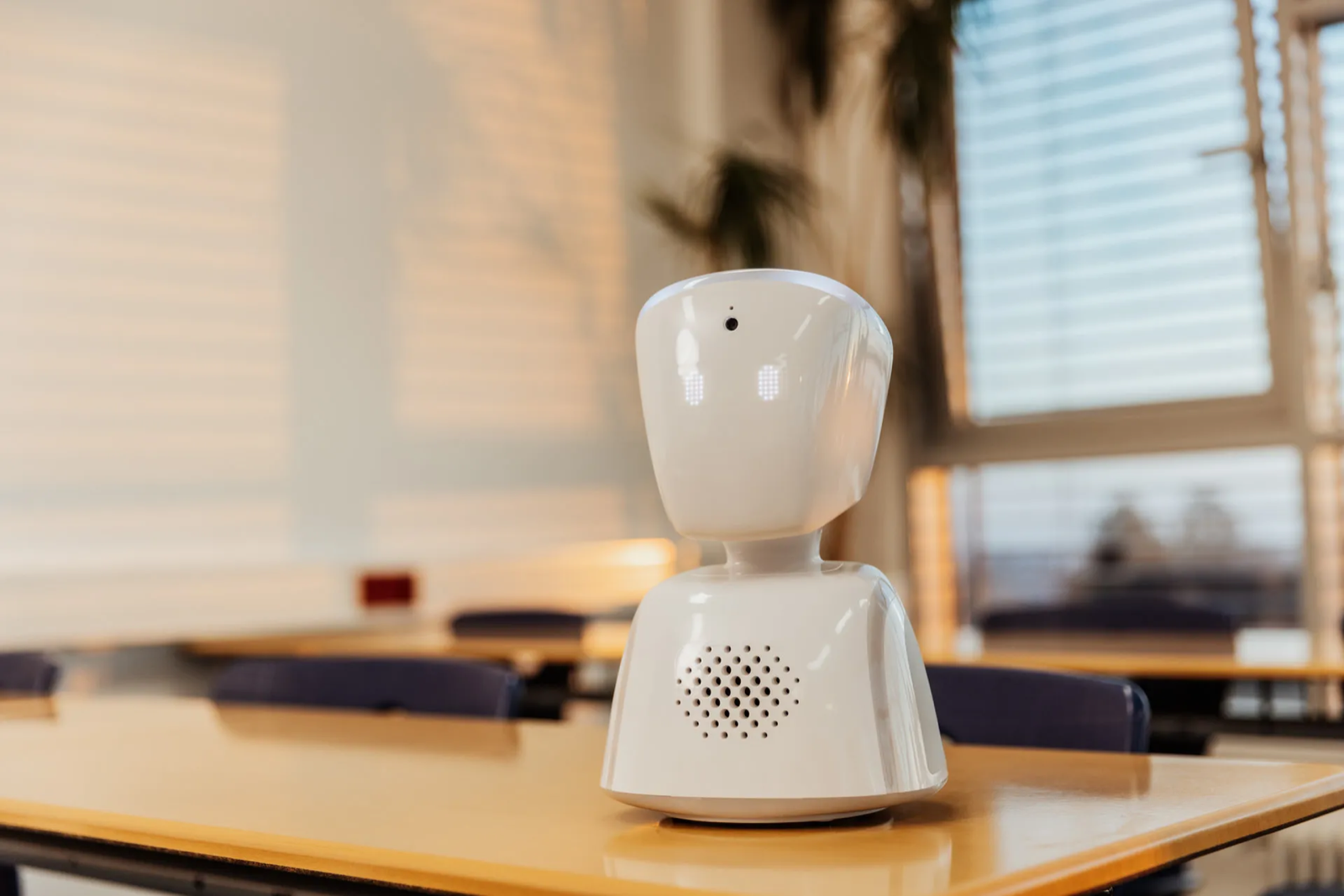
- AV1: a telepresence robot that sits in a classroom so a child who cannot attend school can still take part
- Komp: a one-button screen that lets older adults with no digital experience receive photos, messages, and video calls from family
Neither is a conversational AI companion. Both are built to connect people with other people. That is the main difference from companion robots such as ElliQ, LOVOT, or Mia, where the robot itself is the one you talk to.
Key Points
At a Glance
- A Norwegian company building devices that reduce isolation and loneliness
- AV1 is a telepresence robot for children who cannot attend school
- Komp is a one-button screen that connects seniors with their families
- According to No Isolation, more than 5,000 AV1 units are in use in Europe, across 20 countries and 2,500+ schools
- As of November 2026, no official sales in Japan could be confirmed
- Both require a subscription that includes mobile data
Strengths
- Each product targets a specific kind of isolation, so the purpose is clear
- AV1 does not show the child's face in the classroom, which lowers the pressure on the child
- Komp needs almost no action from the senior, so it works even for people who cannot learn new devices
- Built-in 4G means it does not depend on Wi-Fi setup
- Invite-only networks keep unknown contacts out
Concerns
- No Japanese sales, Japanese app, or Japanese support could be confirmed
- AV1 is sold to schools and municipalities, not as a casual consumer purchase
- Both require ongoing subscriptions, and key features stop without one
- Neither device is a conversation partner by itself. They only work if family members or classmates are on the other side
Quick Verdict
No Isolation's products do not try to replace human company with a robot. They try to keep human connections from breaking.
AV1 sits at the child's desk while the child joins from home or hospital through a tablet app. Komp sits in a senior's home: photos and messages sent from the family app simply appear, and video calls connect without the senior pressing anything.
Both ideas are focused and have been well received in European schools and care settings. But they are not sold in Japan and require monthly fees, so they are not realistic options for Japanese households today.
If you want daily voice prompts and conversation for someone who spends a lot of time alone, a robot that speaks on its own, such as Mia, is easier to introduce.
AV1: A Stand-In for Children Who Cannot Go to School
What AV1 Does
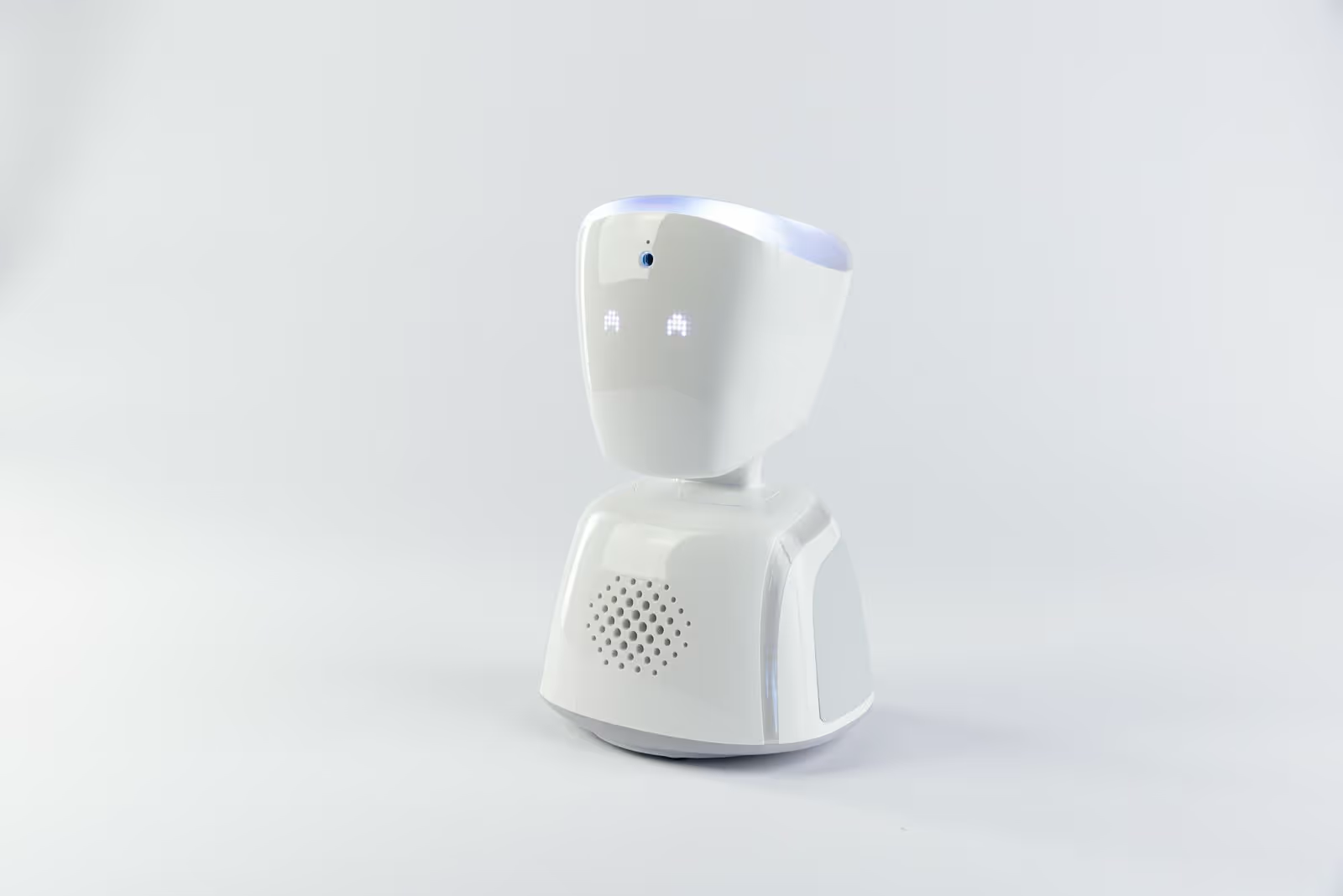
AV1 is a small white robot with just a body and a head. It is placed at the child's seat in the classroom, and the child controls it with a smartphone or tablet app from home or hospital.
- See and hear the classroom
- Speak to the teacher and classmates in their own voice
- Turn the head to look at the board or whoever is speaking
- Use a light on the head to signal a raised hand
- Whisper to nearby friends only
No Isolation stresses that AV1 is not only for lessons but also for breaks and conversations with friends. The goal is to protect the feeling of still belonging to the class, not just to keep up with schoolwork.
The Child's Face Is Not Shown
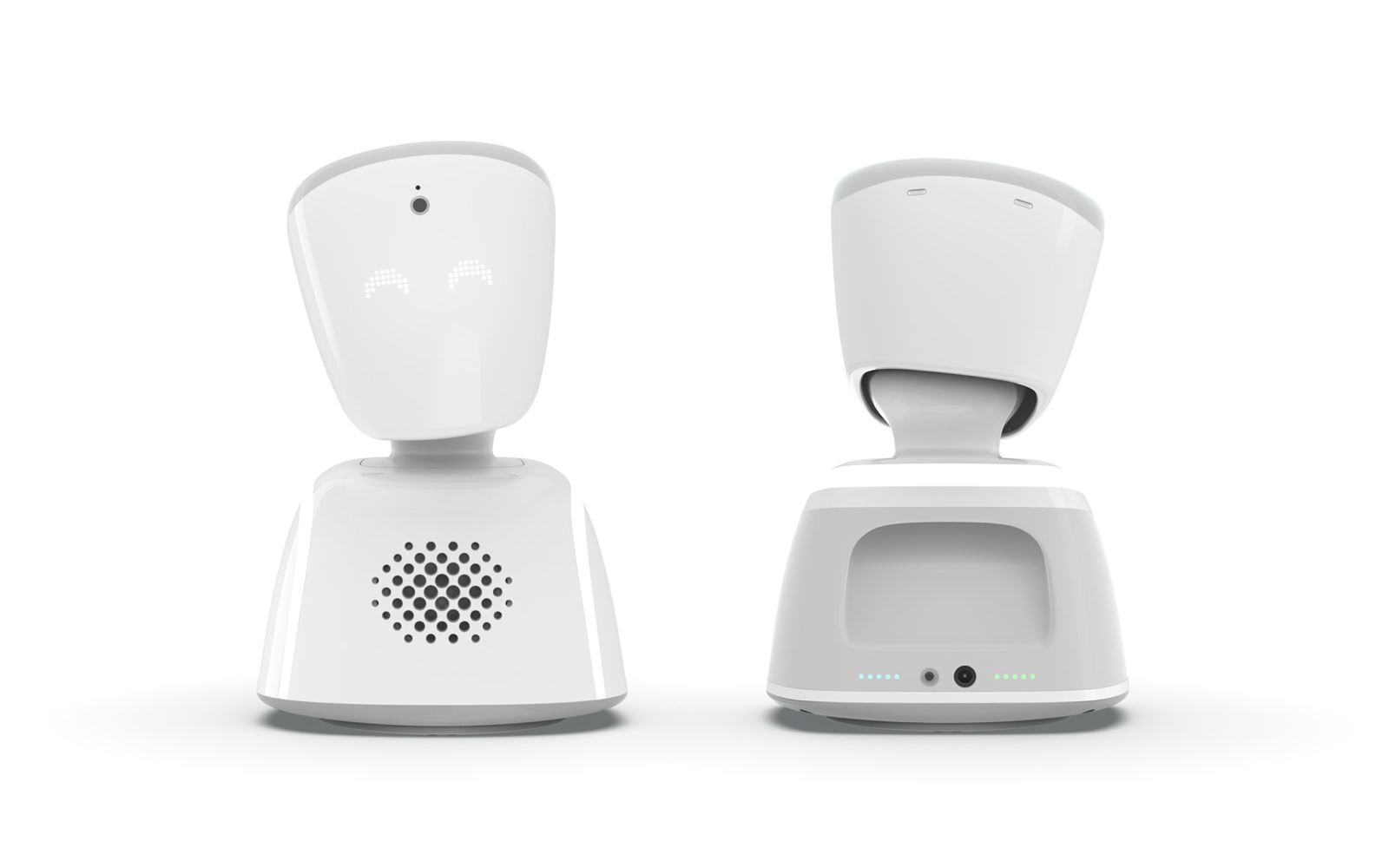
The child sees and hears the classroom, and the class hears the child's voice, but the child's face is not displayed. Children who are unwell, anxious, or whose appearance has changed during treatment can join without being on camera. That is a major difference from video-meeting apps.
Adoption
No Isolation says AV1 has been used by more than 15,000 children, with over 5,000 units in Europe across 20 countries and more than 2,500 schools. Case studies include UK councils, Bremen in Germany, and Swedish municipalities.
Recently the company has also focused on children who cannot attend because of school anxiety (often called EBSA in the UK), publishing articles on chronic illness and school anxiety in September 2026.
AV1 Pricing
AV1 pricing is not listed on the official website and is quoted on request. Older press coverage cited rental at around 179 euros per month and outright purchase at around 5,000 euros, but these figures are several years old.
No Isolation's help pages state that every AV1 needs an active subscription to work, including 4G or 3G data in the country of purchase. It is realistic to think of AV1 as a product contracted by schools or local authorities.
Komp: One Button to Stay in Touch with Family
What Komp Does
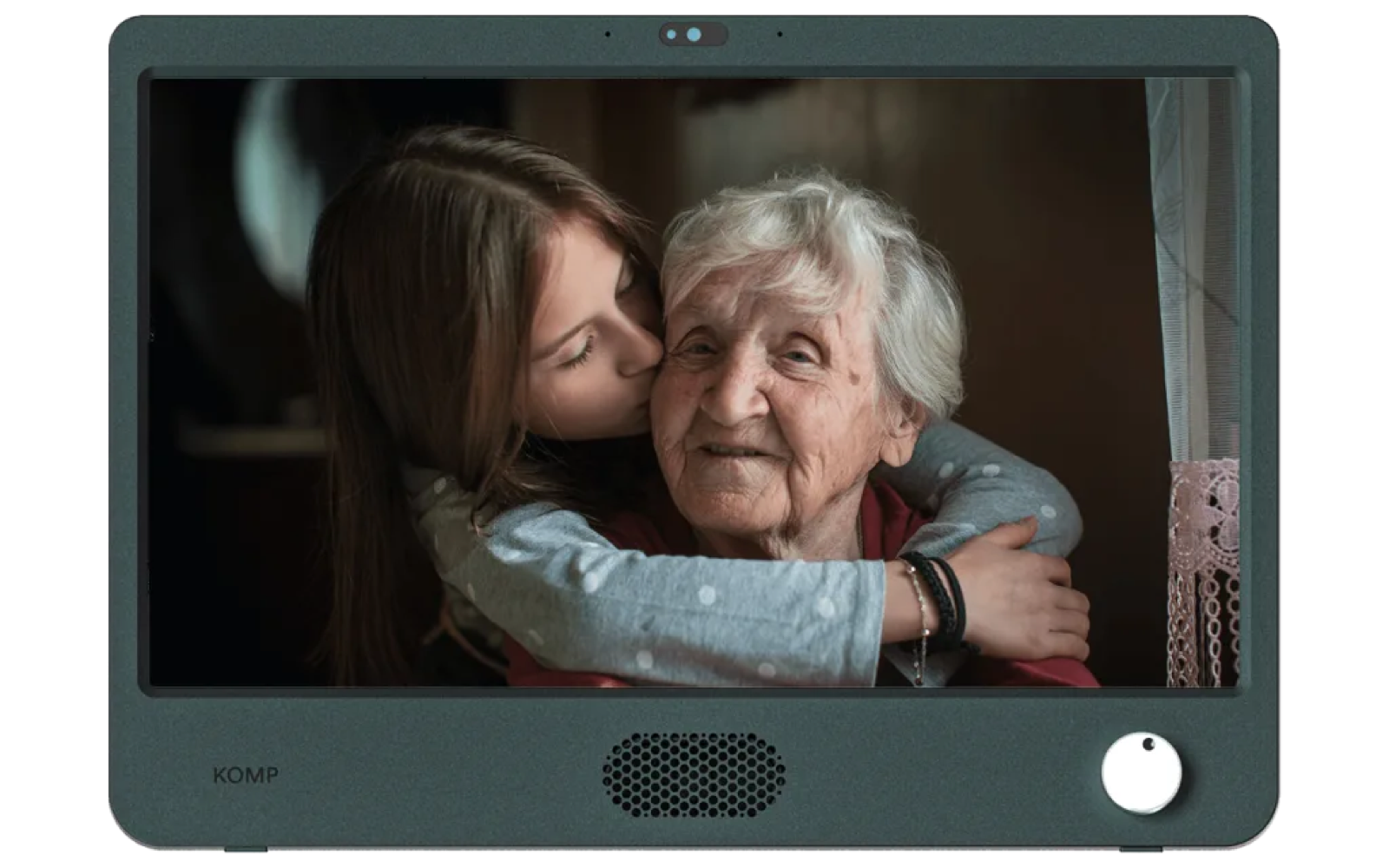
Komp is a screen device for seniors who have never used digital devices.
- Photos and messages sent from the family's smartphone app appear on screen
- Video calls from family connect automatically after a 10-second countdown
- The only control is a single knob for power and volume
- No usernames or passwords
- Only invited family members and friends can connect
- Built-in 4G works without Wi-Fi within the EU
- Scheduled messages, a clock, weather, and a night mode
The Value of Doing Nothing
Common problems with video calls for seniors include missing the call, pressing the wrong button, or the app changing after an update. Komp avoids these by removing almost every action on the senior's side. Setup and management happen in the family app.
Automatic answering only works when the senior agrees to it. Some people dislike a family member's face suddenly appearing on screen, so families should agree on calling hours and who can connect.
Komp Pricing
As of November 2026, the official Komp website lists the device with a family subscription at 7,995 Norwegian kroner, and the subscription at 19 pounds per month with the first three months free. A UK feature article cited 599 pounds for the device and 24 pounds per month, so prices vary by region and time.
The official Komp website is currently operated by Kompany AS in Oslo. Komp was originally developed by No Isolation and is still linked to the No Isolation name on review sites.
Komp is not officially sold in Japan, and its 4G service assumes use within the EU.
How No Isolation Compares with Similar Robots
ElliQ
ElliQ, from Intuition Robotics, is a companion robot for older adults that starts conversations and encourages healthy routines.

Komp never starts a conversation. Its job is to deliver video calls and photos from family. ElliQ is the conversation partner itself, while Komp is a window for talking to family.
PARO
PARO is a seal-shaped therapy robot designed around touch and comfort. PARO supports the relationship between a person and the robot, while No Isolation supports relationships between a person and their family or community.

Comparison Table
| Comparison | AV1 | Komp | ElliQ | Mia |
|---|---|---|---|---|
| Main use | Classroom participation for children who cannot attend | Video calls and photos between seniors and family | Conversation and healthy routines for seniors | Daily voice prompts and conversation |
| Who you talk to | Teacher and classmates | Family | The robot | The robot |
| Operation | Child controls via app | Almost none (auto-answer) | Voice and screen | Voice |
| Connectivity | Built-in 4G | Built-in 4G (EU) | Wi-Fi | Wi-Fi |
| Price | Quote, subscription required | Device plus monthly fee | Device plus monthly fee (US) | From 9,800 yen incl. tax |
| Sold in Japan | Not confirmed | No | No | Yes |
| Japanese | Not confirmed | No | No | Yes, 47 dialects |
Things to Check Before Adopting
1. Is Someone on the Other Side?
Both products only help if someone is there to connect with. AV1 needs a welcoming school, and Komp needs family members who actually send photos and call. If family contact fades, Komp becomes little more than a photo frame.
2. Monthly Fees
Both require subscriptions that include data. Compare total cost over the years you expect to use them, not just the device price.
3. Consent and Privacy
A camera robot in a classroom and auto-answering video calls both depend on the understanding of the user and the people around them.
4. Availability in Japan
As of November 2026, neither AV1 nor Komp is officially sold in Japan, and Japanese apps and support are unlikely.
No Isolation vs. Mia
Both aim to support people who spend a lot of time alone, but they take opposite approaches. No Isolation connects people with family and classmates through a device. Mia is a robot that speaks on its own and brings conversation into everyday life.
Mia is a cat-shaped AI companion robot that starts at 9,800 yen including tax, and its basic features work without a monthly fee. It supports voice conversation, facial expressions, voice prompts in 47 Japanese dialects, schedule reminders through Google Calendar integration, weather information, and 15 English characters.
You can also combine the two roles: video calls with family on a phone or tablet, and daily voice prompts and conversation with Mia.
FAQ
Can I buy No Isolation products in Japan?
As of November 2026, no official sales of AV1 or Komp in Japan could be confirmed, and there is no Japanese app or support.
Can individuals buy AV1?
AV1 is mainly adopted by schools, local authorities, and hospital schools. Pricing is on request and a subscription that includes data is required.
Is Komp a talking robot?
No. Komp is a device that makes it easy for seniors to receive photos, messages, and video calls from family. It does not hold conversations itself.
How is Komp different from a tablet?
Komp removes almost all actions on the senior's side. Calls connect automatically, photos appear on their own, and there are no logins or app updates. In exchange, you cannot freely install apps.
Summary
No Isolation is a Norwegian company known for AV1, a telepresence robot for children who cannot attend school, and Komp, a one-button screen that connects seniors with family. Both are tools for keeping human connections alive rather than robots that act as companions themselves.
They are not sold in Japan and require monthly fees. If you want to bring daily voice prompts and conversation to someone who spends a lot of time alone, Mia is easy to start with at 9,800 yen including tax, with support for 47 Japanese dialects.
You may also like:

👀 You may also like:
👉 2026 Guide: AI Pet Robots for Elderly Loneliness – A Comparison of 10 Companion Robots
👉 2026 Edition: 9 Recommended Pet Robots Under $150 – Cheap, Cute, and Healing Models
👉 Monthly and Maintenance Costs of Pet Robots: Moflin, LOVOT, Mia, and More
👉 Mia – Your Chatty AI Cat Companion Robot with 100+ Expressions