What Is Microduck?
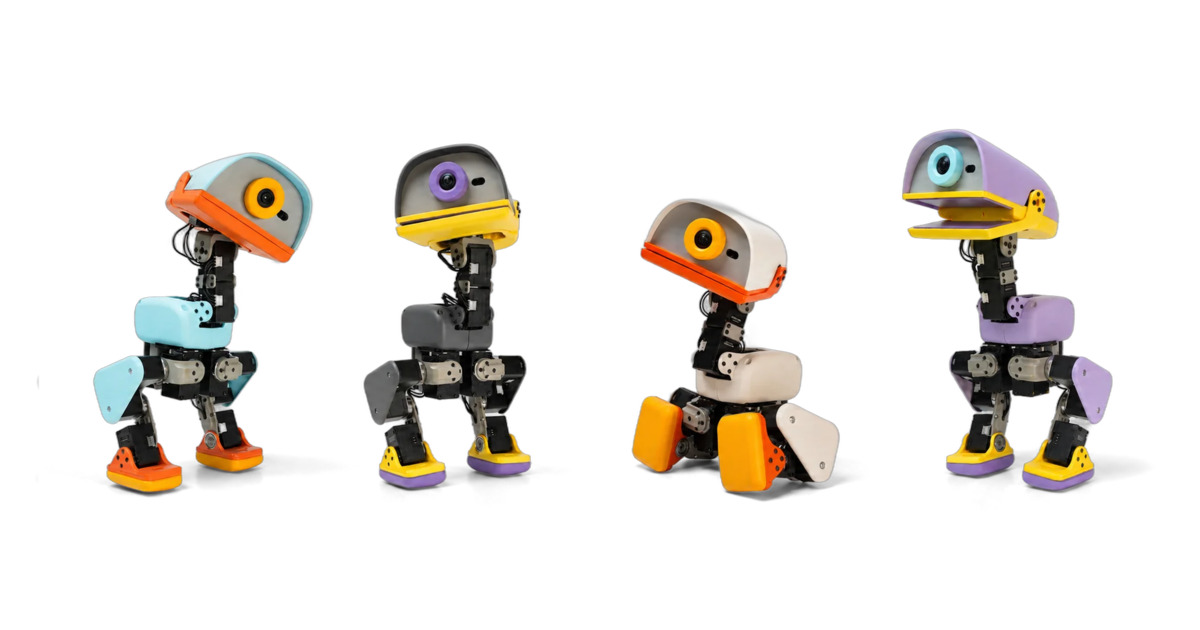
Microduck is a small biped robot from Pollen Robotics, the robotics team under Hugging Face. It is about 25 cm tall, looks like a compact duck-like robot, and is designed for more than simple remote-control play. Its real point is giving developers and robotics learners a small open-source platform for movement learning, reinforcement learning, and sim-to-real experiments.
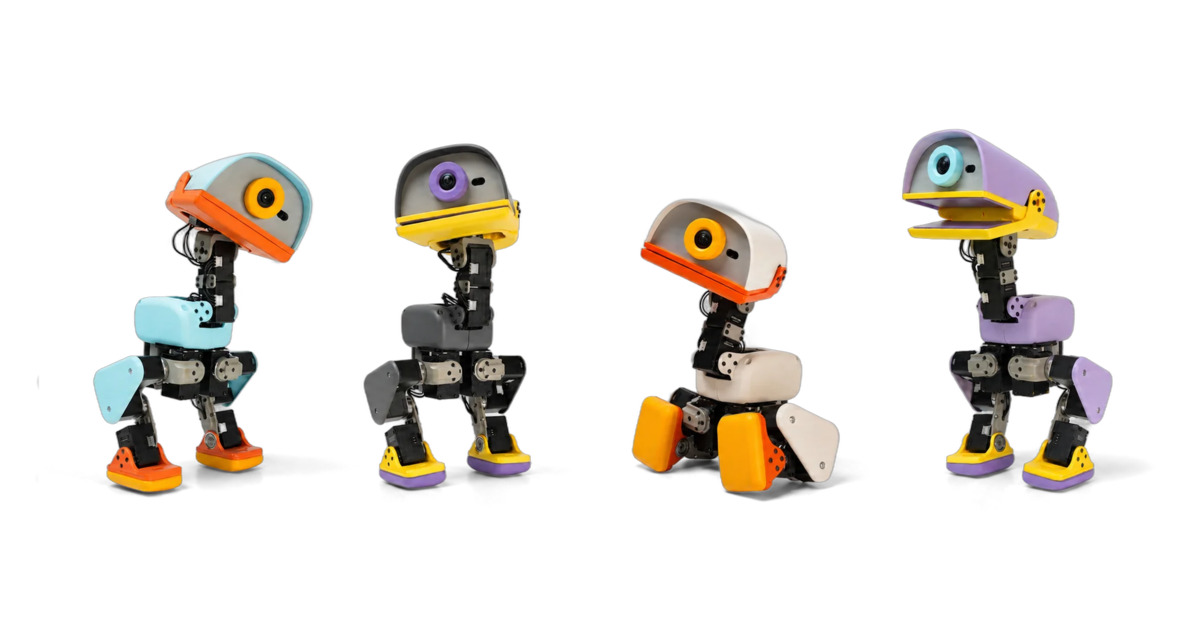
Image source: Pollen Robotics official Microduck press kit
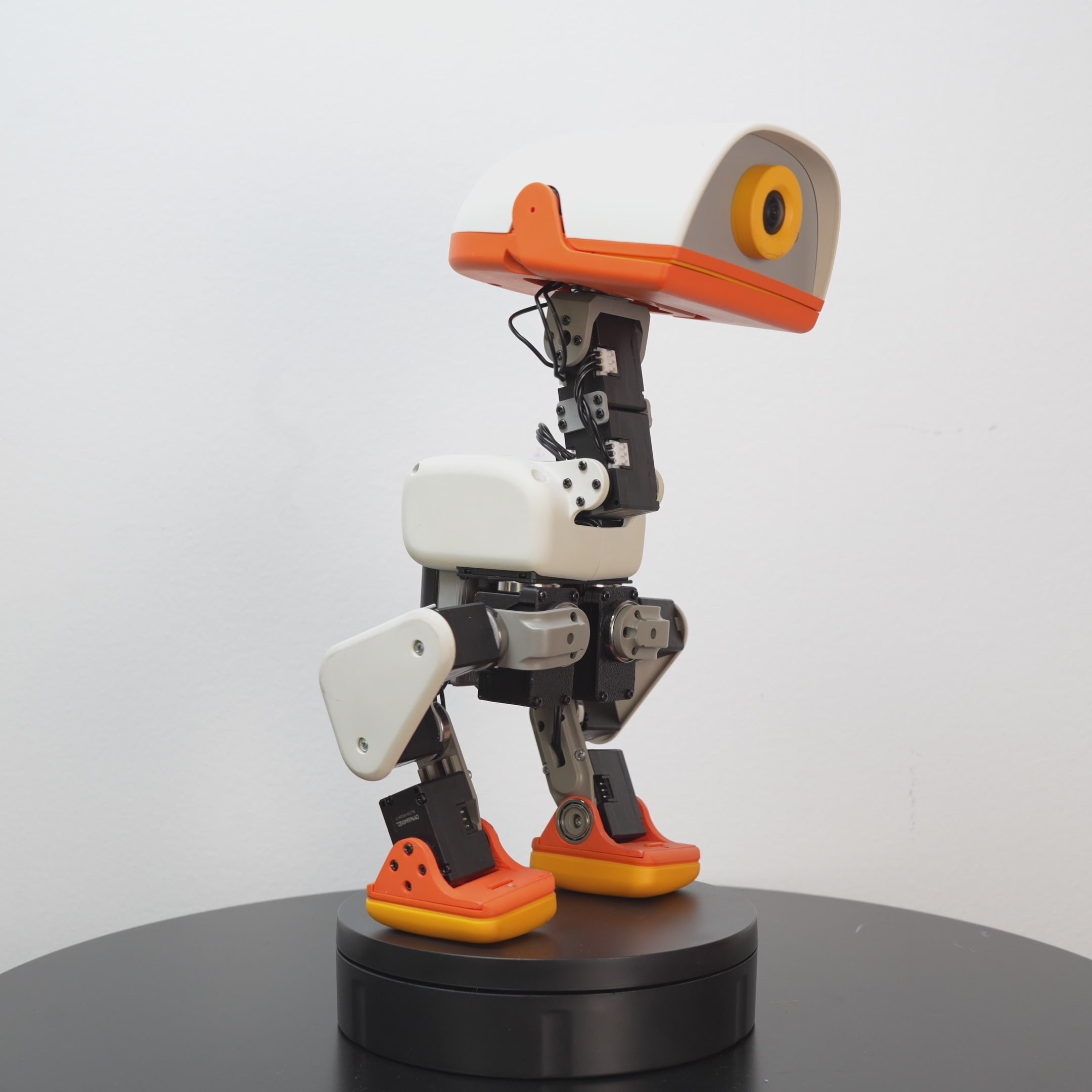
According to Pollen Robotics, Microduck includes 15 motors, a camera, an 8×8 ToF LiDAR, two IMUs, microphones, a speaker, NFC, Wi-Fi, Bluetooth, and a beak-like gripper. The company shows it walking, crouching, sitting, grabbing small objects, recovering after falls, and moving in playful skating-like motions.
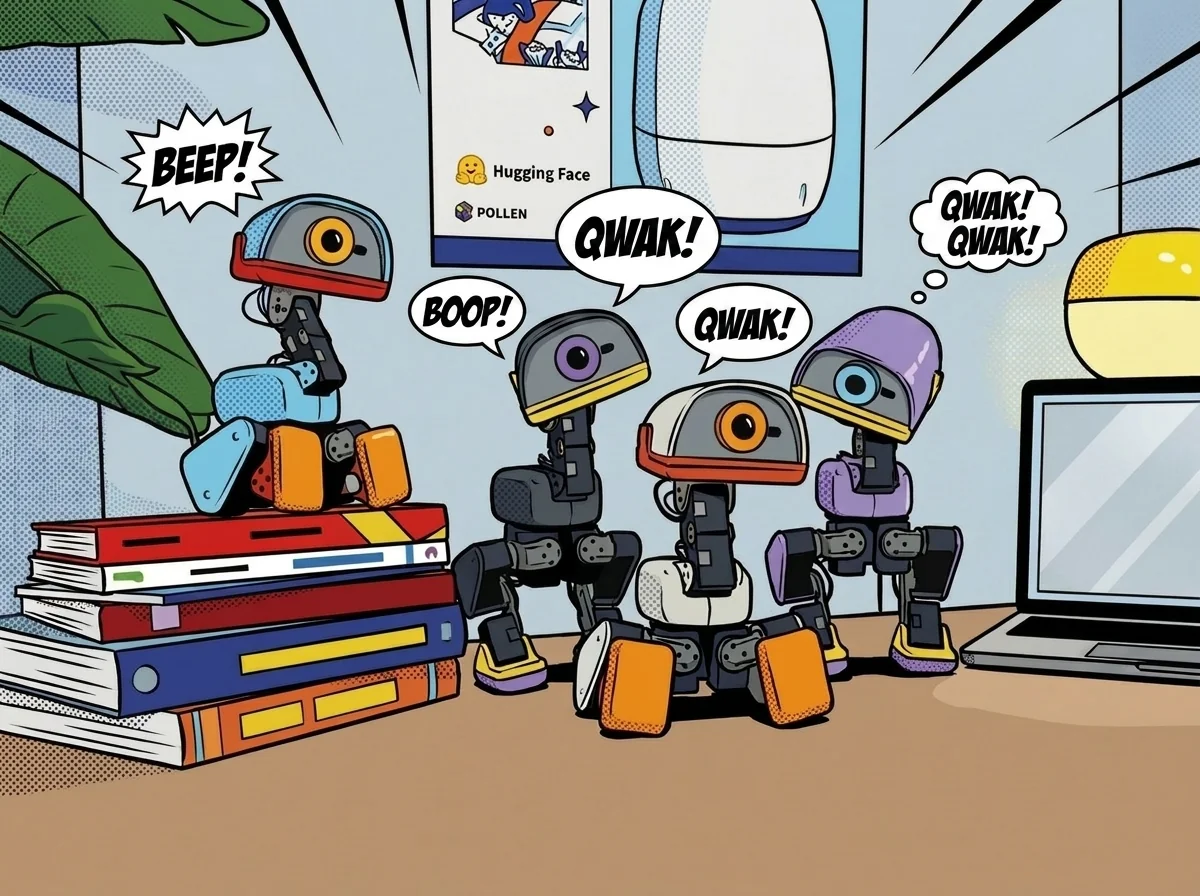
The important framing is that Microduck is not just a finished toy. Its SDK, simulation environment, and reinforcement learning stack are published on GitHub, so developers can study how it works and build new behaviors.
Quick Summary
What is Microduck?
- A compact open-source biped robot from Pollen Robotics under Hugging Face
- About 25 cm tall and roughly 780-800 g
- Equipped with 15 motors, a camera, 8×8 ToF LiDAR, two IMUs, microphones, a speaker, NFC, Wi-Fi, and Bluetooth
- Ships with a gamepad for out-of-the-box control
- Built around an SDK, simulation, reinforcement learning, and sim-to-real workflows
- As of August 29, 2026, it is a pre-order product, with first deliveries targeted before Christmas 2026
What's good
- A rare low-cost entry point for biped robotics and reinforcement learning
- Strong open-source alignment through Hugging Face and Pollen Robotics
- Gamepad control makes the robot approachable before writing code
- Public GitHub resources make it easier to inspect before buying
- Small enough for a desk, home lab, classroom, or robotics club setting
What to watch out for
- It is still a pre-order product, so long-term user reviews are not available yet
- Walking stability, durability, support quality, spare parts, and repairability still need real-world confirmation
- Buyers in Japan should check shipping, tax, warranty, radio compliance, and support language
- It looks friendly, but it is closer to a developer robot than a child-focused toy
- Battery life is listed around one hour, so it is not a always-on companion robot
Who it may suit
- Developers who want to learn reinforcement learning, robot control, and sim-to-real deployment
- People following Hugging Face, LeRobot, and open robotics
- Robotics learners who want a small physical biped robot rather than only a simulator
- Makers who enjoy tuning behaviors and experimenting with real hardware
- Users who value building and testing more than polished companion features
Bottom Line
Microduck is interesting because it makes physical AI feel more accessible. It packages biped walking, fall recovery, a gripping beak, gamepad control, sensors, and an open-source learning stack into a 25 cm robot.
The official pre-order price is listed as $399 before tax and shipping, which is about 63,600 yen using the August 27, 2026 reference estimate of roughly 159.4 yen per dollar. The Pollen Robotics store also shows €340.00 EUR, about 63,100 yen using roughly 185.6 yen per euro. Those numbers put Microduck far below most serious legged robots, while still giving developers real hardware to experiment with.
That said, Microduck should not be treated as a Japanese conversational pet robot, a family monitoring device, or a low-maintenance toy. Its core value is movement learning, robotics development, and open-source experimentation.
Price, Availability, and Buying Notes
Price
The Pollen Robotics store lists Microduck at €340.00 EUR. Using the European Central Bank reference rate from August 27, 2026, roughly 185.6 yen per euro, that is about 63,100 yen before any additional fees.
The official Microduck page and launch materials also describe the pre-order price as $399 before tax and shipping. Using the same date's derived estimate of roughly 159.4 yen per dollar, that is about 63,600 yen.
These yen figures are only rough references. The actual amount paid from Japan can change with card exchange rates, payment fees, shipping, import duties, and taxes.
Shipping timing
As of August 29, 2026, the official store says the first deliveries are targeted before Christmas 2026. That should be read as a target, not a guaranteed arrival date.
Pre-order hardware can slip because of manufacturing, certification, logistics, and customs. If someone wants Microduck specifically as a Christmas gift, it is safer to treat the timing as uncertain.
Sales regions
The store lists Japan among the initial regions, alongside the US, Canada, EU, UK, Norway, Switzerland, and South Korea. That is a positive sign for Japanese buyers.
Still, buyers in Japan should check radio compliance, warranty handling, return policy, replacement parts, and whether support is available in a language they can use comfortably.
What Microduck Can Do
Gamepad control
Microduck ships with a gamepad, so users can start by driving built-in behaviors before writing code.
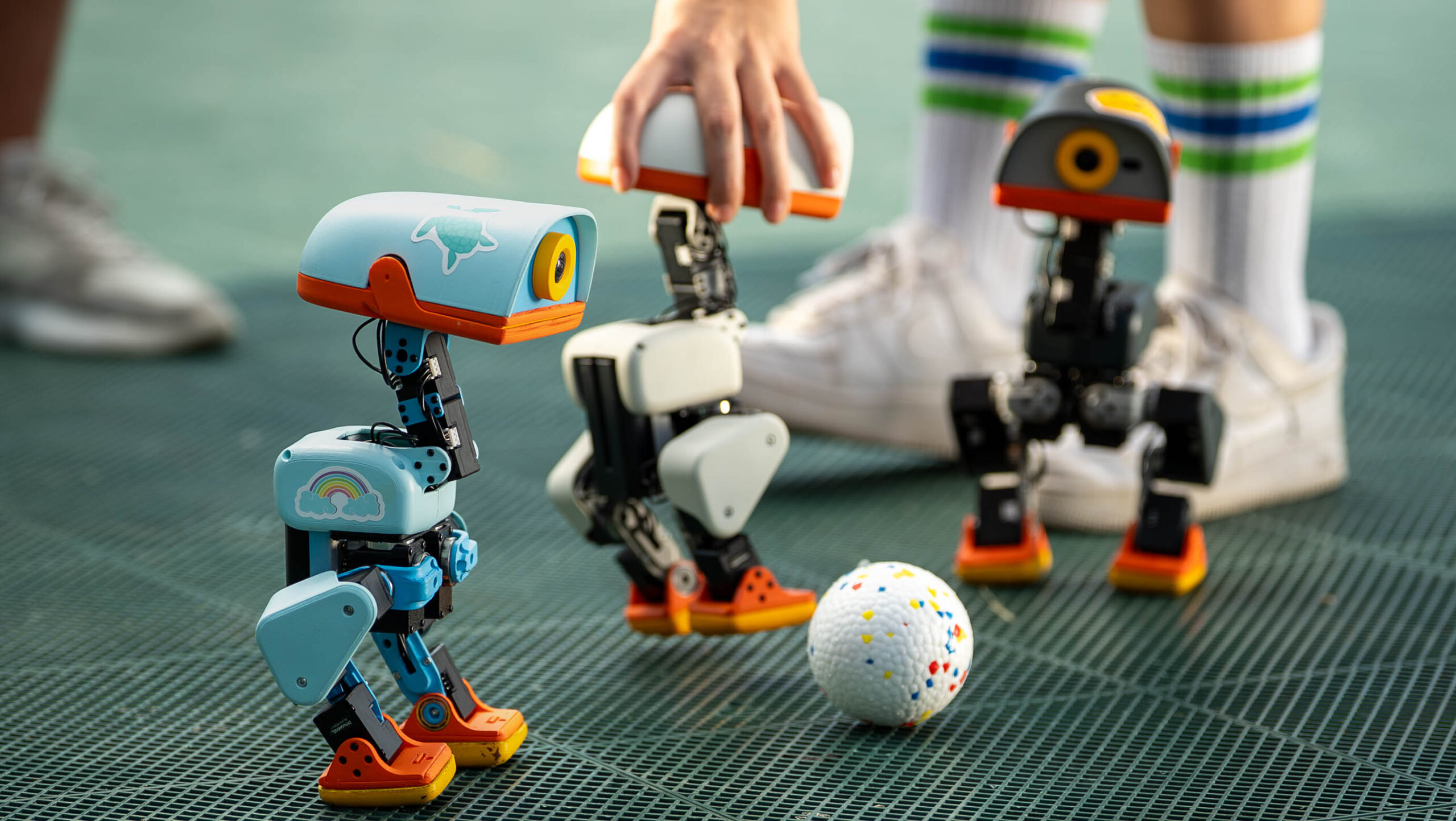
Image source: Pollen Robotics official Microduck press kit
That matters because biped robotics is easier to understand once you see the robot deal with balance, friction, floor surfaces, and falls in the real world.
A gripping beak
Microduck is not a humanoid with arms, but its beak acts like a small gripper. Pollen Robotics shows it grabbing and carrying lightweight objects.
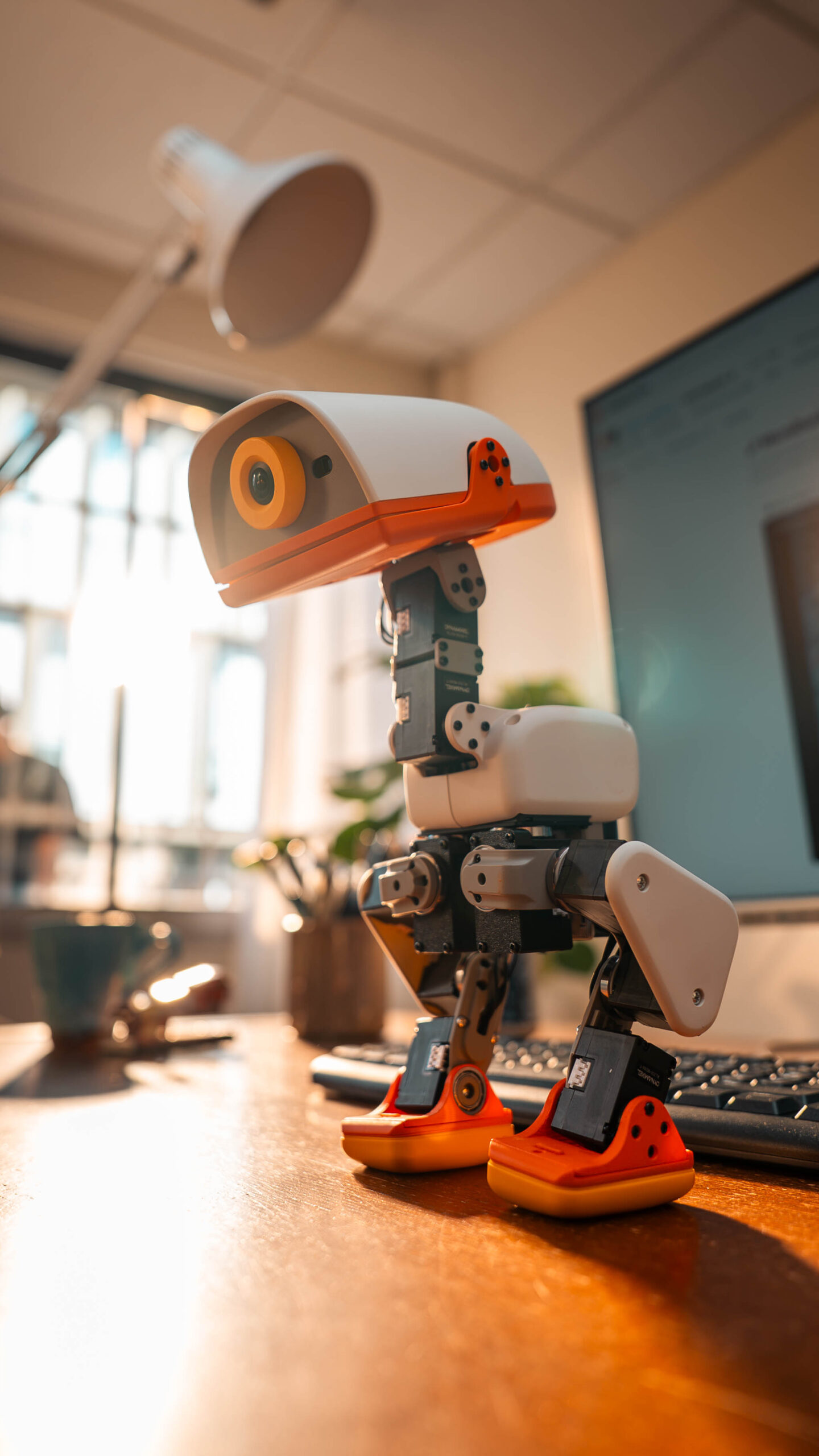
Image source: Pollen Robotics official Microduck press kit
This does not make it a home chore robot. It is better understood as a small physical AI platform where walking, approaching, gripping, and recovering can be studied at desk scale.
Fall recovery
Falls are part of biped robotics. Microduck is shown recovering from common fall positions, which is important for experimentation because real floors, battery levels, timing, and foot friction can all change the outcome.
Reinforcement learning and sim-to-real
This is the most important part of Microduck. The official materials describe a workflow with MuJoCo simulation, PPO reinforcement learning, ONNX export, and deployment to the real robot.

Image source: Pollen Robotics official Microduck press kit
In plain terms, Microduck is meant to let people train a movement policy in simulation, then bring that behavior onto real hardware. That is a much deeper idea than simply choosing canned motions from an app.
Open-source learning
The official GitHub repository explains the software architecture, including daemons on a Rockchip RK3566 system and a 50 Hz control loop for 15 servos.
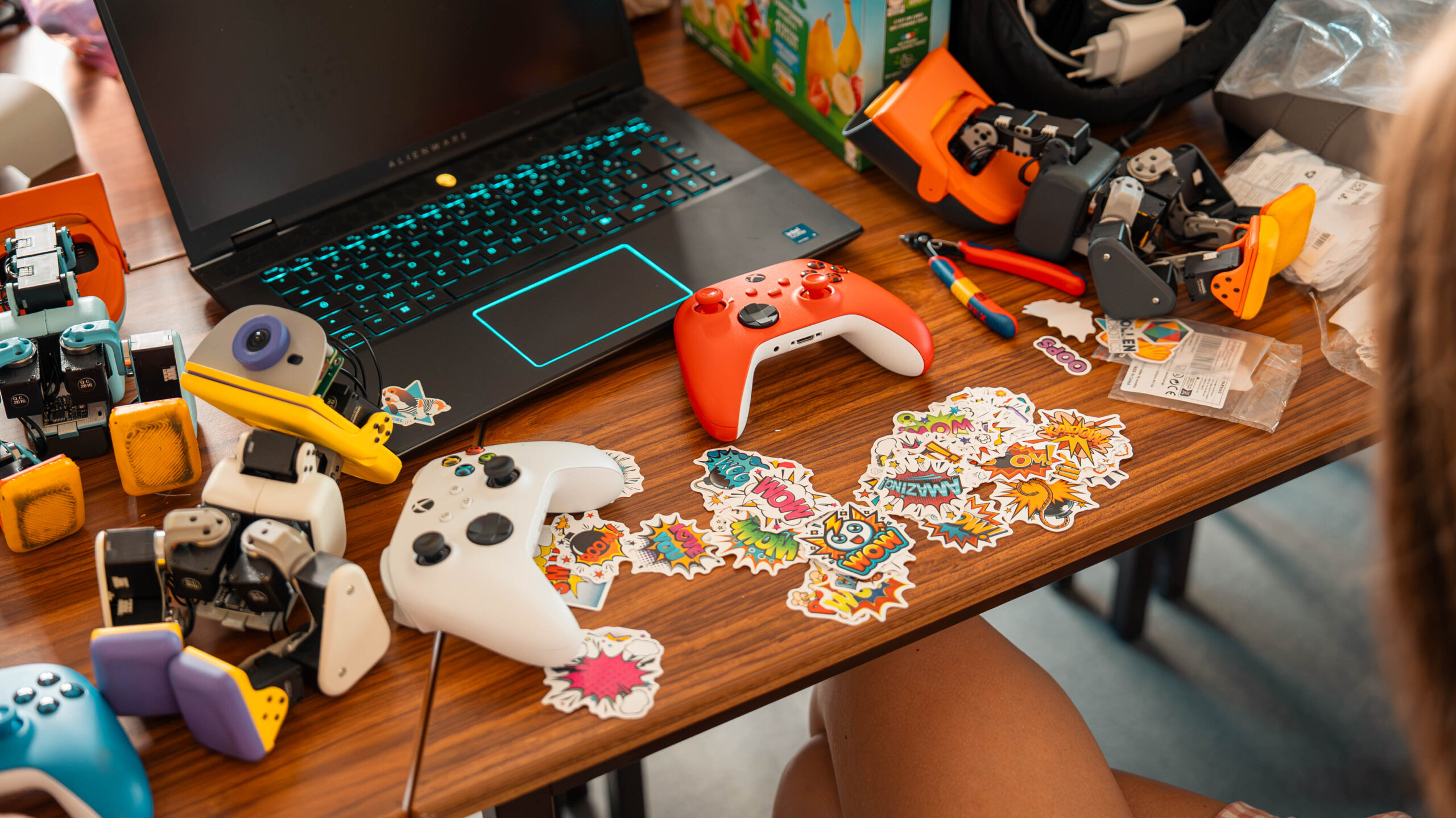
Image source: Pollen Robotics official Microduck press kit
Even before buying, the repository gives developers a way to inspect how the robot is built and how much of the stack is likely to be accessible.
Buying Risks to Check First
It is still a pre-order product
Microduck was announced in August 2026. Official videos and press photos are useful, but broad user reviews, long-term durability reports, support experiences, and repair stories are not available yet.
Legged robots can look smooth in demo clips but behave differently on a home's actual floor. Early buyers should be comfortable with some first-batch uncertainty.
It is not mainly a children's toy
Microduck looks cute, but it has 15 moving motors and a removable battery. It should not be treated like a soft plush toy.
For use with children, check the target age, pinch points, charging safety, floor space, fall behavior, and whether an adult can supervise operation.
It is not a Japanese chat companion
Microduck includes microphones and a speaker, but its current positioning is movement learning and robot control. If the goal is Japanese conversation, daily voice prompts, or emotional companionship, a robot designed around speech and daily interaction will be a better fit.
Battery life is around one hour
The store lists about one hour of use with a removable NP-F550 battery. That is reasonable for a moving robot, but it is short if someone imagines an always-present pet robot.
Specs
| Item | Details |
|---|---|
| Product | Microduck |
| Maker | Pollen Robotics |
| Affiliation | Robotics team under Hugging Face |
| Price | €340.00 EUR, about 63,100 yen; also listed as $399 before tax and shipping, about 63,600 yen. Yen estimates use August 27, 2026 reference rates |
| Sales status | Pre-order as of August 29, 2026 |
| Shipping target | First deliveries targeted before Christmas 2026 |
| Height | About 25 cm |
| Weight | Roughly 780-800 g |
| Motors | 15 |
| Sensors | Camera, 8×8 ToF LiDAR, two IMUs, microphones, NFC, and more |
| Connectivity | Wi-Fi and Bluetooth |
| Battery | Removable NP-F550, about one hour |
| Control | Gamepad included |
| Developer stack | SDK, simulation, reinforcement learning, GitHub repository |
| Main use | Biped walking, movement learning, reinforcement learning, sim-to-real robotics education |
| Japan availability | Japan is listed among the store's supported regions |
Microduck vs. Mia
Microduck and Mia are both small robots that can sit in a home, but their purposes are very different.
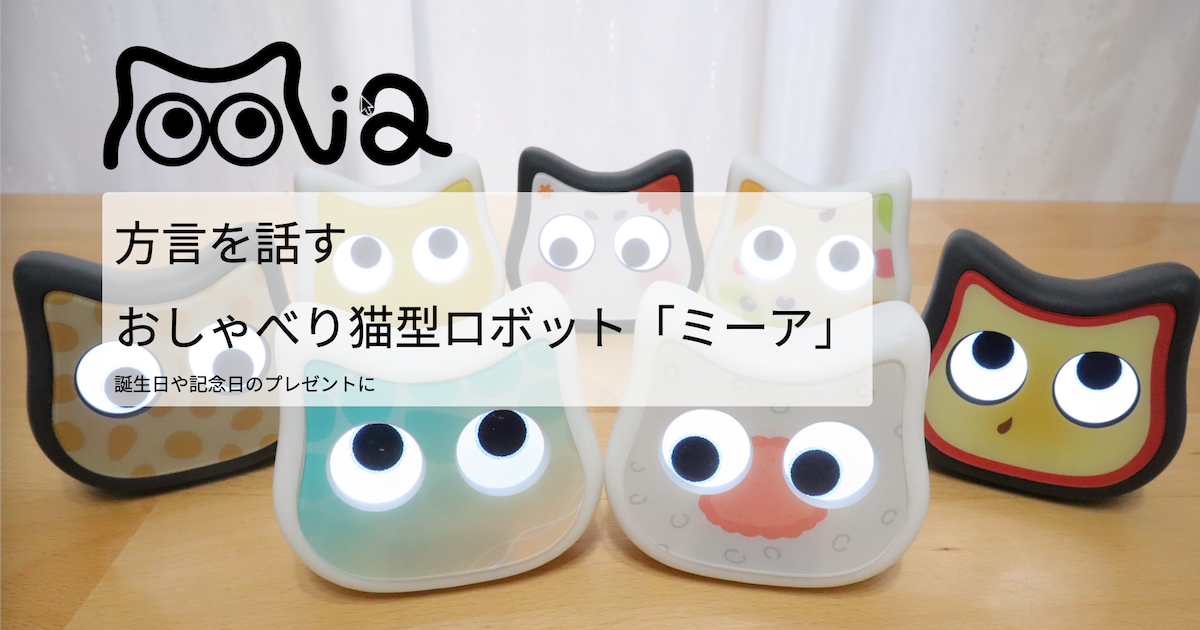
Microduck is about movement, learning, and developer experimentation. Mia is about daily communication, facial expression, Japanese dialects, voice interaction, reminders, and companionship.
| Comparison | Microduck | Mia |
|---|---|---|
| Form | Duck-like compact biped robot | Compact cat-like companion robot |
| Main value | Walking, gamepad control, reinforcement learning, open-source SDK | Japanese conversation, 47 dialects, expressions, reminders, weather, Google Calendar integration, English characters |
| User goal | Robotics learning, control, development, experimentation | Comfort, daily voice interaction, routine support, companionship |
| Movement | 15-motor whole-body walking and fall recovery | Voice recognition, head touch, blinking, facial expression |
| Developer focus | SDK, simulation, reinforcement learning stack | Daily interaction and character experience |
| Conversation | Has microphones and speaker, but movement is the core | Japanese conversation and dialect communication are central |
| Price range | $399, about 63,600 yen, or €340.00 EUR, about 63,100 yen | From 9,800 yen including tax |
Summary
Microduck is a strong product to cover because it represents a bigger shift: AI is moving from screens into small physical bodies that individuals can actually buy and program.
The best angle is not just "a cute duck robot." It is that Hugging Face and Pollen Robotics are trying to make open-source robotics, reinforcement learning, and sim-to-real experimentation accessible at a much lower price point than traditional research robots.
The caution is just as important. Microduck is still a pre-order product, and real-world quality, shipping reliability, warranty handling, Japan-specific compliance, and long-term support still need to be confirmed.
👀 You may also like:
👉 2026 Guide: AI Pet Robots for Elderly Loneliness – A Comparison of 10 Companion Robots
👉 2026 Edition: 9 Recommended Pet Robots Under $150 – Cheap, Cute, and Healing Models
👉 Monthly and Maintenance Costs of Pet Robots: Moflin, LOVOT, Mia, and More
👉 Mia – Your Chatty AI Cat Companion Robot with 100+ Expressions