What Is Petoi Quaddle?
Petoi Quaddle is a compact quadruped robot dog from Petoi, launched on Kickstarter as an open-source desktop robotics kit.
It belongs to the same OpenCat family as Petoi Bittle and Nybble, but Quaddle is smaller, simpler, and cheaper. Petoi positions it as an accessible physical AI and STEM education robot for kids, classrooms, hobbyists, and makers.
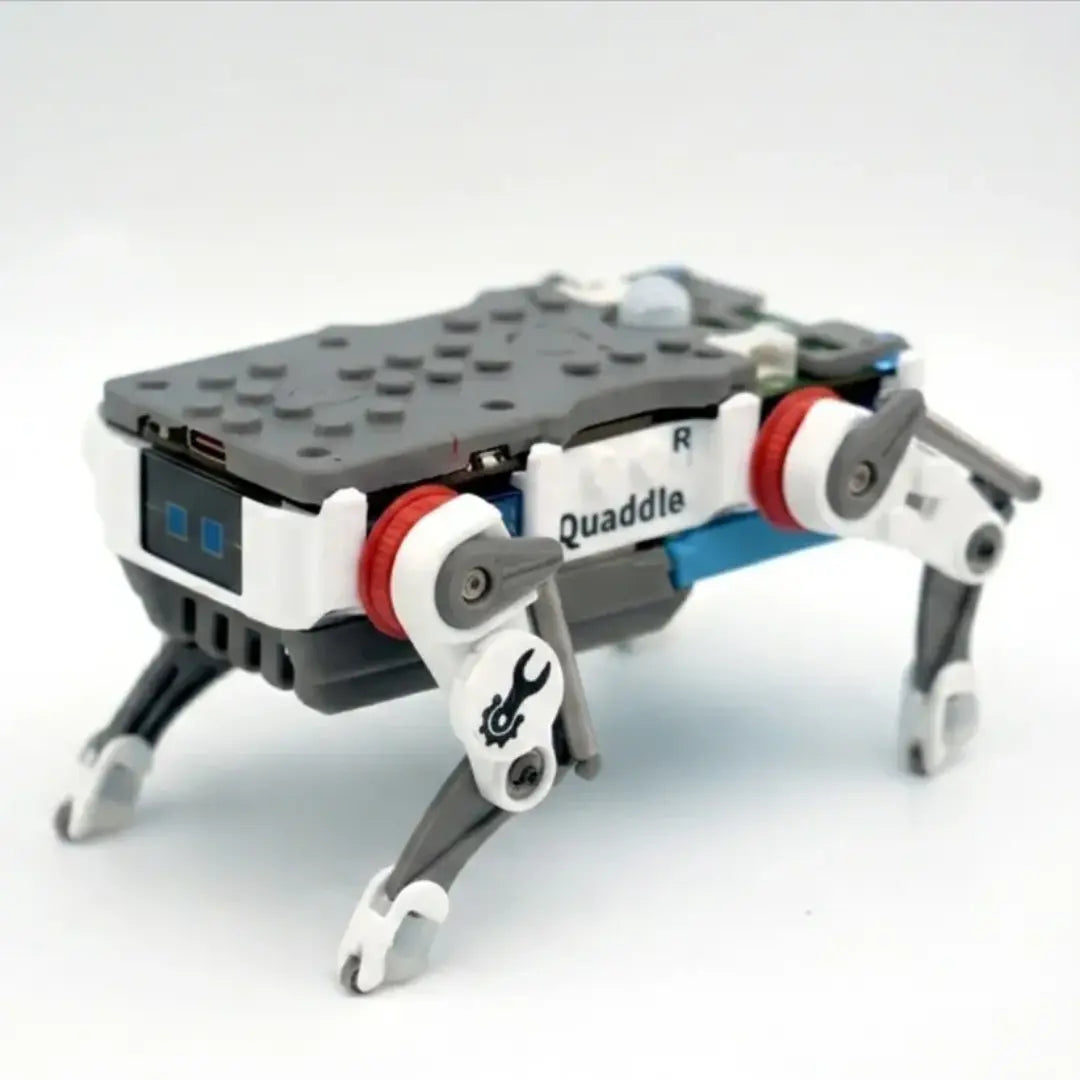
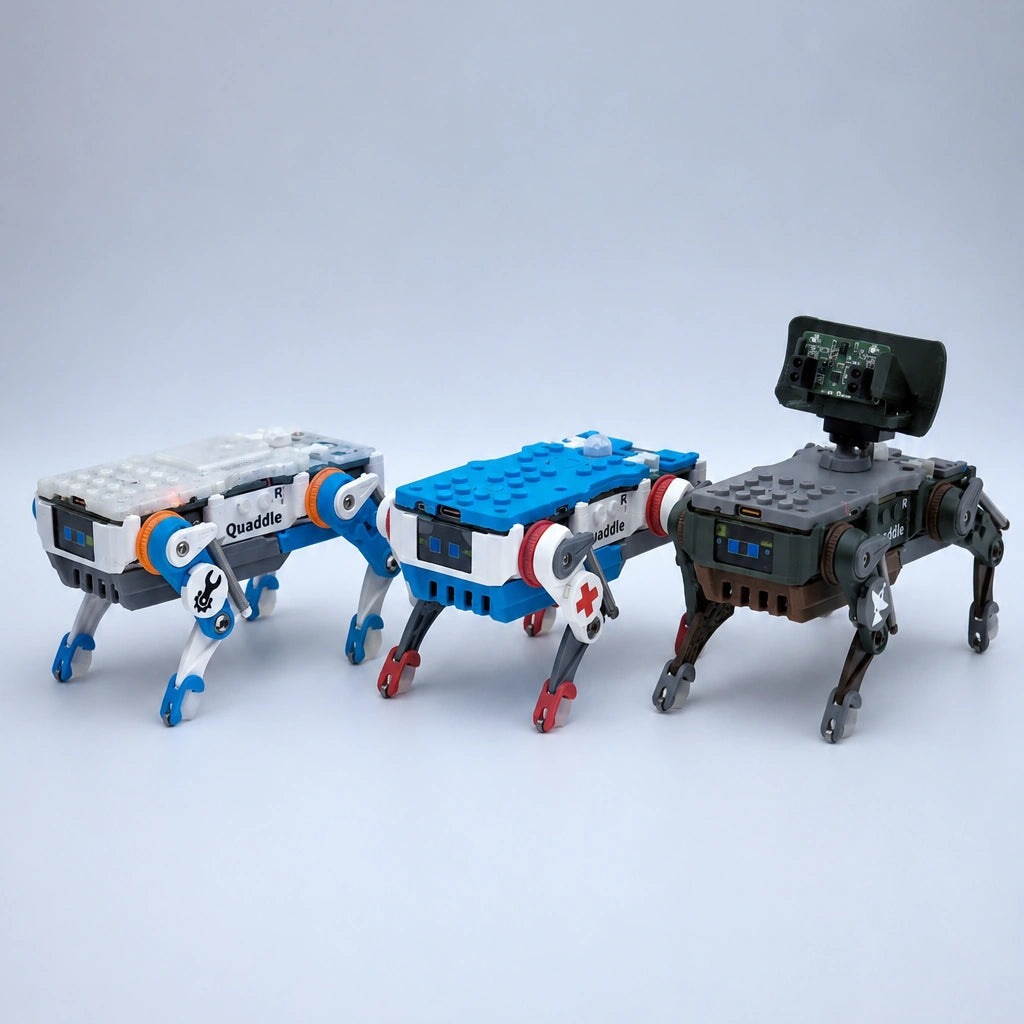
The official page describes Quaddle as a 4-servo omnidirectional quadruped robot kit. It supports block coding, Python, C++, and ROS/ROS2, so users can start visually and gradually move toward real programming and robotics development.
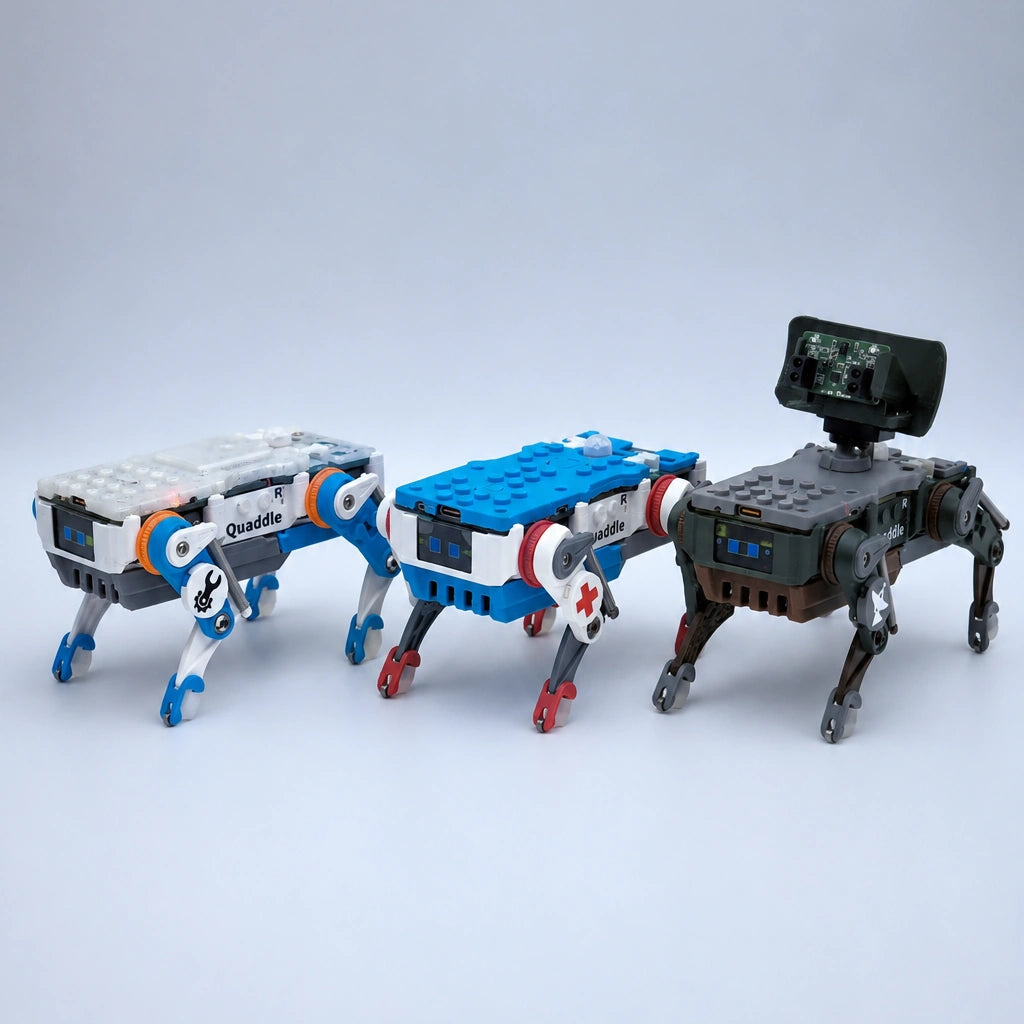
The Kickstarter campaign began in September 2026. The official page lists three models: Builder, Buddy, and Scout. Early-bird pricing starts at $99 for Builder, $139 for Buddy, and $179 for Scout. MSRP is listed as $149, $219, and $269 respectively.
This article looks at Quaddle not as a simple pet robot for comfort, but as a small robot dog for learning, coding, experimenting, and understanding how physical AI moves in the real world.
Key Points
What Petoi Quaddle Is
- A compact open-source quadruped robot dog from Petoi
- Built around the OpenCat platform
- Uses a 4-servo design for walking, sideways movement, and rotation
- Supports block coding, Python, C++, and ROS/ROS2
- Comes in Builder, Buddy, and Scout models
- Buddy and Scout add features such as AI conversation, touch response, and Learn & Replay
- Easier and cheaper to start with than Petoi Bittle, but less capable of complex dog-like motion
Strengths
- The $99 entry price is low for a walking quadruped robot
- The 4-servo design lowers assembly and control complexity
- Learning can progress from block coding to Python, C++, and ROS
- LEGO-compatible and 3D-printable customization gives it strong maker appeal
- It connects to the existing Petoi/OpenCat ecosystem
Cautions
- It is a Kickstarter product, so delivery timing, final specifications, warranty, and support can change
- Japan shipping, technical compliance, local support, and Japanese learning materials should be checked before backing
- It is mainly a learning robot, not a cuddly emotional pet robot
- The AI conversation feature is secondary to robotics learning
- The 4-servo design is affordable and simple, but Bittle is better for more complex animal-like movement
Short Verdict
Petoi Quaddle is best for people who want to build, program, and understand a small robot dog. It is not the best choice for someone who simply wants a cute companion that talks, reacts emotionally, and fits into daily life with no technical setup.
The price is the main hook. A quadruped robot starting at $99 is unusually approachable. That makes Quaddle interesting for families, robotics clubs, schools, and parents who want a first physical AI kit for kids.
But Quaddle is not a Mia-style talking companion. Mia focuses on voice, expressions, dialects, reminders, weather, family messages, and daily companionship. Quaddle focuses on motion, coding, mechanics, sensors, and experimentation.
If you already know Petoi Bittle, the simplest way to read Quaddle is not as a direct replacement. Quaddle is the easier, cheaper OpenCat entry point. Bittle remains the more expressive and capable small robot dog.
Price and Model Differences
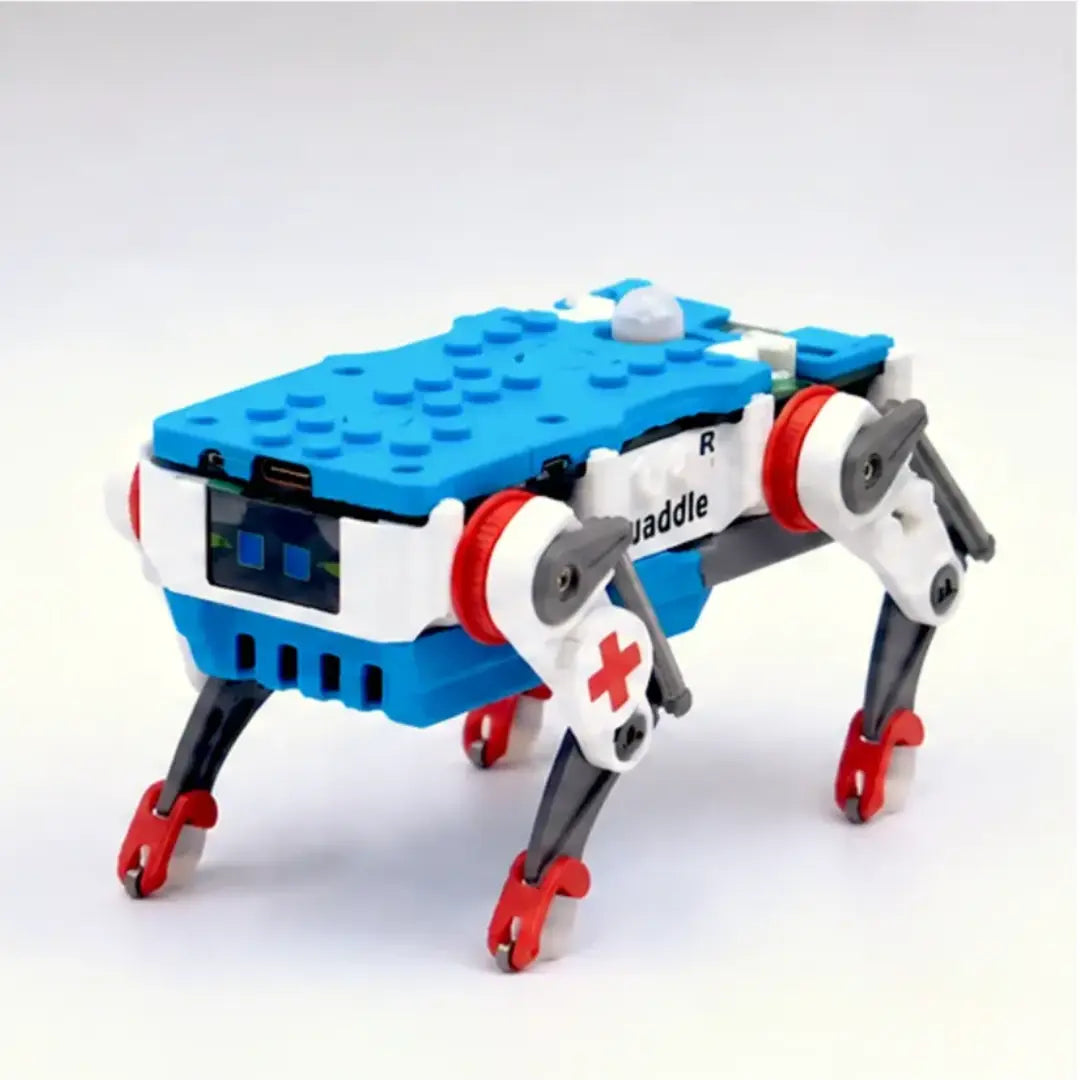
The official lineup includes three models: Builder, Buddy, and Scout.
| Model | Early-bird price | MSRP | Best for | Main features |
|---|---|---|---|---|
| Builder | From $99 | $149 | Beginners, kids, classrooms | 90+ movements, Raspberry Pi Zero socket, Arduino/ESP32 support, LEGO-compatible customization |
| Buddy | From $139 | $219 | General users | Builder features plus AI conversation, touch response, Learn & Replay |
| Scout | From $179 | $269 | Makers and research-oriented users | Buddy features plus gesture, light, infrared sensors, and broader experimentation |
Builder is the simplest choice if the goal is to learn assembly, motion, and programming. Buddy is the better fit if you want the robot to feel more interactive through touch, conversation, and hand-taught movements. Scout is the strongest option if sensors and advanced experiments matter.

Which Model Should You Choose?
If you are choosing for a child, start by asking what kind of experience matters most.
Builder is for learning the structure of a robot. It is the model to choose when you want kids to understand how a robot is assembled, how simple motion works, and how block coding can change behavior.
Buddy is better if you want Quaddle to feel more like a desktop robot friend. The added AI conversation, touch response, and Learn & Replay features make it easier for children to interact before they fully understand code.
Scout is for people who want sensors and experiments. If the goal is a maker project, robotics club activity, or school challenge that involves environmental response, Scout is the most flexible model.
| Need | Recommended model |
|---|---|
| Lowest-cost entry into quadruped robotics | Builder |
| Kids want touch, conversation, and hand-taught movement | Buddy |
| Sensor experiments and maker projects matter | Scout |
| More complex dog-like motion matters most | Consider Bittle or Bittle X as well |
Approximate Yen Conversion
At 160 yen per dollar, $99 is about 15,840 yen, $139 is about 22,240 yen, and $179 is about 28,640 yen. MSRP converts to about 23,840 yen, 35,040 yen, and 43,040 yen.
These numbers are only rough device-price estimates. Kickstarter backing can involve shipping, taxes, exchange-rate fees, import costs, and campaign-specific reward changes. If you are backing from Japan, check the final checkout amount rather than judging by the headline price alone.
How Quaddle Differs From Petoi Bittle
The most obvious comparison is Petoi Bittle.
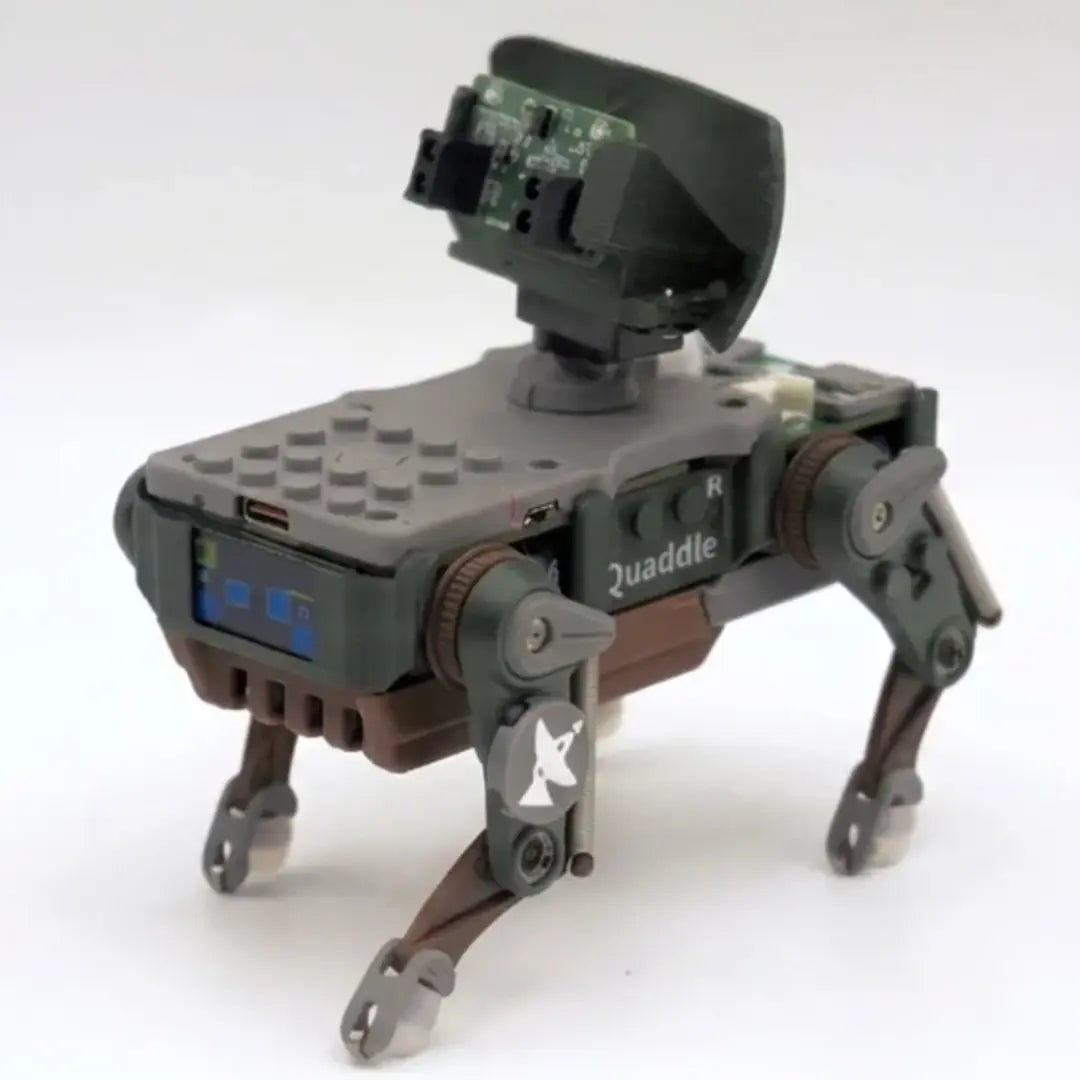
| Item | Quaddle | Bittle / Bittle X |
|---|---|---|
| Positioning | Smaller, cheaper, entry-level | More advanced small robot dog |
| Servo count | 4-servo design | 9 servos |
| Movement | Walking, sideways movement, rotation, 90+ actions | More animal-like walking, running, and complex motions |
| Assembly difficulty | Simpler | More technical |
| AI conversation | Emphasized on Buddy/Scout | Voice features on Bittle X |
| Best for | Kids, beginners, classrooms, maker entry | Users who want deeper robot control |
| Price | Lower entry point | Higher than Quaddle |
Quaddle is easier to introduce at home or in a classroom. Bittle is better when motion complexity and dog-like expression matter more.
Is a 4-Servo Robot Too Limited?
Not necessarily. A 4-servo robot is a design compromise.
More servos allow finer movement, more joints, and more realistic animal-like motion. They also add cost, assembly complexity, calibration work, potential failure points, and power use.
Quaddle trades some realism for simplicity. That can be a good educational decision. For a first robot, it may be more useful for a child to see the structure clearly, assemble it with less frustration, and immediately understand how code changes movement.
In other words, Quaddle is not trying to be the most realistic robot dog. It is trying to be an approachable physical AI learning platform.
What Can Quaddle Do?
Quaddle can be understood through four themes: movement, reaction, learning, and customization.
Walking, Sideways Movement, and Turning
Quaddle is a four-legged robot, but Petoi emphasizes omnidirectional movement. It can move forward, sideways, and rotate.
For robotics education, that matters. A wheeled robot can turn by changing motor speed. A quadruped robot needs coordinated leg motion, timing, balance, and ground contact.
Quaddle makes this difficult topic small enough to explore on a desk.
AI Conversation and Touch Response
Buddy and Scout add AI conversation and touch response.
The important caveat is that Quaddle's AI conversation should not be compared directly with a dedicated conversational robot such as Mia or Romi. In Quaddle, conversation adds character to a robotics kit. It is not the whole product.
That said, conversation and touch can make the robot feel less like a bare mechanism. For children, that can be useful. A robot that responds can feel easier to approach than a kit that only moves when code runs.
Learn & Replay
Learn & Replay is one of the most interesting Buddy and Scout features. The idea is to manually move or teach the robot and then replay that movement.
This is useful because it connects physical motion to data. Before a child understands Python syntax, they can understand that a movement can be recorded, stored, and repeated.
That creates a natural path: first move the robot by hand, then replay it, then ask what happens if code changes the movement.
LEGO-Compatible and 3D-Printed Customization
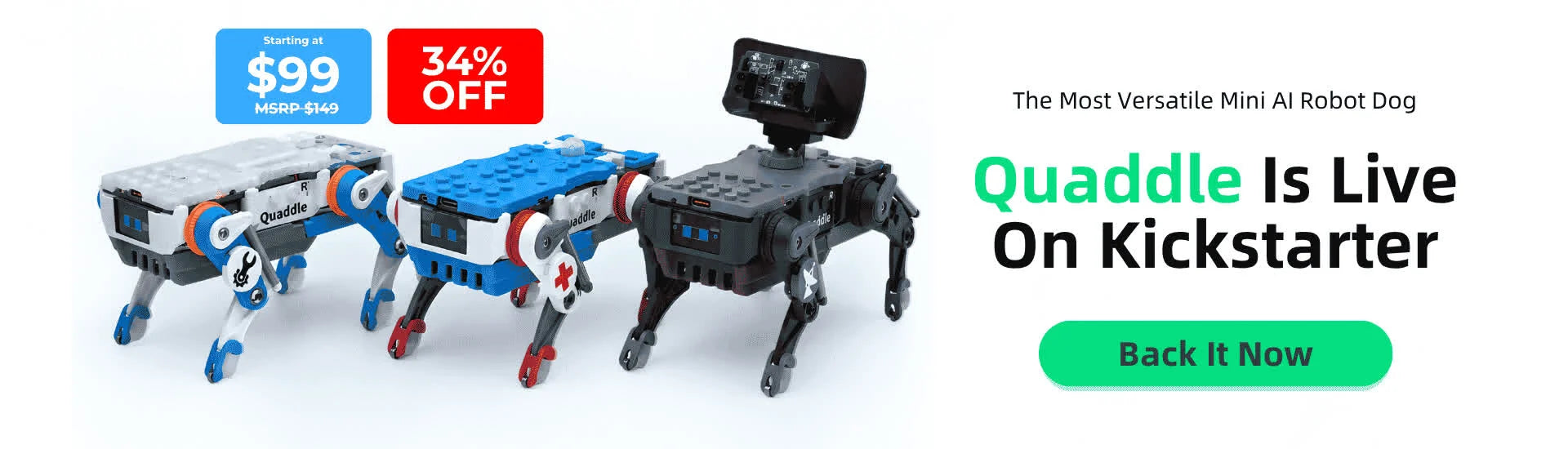
Quaddle also highlights LEGO-compatible customization and 3D-printable parts.
That separates it from finished companion robots. A finished robot asks users to enjoy the product as designed. Quaddle invites users to change the shell, add parts, mount sensors, alter the look, and treat the robot as a platform.
For parents and kids, the path can be simple: assemble it, make it walk, customize the body, change movement, add sensors, and gradually move into code.
Is Quaddle Good for Kids' STEM Learning?
Quaddle has strong potential as a STEM education robot because it offers a learning ladder:
- Assemble the robot
- Move it with an app or block coding
- Move into Python
- Try C++ or ROS/ROS2 later
- Customize the body with LEGO-compatible or 3D-printed parts
- Add sensors and AI interaction
It is not a toy that a young child can fully manage alone. Parents or teachers will likely need to help with assembly, charging, app setup, code examples, and Kickstarter-related support questions.
| Child or learner type | Good model fit |
|---|---|
| Loves building and hands-on projects | Builder |
| Wants to talk to the robot or teach movement by hand | Buddy |
| Wants sensor experiments or maker projects | Scout |
| Wants a finished pet companion | Consider Mia, Loona, aibo, or similar robots instead |
Age-Based Use
For younger elementary-school children, the best use is assembly, simple app control, and block coding. The goal is not abstract programming theory. The goal is the excitement of seeing a robot they built actually move.
For older elementary and middle-school learners, block coding can lead into Python. Loops, conditions, movement patterns, and sensor input are easier to understand when the result is visible in a physical robot.
For high-school students, robotics clubs, and makers, C++, Arduino IDE, ROS/ROS2, the Raspberry Pi Zero socket, and sensor expansion become more meaningful. Quaddle is not a research-grade robot dog, but it can be a useful low-cost physical AI sandbox.
Classroom Cautions
For classrooms, the device price is only one part of the decision.
Teachers should also consider:
- How many units are needed
- Whether charging time fits lesson time
- Whether spare parts are available
- How much setup teachers must do
- Whether students can use English documentation
- Whether the robots will be stored at school or taken home
Because Quaddle is a Kickstarter product, delivery and specifications may change. For formal curriculum planning, waiting for stable retail availability may be safer.
How Quaddle Differs From Mia
Quaddle and Mia are both robots, but they solve different problems.
| Item | Petoi Quaddle | Mia |
|---|---|---|
| Main purpose | STEM education, physical AI, robot control | Conversation, dialects, expressions, daily voice prompts |
| Experience | Build, move, program, customize | Place it nearby and talk/listen |
| Movement | Walks as a quadruped robot | Does not drive around |
| Conversation | AI conversation on Buddy/Scout | Conversation model, dialects, weather, schedules, family messages |
| Best for | Learning robotics | Daily companionship and voice-based support |
| Cautions | Kickstarter, assembly, technical support | Conversation requires a compatible unit and monthly service |
Choose Quaddle for coding and robotics learning. Choose Mia for daily voice companionship, dialect-based familiarity, reminders, and family communication.
Compared With Other Robot Dogs and Education Robots
Quaddle is closer to Petoi Bittle, Mini Pupper 2, Unitree Go2, and Hengbot Sirius than to LOVOT or aibo.
| Product | Best for | Difference from Quaddle |
|---|---|---|
| Petoi Bittle / Bittle X | More advanced small robot dog learning | More servos and more complex motion |
| Mini Pupper 2 | Raspberry Pi and ROS learning | More developer-oriented and potentially harder |
| Unitree Go2 | Advanced robot dog use and research | Much larger and in a different price class |
| Hengbot Sirius | AI-trainable robot dog experience | More finished pet-like experience |
| Mia | Conversation, dialects, daily prompts | Does not walk, but fits daily voice companionship better |
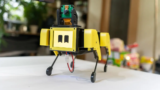


Quaddle's position is clear: small, affordable, customizable, and education-oriented.
Buying Cautions
Kickstarter Risk
Quaddle is a Kickstarter product. Even if a campaign looks promising, backing is not the same as buying a finished item from a normal store.
Delivery timing, final specifications, accessories, warranty terms, app behavior, AI features, and support can change. Check the latest campaign page before backing.
Do Not Expect Too Much "Pet Feeling"
Quaddle looks like a robot dog, but it is not designed like aibo, LOVOT, or other emotional companion robots.
It can be cute, but its core value is learning and building. Think of it as a robot you create and study, not a pet that asks to be cared for.
AI Conversation Is Not the Main Feature
AI conversation on Buddy and Scout is interesting, but Quaddle's main identity is still quadruped motion, programming, OpenCat, and customization.
If natural conversation, dialects, reminders, family messages, and everyday companionship matter most, compare dedicated conversation robots instead.
Check Compliance, Language, and Support
If you plan to use Quaddle in Japan or another market outside Petoi's main shipping regions, check shipping, wireless compliance, app availability, documentation, and support.
English documentation may be enough for many maker users, but younger children and non-technical parents may need more support.
Think About Parts and Long-Term Use
Robotics kits are only useful if they can be maintained. Servos, batteries, leg parts, shells, cables, firmware, and app support matter over time.
Petoi already has Bittle and Nybble, which is a reassuring sign compared with a one-off gadget. Still, Quaddle itself is new, so real shipping and support quality should be checked after early backers receive units.
Final Thoughts
Petoi Quaddle is an appealing small quadruped robot because it makes physical AI and robot-dog learning cheaper and more approachable.
The 4-servo design, OpenCat base, block coding, Python, C++, ROS/ROS2, LEGO-compatible customization, and 3D-printable expansion give it a strong learning path.
But Quaddle is not the right product if you want a relaxing emotional pet robot with minimal setup. It is better understood as a robot dog you build, teach, modify, and learn from.
For kids, parents, schools, and hobbyists who want an affordable OpenCat entry point, Quaddle is worth watching closely.
👀 You may also like:
👉 2026 Guide: AI Pet Robots for Elderly Loneliness – A Comparison of 10 Companion Robots
👉 2026 Edition: 9 Recommended Pet Robots Under $150 – Cheap, Cute, and Healing Models
👉 Monthly and Maintenance Costs of Pet Robots: Moflin, LOVOT, Mia, and More
👉 Mia – Your Chatty AI Cat Companion Robot with 100+ Expressions