Alilo is an educational programming robot developed by Artec, a long-established educational materials manufacturer with a thorough understanding of the Japanese educational field, for children as young as 3 years old, The robot was created with the hope that “children of the digital native generation will be exposed to the basic concepts of programming earlier and more naturally” against the backdrop of mandatory elementary school programming education starting in 2020.
- Product Overview: Features and Basic Structure
- Summary of key points
- rough conclusion
- Frequently Asked Questions (FAQ)
- Specifications Summary
- Reviews (Word of mouth)
- Overall Evaluation: Summary of Attractiveness and Challenges
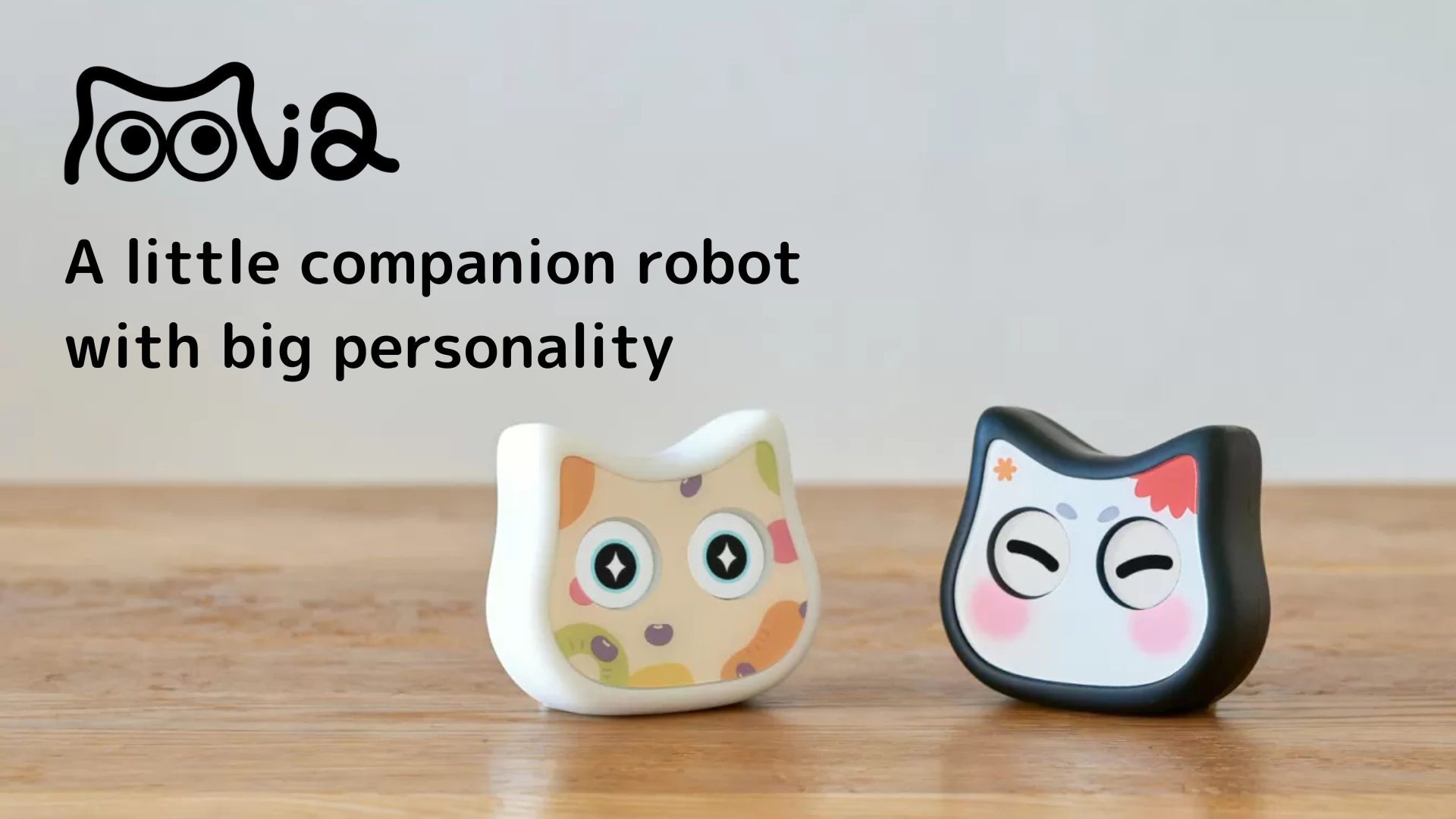
- Comparison with “Mia,” a talking cat-shaped robot
- Summary: Defining the final target audience
Product Overview: Features and Basic Structure
The most distinctive feature of Arilo is its 3-stage operation mode that allows children to step up to the next level according to their developmental stage, from “screen-less (unplugged)” analog play to “full-scale control with a tablet.
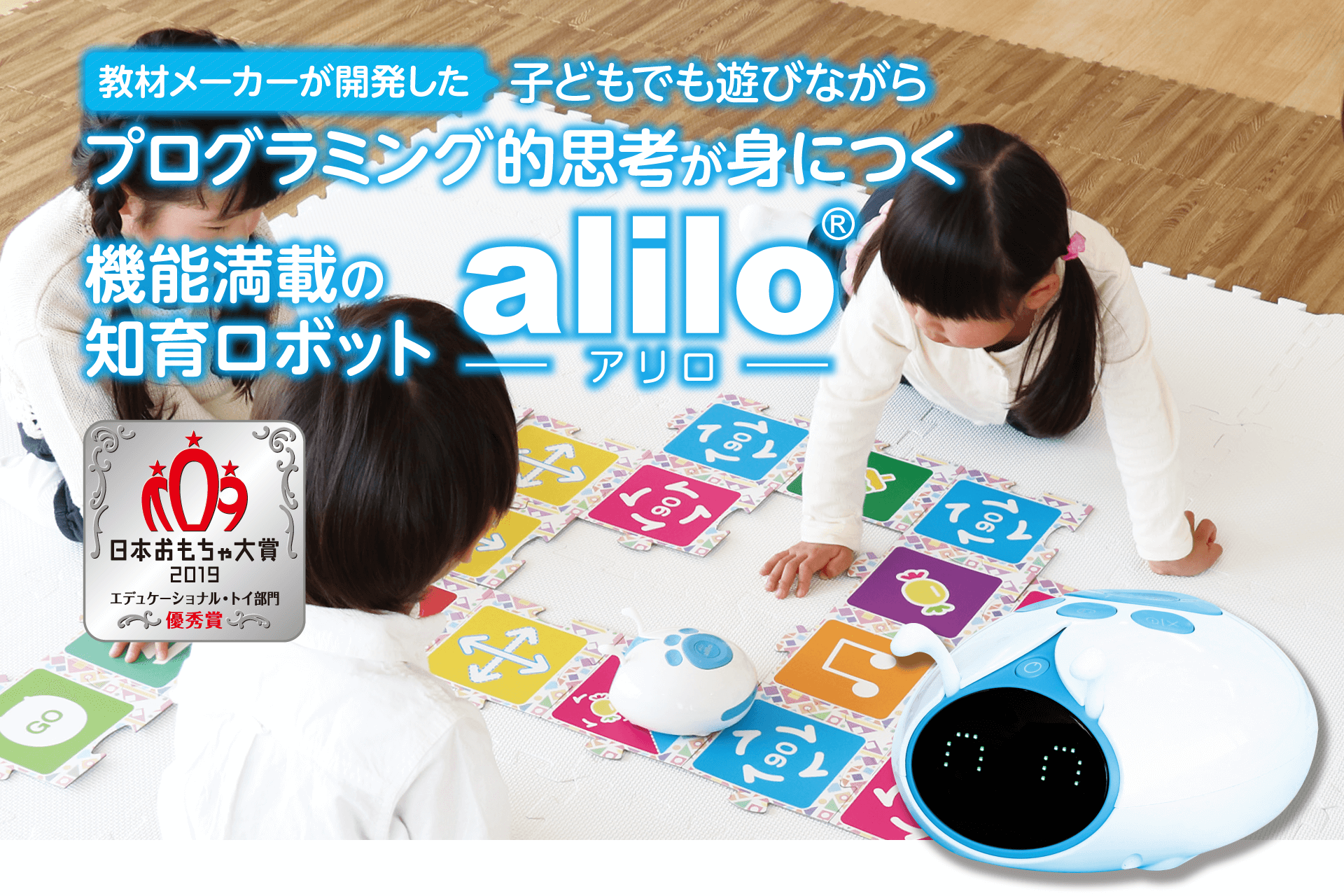
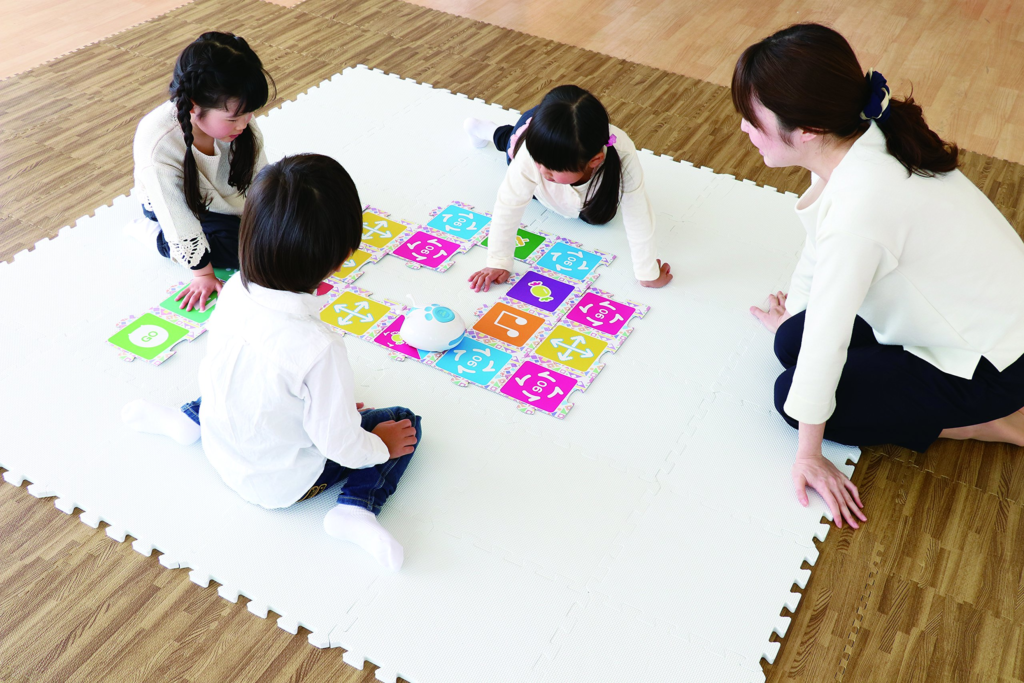
- Panel Programming (ages 3 and up): In this mode, colorful “course panels” are combined like a puzzle and driven on by Arilo. The panels are marked with icons such as “turn right,” “pause,” and “dance,” and the sensor at the bottom instantly reads the marks. Even infants who cannot read can intuitively assemble the “steps” by looking at the pictures.
- Button Programming (ages 5 and up): In this mode, users press the directional buttons on the back of the machine in the order “forward, forward, right, forward,” etc., to move Arrillo according to their memory. This is an exercise in visualizing the course in your mind and translating it into commands (instructions).
- App Programming (ages 7 and up): Uses a dedicated app for smartphones and tablets. By connecting blocks with drag-and-drop, students can try their hand at creating full-fledged algorithms, including complex “conditional branching (if – then)” and “repetition.
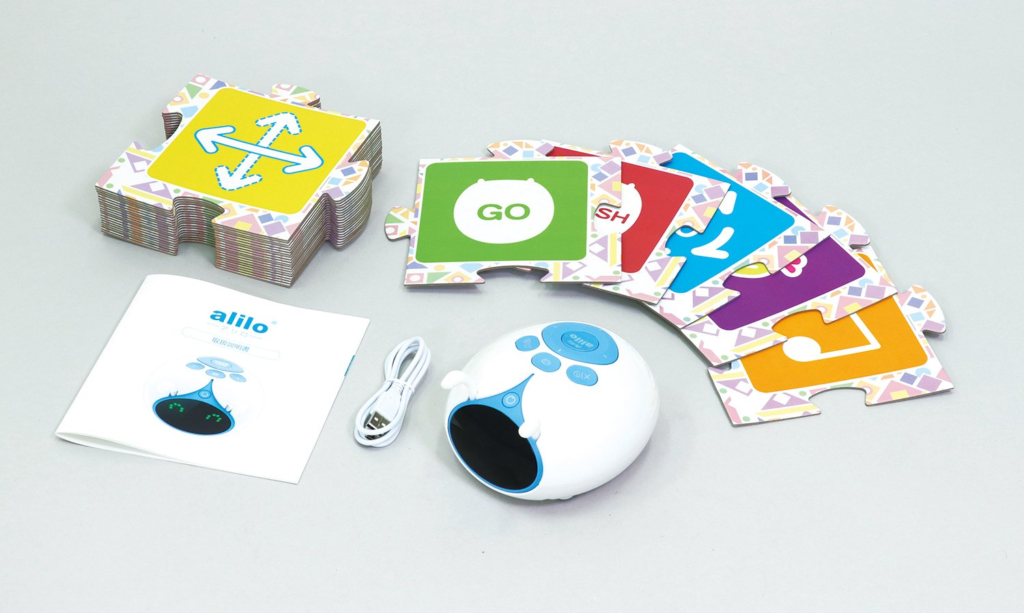
The main unit has an LED monitor that projects facial expressions, and the voice is provided by “Sasara Satou” from the CeVIO Project. Her emotionally rich voice and clever movements that make full use of acceleration and PSD (distance) sensors naturally motivate children to want to learn, and make them recognize the robot as a “friend that grows with them,” rather than just a machine.
Summary of key points
What is alilo?
- Compatible with the new curriculum guidelines of the Ministry of Education, Culture, Sports, Science and Technology: This is a full-fledged educational device for cultivating “programming thinking,” which has been made compulsory in elementary schools, in advance, while playing at home.
- Versatile expression and familiarity: 10 different facial expressions, 56 different words, and 5 well-known children’s songs are included to keep children entertained.
- Crystallization of high-precision sensor technology: PSD sensors that detect obstacles and automatically stop the robot, acceleration sensors that detect being lifted, and other sensors that allow the robot to experience the fundamentals of robotics.
good point
- Economical built-in lithium polymer battery: Can be recharged repeatedly with the included USB cable. The main unit is extremely lightweight at approximately 316g, eliminating the hassle and cost of frequently replacing batteries.
- Voice navigation for independent learning: Arilo himself says, “What’s next? “Yay, I made it to the goal! The child can repeat “trial and error” on his or her own without a parent or guardian being present at all times.
- De-Screen Time: Because programming concepts can be learned without the use of a tablet, parents who are concerned about vision loss can give the program to their children without worry and emphasize hands-on, real-life experience using their hands.
points of concern
- Requires a large play space: The 25 panels in the basic set can occupy an area nearly the size of a tatami mat when connected together. When playing, a larger floor space is needed, such as by pulling up furniture in the living room.
- Environmental constraints due to the precision sensor: The optical sensor on the bottom is very delicate. Command reading errors can occur under strong direct sunlight, slight lifting of the panel connections, or dust buildup.
- Importance of educational follow-up: Because concepts such as “conditional branching” in the application mode are difficult to grasp, it is effective to support children when they hit a wall by having an adult ask, “What would you do if there was an obstacle?” and giving hints is effective.
Users who may be suitable for
- Families considering early education: We want our children to develop the enjoyment of constructing logical procedures and the “habit of thinking” before entering elementary school.
- Those who value the experience with real objects: We want to convey the physical emotion of moving objects in the real world by our commands, rather than moving characters on the screen.
- Interested in STEM education: to provide a cross-section of the fundamentals of Science, Technology, Engineering, and Mathematics in a fun and playful way.
rough conclusion
It is “the world’s gentlest programming tutor, where you can learn ‘logical thinking in the IT age’ before you know it, as an extension of your playtime.
Frequently Asked Questions (FAQ)
- Price. MSRP 18,500 yen (excluding tax). Considering the richness of the set contents, this is an acceptable price.
- What can it do? Panel driving, button memory, application control, dancing, recording, emotional expression, and obstacle avoidance.
- What operating systems are supported?: Android 4.2.2 or later, iOS 9 or later. Works with a wide range of older devices.
- Disadvantages: Requires a large space and sensor management as a precision instrument.
- What about software updates? Yes: The dedicated application is always updated to provide the most up-to-date learning environment.
What are the words you can speak and the songs you can record?
It contains 56 songs, including 1) Alps Ichimanjaku, 2) Oni no Pants, 3) Happy Birthday to You, 4) London Bashi Ochita, 5) Guchokipa de Nani Tsukurou, and many more.
What kind of sensor is attached?
-5°C to 40°C Sensor: acceleration sensor, PSD sensor Sound: 1 speaker is attached.
What about charging time and operating time?
Battery: Lithium polymer (1200mAh). Rated voltage: 5V Continuous operating time: 4 hours Charging time: 2.5 hours
Specifications Summary
| (data) item | Details |
| Size | 135 × 125 × 75 mm (easy to handle even for a child’s small hands) |
| weight | Approx. 316g (very lightweight, child can carry by himself/herself) |
| battery | Lithium polymer (1200mAh) built-in |
| Charging / Operating | Charging: approx. 2.5 hours / Continuous operation: max. 4 hours |
| On-board sensors | Acceleration sensor (vibration and tilt detection), PSD sensor (obstacle and distance detection) |
| expressive function | Expression LED: 10 types / Voice: 56 types (CV: Sasara Satou) |
| Included songs | 5 songs including Alps Ichimanjaku, Oni no Pants, London Bridge, etc. |
| Age Range | 3 years old and up (developmentally appropriate play until early elementary school age) |
| Communication / Terminals | Bluetooth connection / Micro USB port (for charging only) |
| Manufacturer | 5 songs, including Alps Ichimanjaku, Oni no Pants, London Bridge, etc. |
Reviews (Word of mouth)
Good Reviews
I bought this as a Christmas present for my five-year-old daughter. At first she was just connecting panels at random, but gradually she started to think logically, saying, ‘I have to put the right-turn panel here to reach the goal. As a parent, my greatest joy is to see her smile, filled with a sense of accomplishment, when Arrillo makes the correct move with the program I put together.”
Source: Amazon.com Customer Reviews
I came to Arilo looking for programming materials that didn’t show a screen. The voice is by ‘Sasara Satou’ from CeVIO, so it is very easy to listen to without the spikes that are characteristic of digital. It’s more like having a new friend or pet in the house than a robot, which is soothing to the whole family.”
Source: Rakuten Minna no Review
Mid-term and dissatisfaction reviews
The application cannot be downloaded on iPad and iPhon.
I don’t usually write reviews, but I’m sorry to hear that someone else will have trouble with it, so I reviewed it.
I purchased this app because my child used it as a teaching aid at school and was very interested in it. However, I can no longer download the app from the APPStore or Google Play. I have contacted the manufacturer, but so far there seems to be no chance of downloading it again. As for Android, there seems to be downloads other than Google Play. It is not possible to play with the program only with the device itself. Please be careful when purchasing.Postscript.
On a tablet with Android version 10, I was able to download the app using the above method, but the app and the device are not connected via Bluetooth. I have not tried with other versions, so I am not sure.Source: Amazon Review
The application is not currently distributed.
Even my preschooler was able to play with it.
It is cute and a great introductory material.They react when you turn them over and so on.
It is also expected to foster the careful handling of things.My child enjoyed making the path like a puzzle without the app on his phone.
However, the paths are made of paper, so I’m not sure about the durability.The app on the phone offers radio control, voice recognition, moves as you sketch, and Scratch-like programming, but we do not currently distribute the app.
How would you rate this point?Source: Bic Camera Review
Overall Evaluation: Summary of Attractiveness and Challenges
Alilo is more than just a “moving toy”; it is an educational material created with passion by a Japanese manufacturer that is dedicated to the science of “education.
The core of the appeal lies in the fact that children can directly learn the relationship between “commands (input)” and “results (output)” as a physical, hands-on experience. Even if they fail, they can visually and intuitively understand “what went wrong” by watching the reactions of Arilo’s voice and movements. This naturally and powerfully fosters the spirit of “try and error” (trial and error), which is considered most important in today’s IT society, through play.
The challenges include the hardware delicacy of the sensor, which is easily affected by the environment, but this is more than compensated for by the attentive support that only a Japanese manufacturer can provide, the reassurance provided by the Japanese voice, and the scalability to grow with growth, which are overwhelming strengths not found in other foreign products.
Comparison with “Mia,” a talking cat-shaped robot
We compared the characteristics of Aliro and Mia according to their purpose and role in the household.
| Comparison items | Alilo | Mia (cat-shaped robot) |
| design | Futuristic vehicles and cyber robots | Adorable cat shape like a plush toy |
| Main Experience | Constructing “logic” and solving problems | Healing in Everyday Life through Conversation |
| Price | 18,500 yen (tax not included) | From 9,800 yen |
| Learning & Effectiveness | Programmatic thinking and understanding of conditional branching | Emotional stability, vocabulary, and lifestyle |
| mobility | Motor-driven to run freely on the floor | Stationary” placed on a desk or shelf |
| communication | Focus on feedback on instructions | Spontaneous “chats” with dialects are attractive. |
| Long-term relationships | A sense of accomplishment in completing tasks promotes growth. | Become part of the family with daily chats. |
Key points of comparison: Mia emphasizes “warmth that accompanies daily life. With its unique Japanese dialect of speech and affordable price of less than 10,000 yen, it is a suitable choice for those who want to easily incorporate everyday healing and familiarity into their daily lives.
👇 Talking cat-shaped robot “Mia” that speaks 47 dialects nationwide
Summary: Defining the final target audience
ALILO is the perfect partner for children who are “intellectually curious and eager to put mechanisms in motion with their own hands. Because of its age-appropriate step-by-step progression, it provides long-term, developmentally appropriate, high-quality learning for children from 3 years old to early elementary school age.
- Ages 3-4: Experiencing the “order” of cause and effect by connecting panel puzzles.
- Ages 5-6: Memory runs with button operation to learn spatial awareness and procedure construction.
- Ages 7 and up: Tablet apps challenge students with concepts of “conditional branching” and “loops” that can be used in the real world.
This long-lasting use is one of the strengths of Arilo, which does not end with a temporary boom. Before you regard programming as “study,” please teach them the joy of challenging themselves without fear of failure with their partner, Arilo.
On the other hand, if you are looking for “heart-to-heart communication with a robot” or “empathy” and “healing” in your busy daily life, “Mia,” which speaks warmly to you in the dialects of 47 prefectures in Japan, is also an irreplaceable option for your children and family.
Both robots will use cutting-edge technology to open up endless possibilities for your child and enrich and brighten your family’s life.
👀 Also read this article.
👉 [2026 Edition] 6 Latest Pet Robots to Heal Pet Losses – Thorough Comparison of Cat, Dog, and Healing Models
👉 [2026 Edition] Recommended pet robots for under 10,000 yen.
👉 [Latest in 2026] Thorough Comparison of Monthly and Maintenance Costs of Pet Robots – List of Running Costs of Popular Models including Moflin, LOVOT, Mia, etc.
👉What is Mia, an AI pet robot that speaks 47 dialects nationwide?