What Is LG CLOiD?
LG CLOiD is a home AI robot unveiled by LG Electronics at CES 2026.
LG presents CLOiD as a symbol of its "Zero Labor Home" vision: a future where robots and connected appliances reduce the time and effort spent on household chores. The robot is designed around cooking support, laundry, tidying, appliance control, and smart home coordination through LG ThinQ.

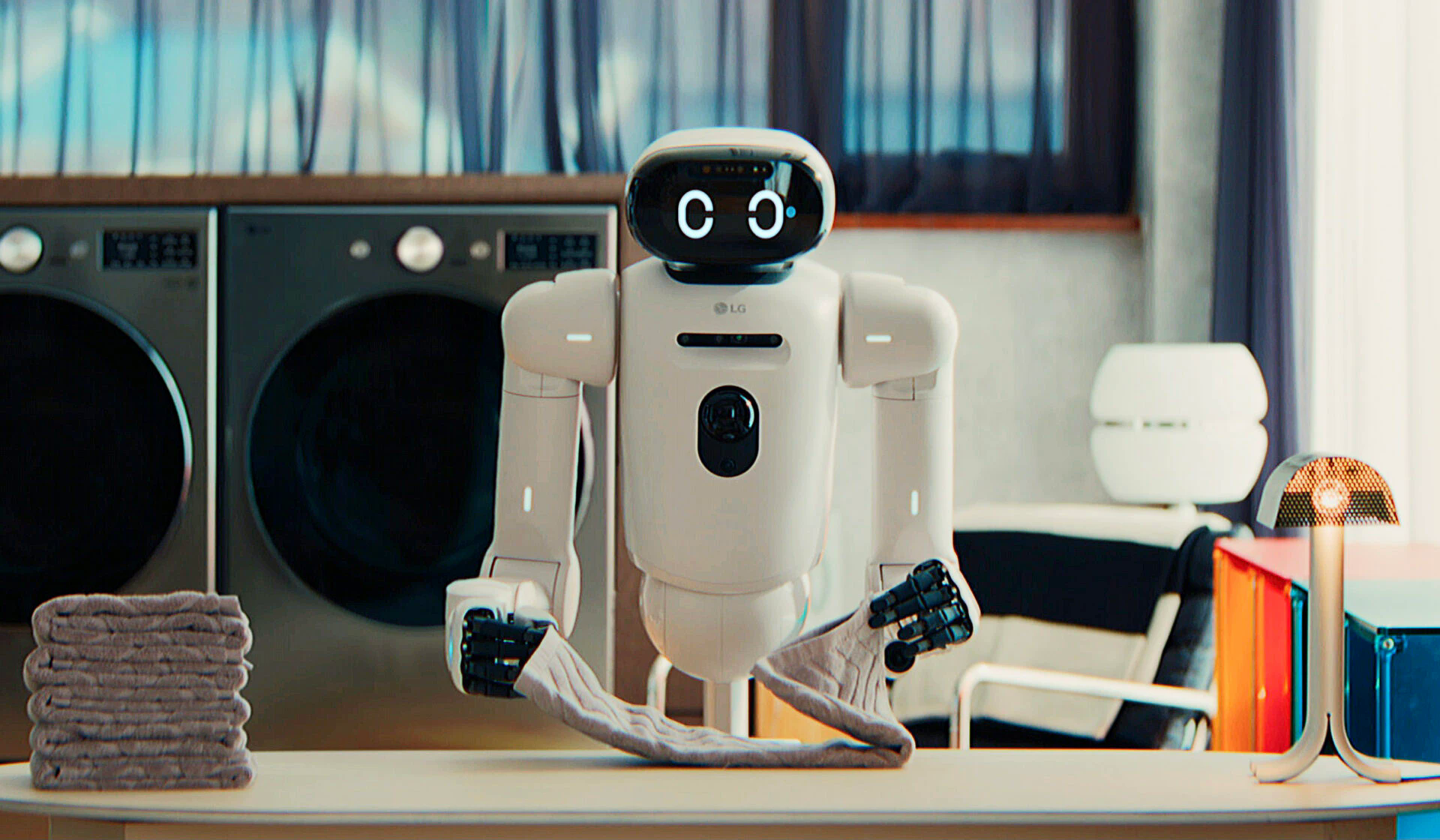
Physically, CLOiD combines a humanoid-like upper body with a wheeled lower base. It is not a bipedal humanoid. LG says the wheeled form was chosen for stability, safety, and cost-effectiveness in real living spaces.
This article looks at what LG CLOiD is trying to become as a home AI robot, and how realistic it is to think of it as a conversation partner or everyday companion.
Key Takeaways
What CLOiD Is
- A chore-supporting home AI robot unveiled by LG at CES 2026
- Built with a head unit, torso, two articulated arms, five-fingered hands, and a wheeled base
- Demonstrated with cooking preparation, laundry, towel folding, and appliance-control scenarios
- Designed to work with LG ThinQ and ThinQ ON as part of LG's AI Home ecosystem
- Equipped with voice-based generative AI, cameras, sensors, speakers, and facial expressions
- Uses VLM and VLA concepts to connect visual understanding, language, and physical action
- As of September 2026, consumer pricing, Japan availability, and final home-sales conditions are not confirmed
What Looks Good
- CLOiD aims to go beyond conversation and physically help with chores
- Two arms and five-fingered hands make appliance operation and object handling possible in principle
- Integration with LG appliances and ThinQ is a natural strength for a major appliance maker
- The wheeled base is a more stable home format than a fully bipedal robot
- Voice and facial expressions make the robot feel less like a silent appliance controller
What Needs Caution
- It is closer to a CES demonstration and product vision than a normal consumer product you can buy today
- Pricing, launch regions, Japanese-language support, warranty, and repair options are still unclear
- Soft-object handling, such as folding towels, remains difficult even in controlled demos
- Cameras, microphones, and home-learning features make privacy handling important
- Its core purpose is chore support and appliance coordination, not companionship for its own sake
Who It Might Suit
- People interested in LG's AI Home strategy and next-generation appliances
- Readers tracking the progress of physical AI robots for housework
- Anyone comparing mobile AI home robots such as Amazon Astro, Samsung Ballie, FrontierX Aura, and Zeroth M1
- People who want to understand the future direction of home robots rather than buy something immediately
Bottom Line
LG CLOiD is not best understood as a ready-to-buy conversation companion. It is LG's vision of a chore-supporting home robot.
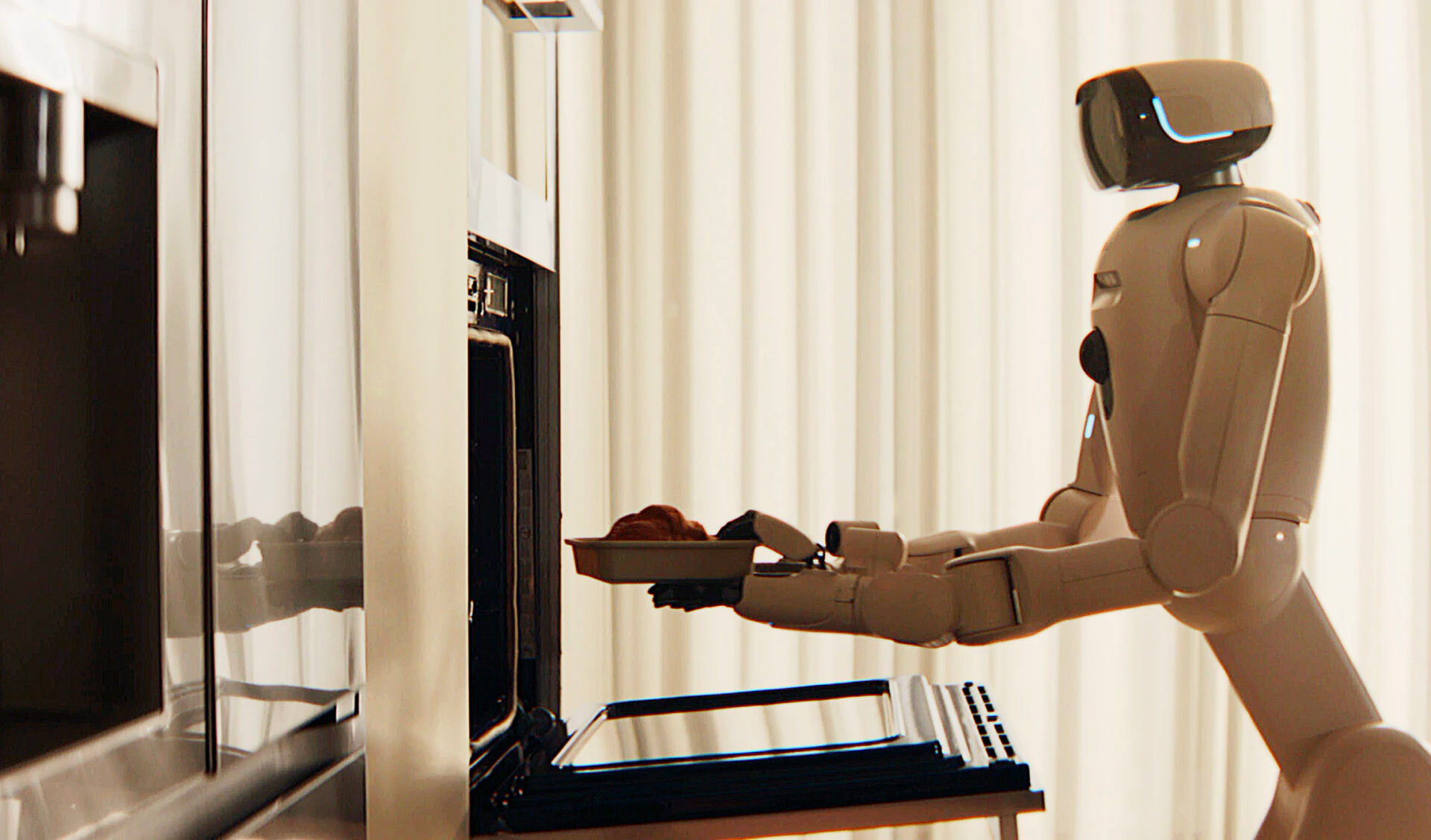
The interesting part is that CLOiD does not stop at voice interaction or facial expressions. It is meant to move its arms, handle objects, and coordinate with refrigerators, ovens, washing machines, dryers, and other home appliances. Instead of only telling an appliance what to do, the robot is meant to physically pick up, carry, place, and manipulate household items.
But if you are evaluating it as a conversation partner, expectations should be measured. CLOiD is not a pet robot or a small desktop chat robot. Its center of gravity is chores, appliance control, and home support. If daily voice prompts, emotional warmth, family messages, dialects, or a character-like presence matter more, robots such as Mia, Romi, BOCCO emo, or ElliQ belong in a different comparison set.
Pricing and Availability
Pricing Has Not Been Announced
As of September 7, 2026, LG has not confirmed general consumer pricing for LG CLOiD.
CLOiD was demonstrated at CES 2026, but LG's public material focuses on the Zero Labor Home and AI Home vision. It does not yet read like a standard consumer product page with final pricing, launch date, retail availability, or household support terms.
Before treating CLOiD as a real purchase candidate, check:
- Final hardware price
- Whether it will launch in Japan
- Japanese voice and UI support
- Which LG ThinQ appliances are required or supported
- Whether there are cloud fees or subscriptions
- Repair, warranty, and replacement terms
- Camera, microphone, and household-data policies
Can You Buy It From Japan?
There is no confirmed Japan consumer launch information as of this writing.
LG is a global appliance company, but a home robot like CLOiD depends on country-specific safety rules, wireless certification, service coverage, appliance compatibility, and language support.
For Japanese households, the question is not only whether the robot can be imported. You would also need to know whether it can operate safely in Japanese homes, connect with Japan-market LG appliances and services, and receive local repair support.
What LG CLOiD Can Do
Cooking and Laundry Support
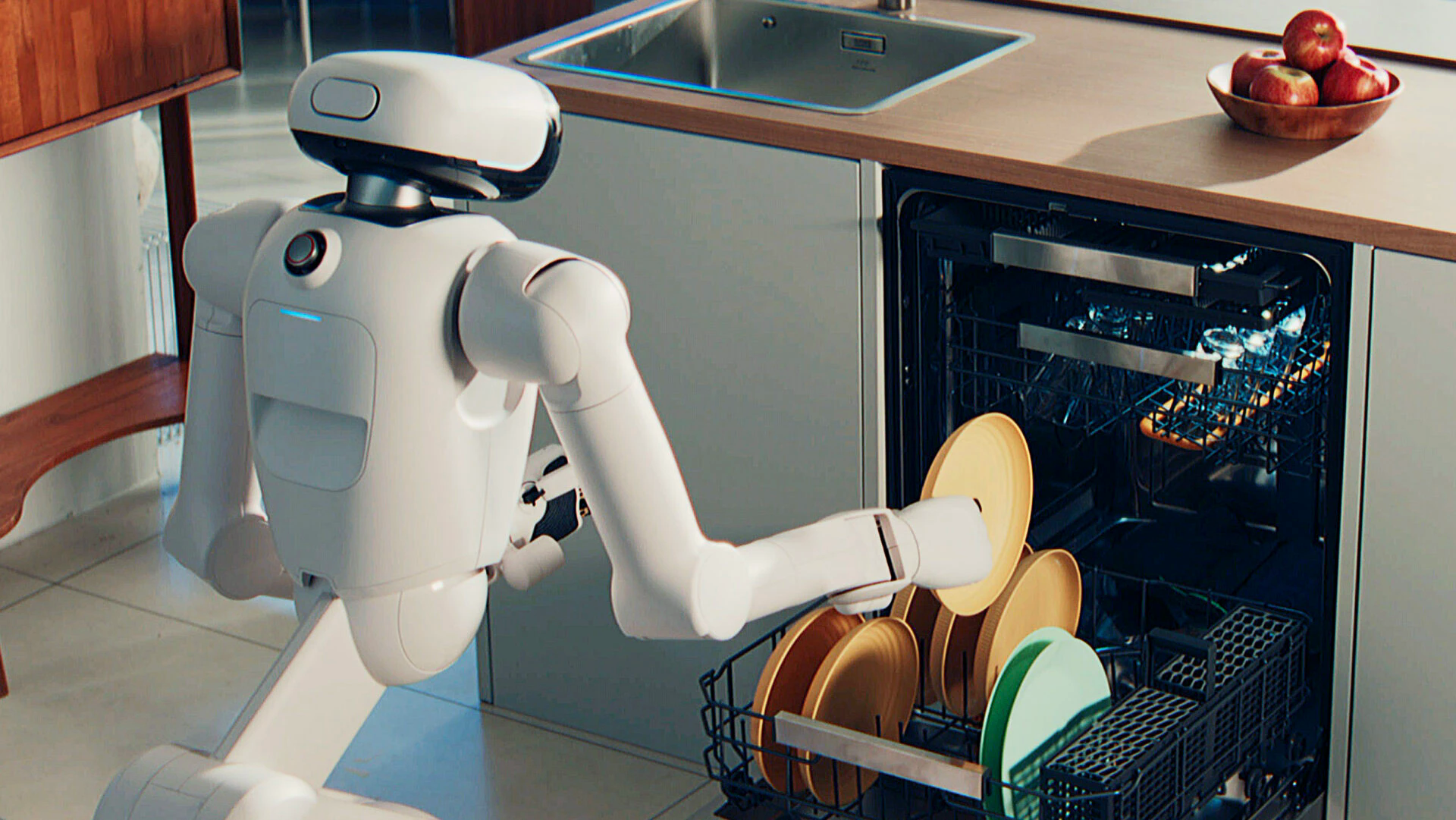
LG's official demonstration scenarios show CLOiD retrieving milk from a refrigerator, placing a croissant into an oven, starting laundry-related tasks, and folding and stacking clothes after drying.
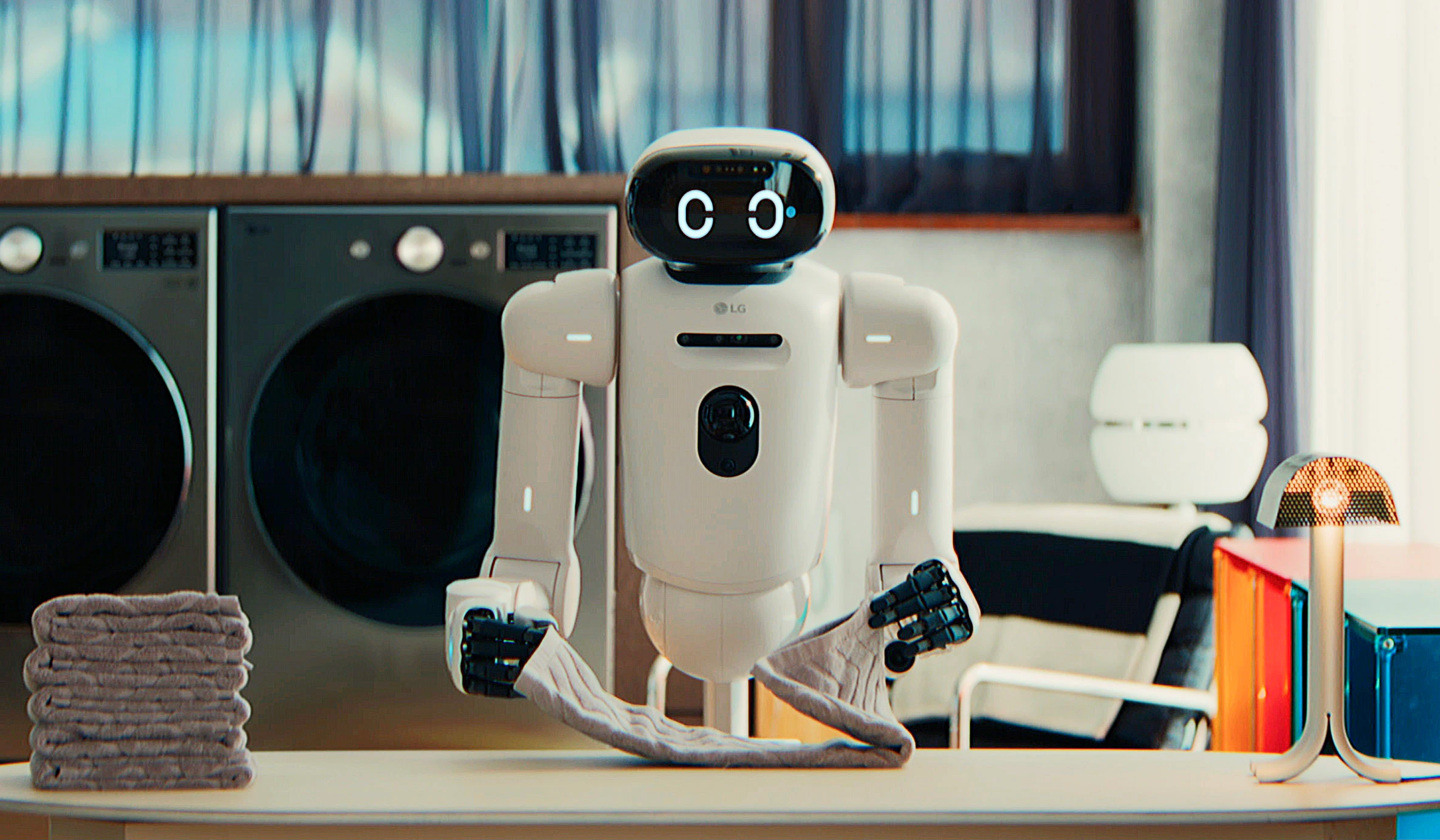
That makes CLOiD different from a normal voice assistant. A smart speaker can trigger an oven or answer a question, but it cannot lift food, move laundry, or physically interact with objects.
CLOiD tries to combine appliance-control AI with robotic arms so the robot can participate in chores themselves.
Two Arms and Five-Fingered Hands
LG says each arm has seven degrees of freedom. The shoulders, elbows, and wrists are designed to move in a human-arm-like range, and each hand has five independently actuated fingers.
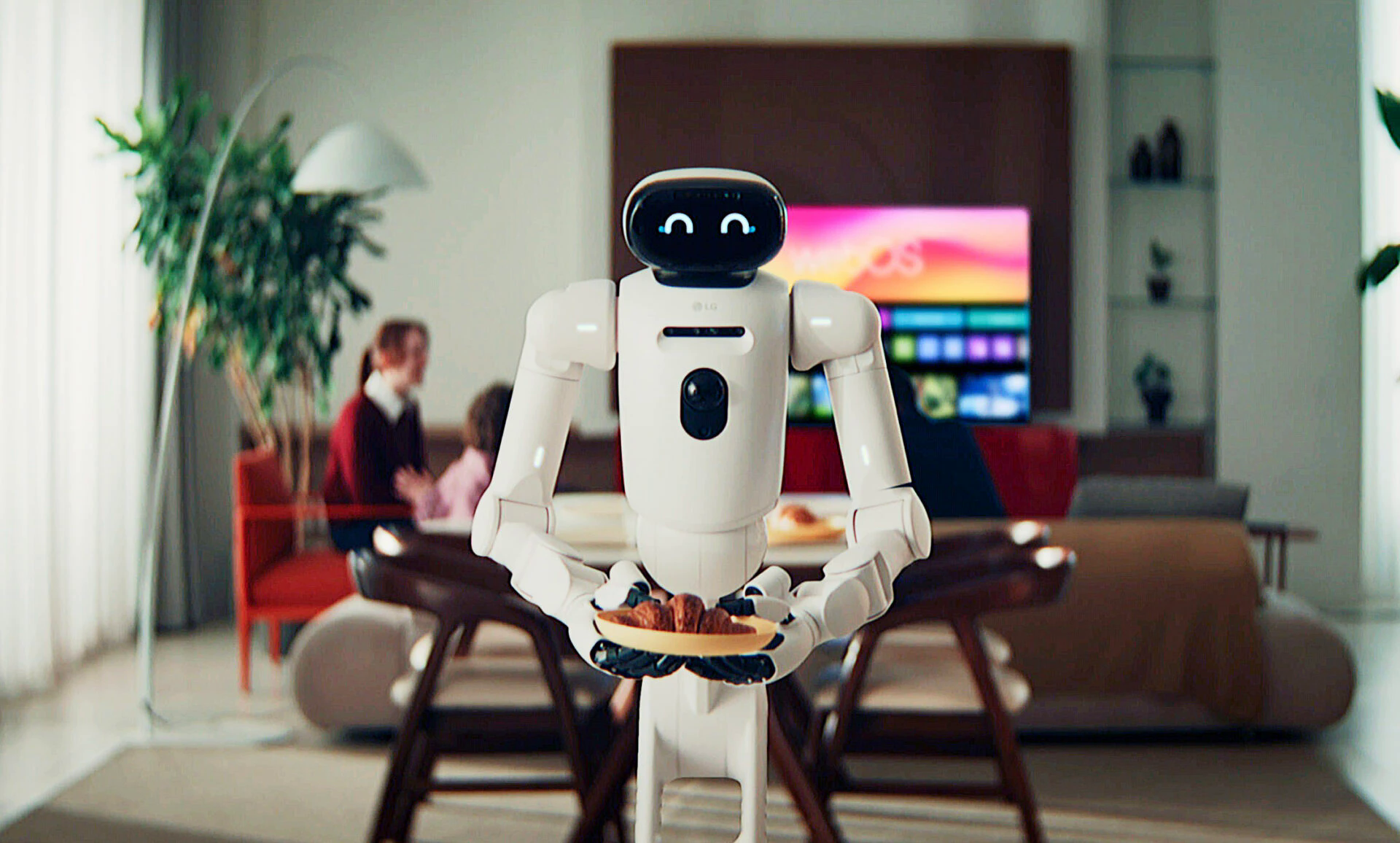
This setup is meant for grabbing, receiving, placing, opening doors, and interacting with appliances. LG also describes a height-adjustable torso so the robot can reach objects from lower to higher positions.
That said, home manipulation is a hard robotics problem. Towels, clothing, bags, cords, dishes, and food all behave differently. Handling them reliably and safely in a normal home is much harder than moving rigid parts in a factory.
A Wheeled Base for Indoor Movement
CLOiD uses a wheeled base. LG says this draws on its experience with robot vacuums and the LG Q9 self-driving AI home hub.
Wheels make sense for a home robot. They are generally more stable, less mechanically complex, and more cost-conscious than bipedal legs. In real homes, however, any mobile robot has to deal with rugs, thresholds, cords, narrow paths, furniture legs, pets, and children.
Key practical questions include:
- Can it handle stairs or thresholds?
- Does it stop on thick carpets?
- Can it avoid kitchen mats and cables?
- Does it stop safely around pets and children?
- Can it turn comfortably in small Japanese homes?
Those details need real-world reviews of the final consumer model, not just booth demonstrations.
The Head Works Like a Mobile AI Home Hub
CLOiD's head includes the robot's chipset, display, speaker, cameras, sensors, and voice-based generative AI.
LG positions this head as a mobile AI home hub. It is the part that talks with people, shows facial expressions, sees the room, interprets context, and controls appliances.
VLM and VLA: Seeing, Understanding, and Acting
Two important terms in LG's CLOiD announcement are VLM and VLA.
VLM, or Vision Language Model, turns images and video into language-like understanding. In a home, that could mean interpreting rooms, appliances, ingredients, laundry, windows, and household objects.
VLA, or Vision Language Action, is the next step: turning visual and verbal inputs into physical actions. A request like "put this in the oven" or "close the window if rain is coming" requires the robot to connect language, perception, planning, and motion.

For home robots, the hardest part is not conversation alone. It is converting conversation into physical actions that are safe, reliable, and appropriate in a changing home. CLOiD's usefulness will depend heavily on how well this part works.
As a Conversation Partner
It Can Talk, But Chores Are the Main Point
LG CLOiD includes voice-based generative AI, speakers, a display, and facial expressions. So yes, it has the ingredients for human-robot conversation.
Tom's Guide reported that, during CES 2026, CLOiD spoke in a soft male voice and appeared to anticipate a presenter's needs by offering water.
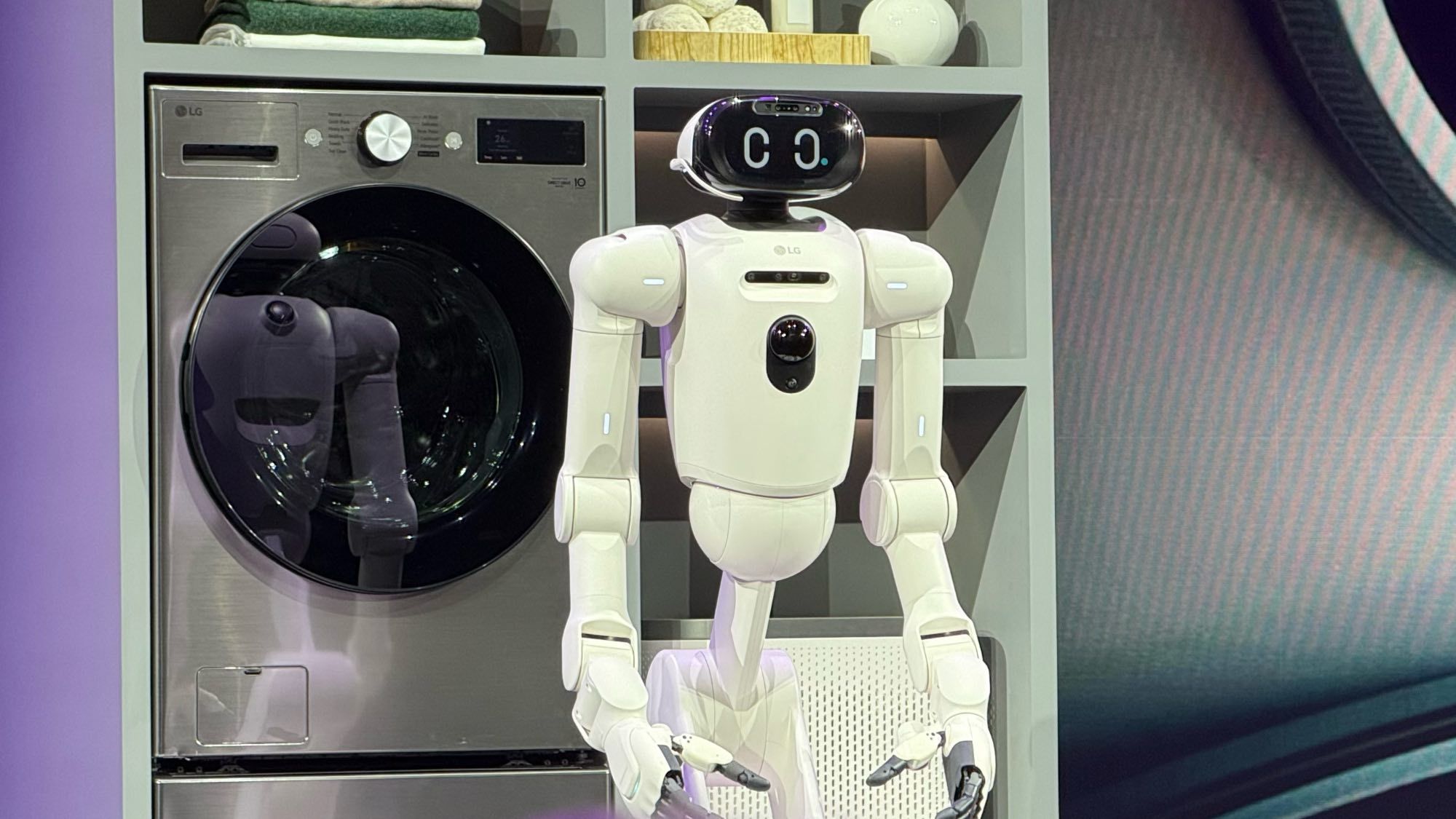
Still, CLOiD is not positioned primarily as a chat companion. It is a home robot for reducing household labor. If your priority is natural small talk, daily check-ins, family messages, dialect voices, or a comforting character, it is better to compare CLOiD separately from companion-first robots.
The Towel-Folding Demo Shows the Reality Gap
CLOiD also attempted towel folding at CES 2026. Tom's Guide reported that the robot moved slowly, produced crumpled results, and needed some human help during the demo.
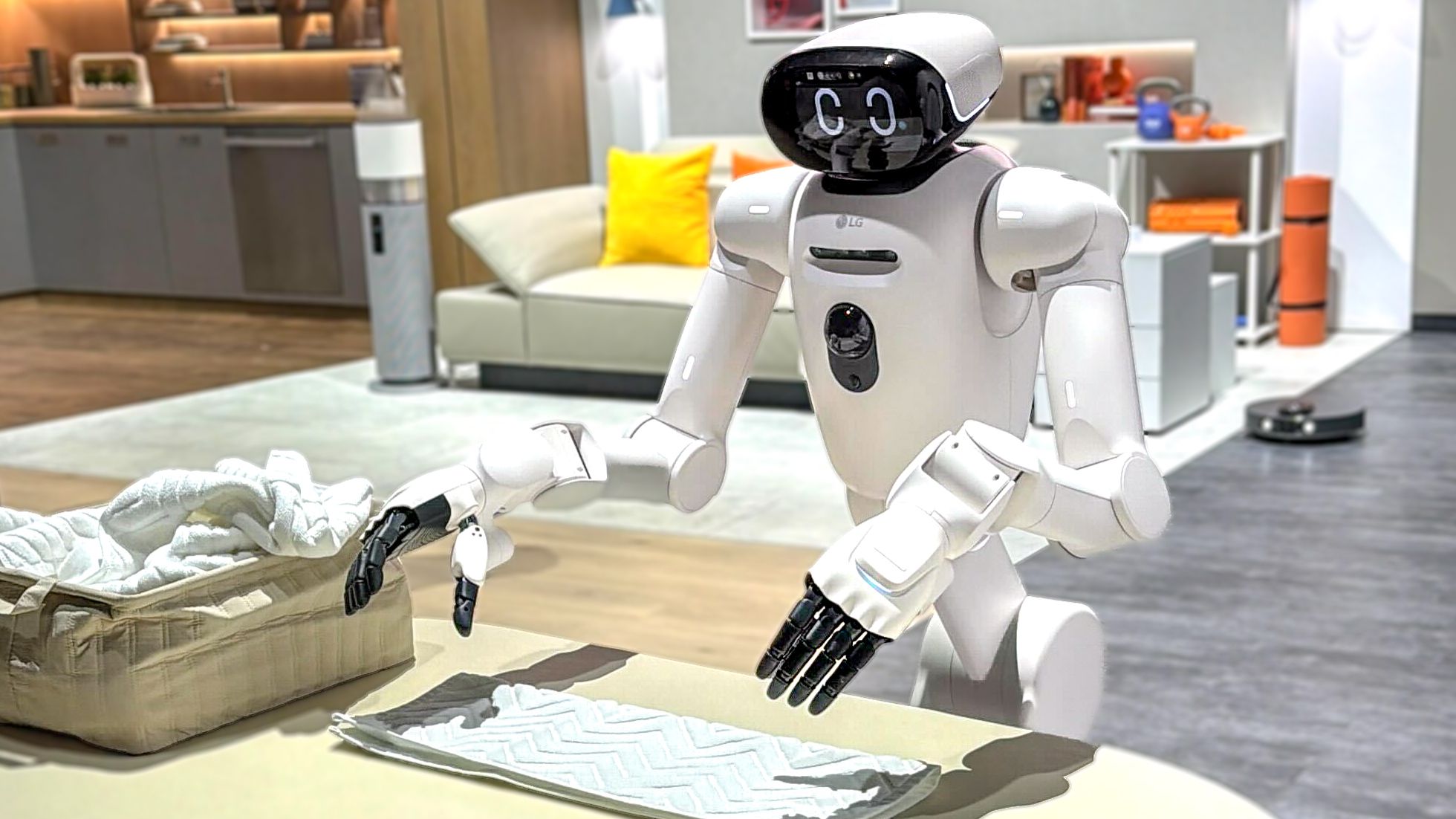
This is not simply an LG problem. It shows how hard home robotics is. Factory robots work in controlled environments. Homes contain soft fabric, changing object positions, narrow spaces, pets, children, and fragile objects.
So CLOiD is best viewed as proof that chore robots are moving closer, not proof that fully reliable home automation is already here.
How It Compares With Similar Robots
LG CLOiD is closer to a chore-supporting mobile AI home robot than a pet robot. The most useful comparisons are mobile AI agents, home-monitoring robots, and conversational companions.
| Product | Main Direction | What It Does | How It Differs From CLOiD | Best Fit |
|---|---|---|---|---|
| LG CLOiD | Chore support and AI Home | Object handling, appliance coordination, conversation, expressions, autonomous movement | Most focused on physically helping with chores | People tracking the future of household robots |
| FrontierX Aura | Mobile AI agent | Indoor movement, AI agents, skills, routines, smart home control | More development-platform and agent-oriented | People who like building AI and smart home workflows |
| Zeroth M1 | Monitoring, conversation, home support | Gemini conversation, fall detection, learning support, pet monitoring | Easier to understand as a family-monitoring and conversation robot | People prioritizing family monitoring and voice interaction |
| Amazon Astro | Monitoring and Alexa integration | Patrol, remote checking, Alexa, Ring integration | More consumer-oriented today, but has no arms | Amazon/Ring households focused on monitoring |
| Samsung Ballie | Smart home and projection | Mobile smart home control, projection-style experiences | More about display and appliance coordination than physical manipulation | Samsung smart home users |
| Mia | Conversation, daily prompts, comfort | Dialect voices, expressions, voice interaction, calendar, weather, family messages | Does not do chores, but focuses on everyday conversation | People who want a practical voice companion now |
How It Differs From FrontierX Aura
FrontierX Aura is a mobile AI agent robot for the home. It focuses on routines, skills, spatial awareness, and smart home customization.
CLOiD feels more appliance-maker-led. It is more about laundry, cooking, appliance operation, and physical help. If you want to build AI agent behavior, Aura is easier to frame. If you want a robot that physically intervenes in housework, CLOiD is the closer concept.

How It Differs From Zeroth M1
Zeroth M1 focuses on Google Gemini conversation, fall detection, elder monitoring, kids' learning, and home support.
CLOiD also has conversation and home support, but its main theme is reducing chores. M1 is easier to place as a family monitoring and conversation robot. CLOiD is easier to place as a physical AI robot connected to LG appliances.

How It Fits Into the Mobile AI Home Robot Category
Amazon Astro, Samsung Ballie, Moripet, MISA, FrontierX Aura, and other products show that mobile AI home robots are becoming a recognizable category.
But adding arms and real object manipulation raises the difficulty sharply. CLOiD sits on the more ambitious end of the category because it aims to use a robot body for chores, not just movement and monitoring.

What to Check Before Buying
1. Whether It Actually Launches for Consumers
For now, CLOiD is a CES 2026 home robot demonstration. It is not yet presented like a normal consumer product with a retail price and checkout page.
The expectations differ depending on whether you see it as a working product coming soon or as LG's vision for the future of AI Home.
2. Japanese Support and Local Appliance Compatibility
If you want a conversation robot, Japanese-language support matters. For CLOiD, compatibility with LG ThinQ, ThinQ ON, and supported appliances matters even more.
Japanese buyers would need to confirm whether Japan-market LG appliances and services can use the same CLOiD features.
3. Home Size, Steps, and Floors
Wheeled robots depend heavily on the home layout. Japanese homes may have thresholds, narrow paths, rugs, mats, cables, and furniture layouts that complicate navigation.
CLOiD also moves its arms, so it needs space not only to drive but also to reach safely.
4. Cameras, Microphones, and Household Data
CLOiD understands the home through cameras, microphones, and sensors. That can be useful, but it also raises privacy questions.
Before buying, check what data is stored, what is sent to the cloud, whether every household member has consented, how guests and children are handled, and how recordings or learned data can be deleted.
5. What Happens When It Fails
For home robots, failure behavior matters as much as successful demos.
What happens if the robot drops something, fails to fold clothing, loses network access, meets a pet, or gets touched by a child? How it stops, alerts users, recovers, and limits force will determine whether it feels useful or risky.
FAQ
Can You Buy LG CLOiD in Japan?
As of September 7, 2026, there is no confirmed Japan consumer launch information. Pricing, release date, Japanese-language support, and warranty terms have not been announced for Japan.
How Much Does LG CLOiD Cost?
General consumer pricing has not been announced. Given the large body, two articulated arms, five-fingered hands, sensors, AI processing, and appliance integration, it would likely belong to a very different price category from small conversation robots if released.
Can LG CLOiD Be a Conversation Partner?
It has voice interaction and facial expressions, but its main purpose is chore support and AI Home coordination. If you mainly want small talk, daily prompts, comfort, or family messages, compare it separately from companion-first robots such as Mia, Romi, or BOCCO emo.
Can It Fully Handle Household Chores?
It is too early to assume that. LG showed cooking and laundry scenarios at CES 2026, but soft-object handling such as towel folding still looked difficult in third-party coverage. Real-world usefulness should be judged after final consumer hardware and long-term reviews appear.
Is It Safe Around Pets and Children?
LG says the wheeled base was chosen partly for stability and safety. Still, actual use around pets and children depends on collision avoidance, stopping behavior, arm-force control, operating zones, and household rules.
Specs Summary
| Item | Details |
|---|---|
| Product name | LG CLOiD |
| Maker | LG Electronics |
| Debut | CES 2026 |
| Price | Not announced |
| Release timing | Not announced |
| Japan availability | Not announced |
| Main purpose | Chore support, AI Home coordination, appliance operation, lifestyle support |
| Form factor | Head unit, torso, two arms, five-fingered hands, wheeled base |
| Movement | Autonomous wheeled movement |
| Arms | Seven degrees of freedom per arm |
| Hands | Five independently actuated fingers |
| Conversation | Voice-based generative AI, speaker, facial expressions |
| Sensors | Cameras and various sensors |
| AI technology | VLM, VLA, LG Affectionate Intelligence |
| Appliance integration | LG ThinQ and ThinQ ON concept |
| Subscription cost | Not announced |
LG CLOiD vs. Mia
LG CLOiD and Mia can both be discussed as robots that fit into everyday life, but they are built for very different jobs.
| Comparison | LG CLOiD | Mia |
|---|---|---|
| Form | Humanoid-like upper body with wheeled base | Compact cat-shaped robot |
| Main features | Chore support, object handling, LG appliance integration, AI home hub | 47 Japanese dialects, expressions, voice conversation, Google Calendar, weather prompts, family messages, 15 English characters |
| Main purpose | Reducing housework, controlling appliances, lifestyle support | Comfort, loneliness reduction, daily voice interaction |
| How it moves | Wheeled movement, two arms, five-fingered hands, cameras and sensors | Voice recognition, head touch, blinking |
| Role of conversation | Interface for chores and AI Home actions | Conversation, dialects, and daily prompts are central |
| Ease of household adoption | Pricing, launch timing, and Japan support are unclear | Small and easy to place |
| Long-term experience | Depends on appliance integration and chore-support maturity | Builds habit and attachment through daily voice interaction |
| Price range | Not announced | From 9,800 yen including tax |
👇 Mia, the cat-shaped robot that speaks 47 Japanese dialects
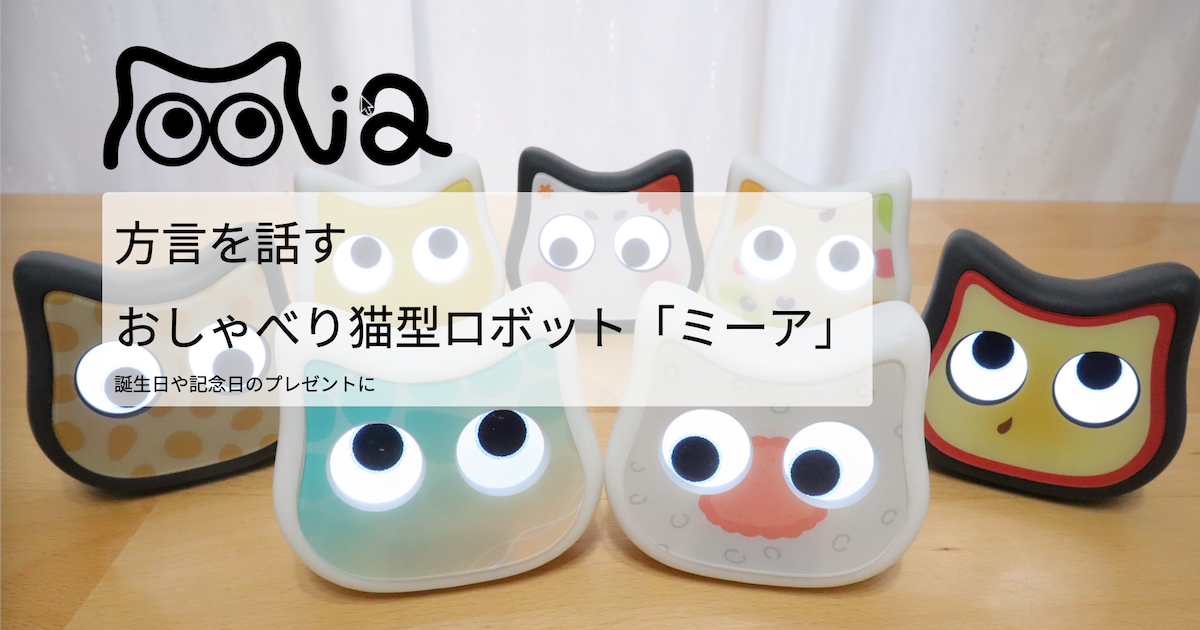
LG CLOiD is interesting as a future chore-support robot. But if you want a companion that can sit in the home now and talk to you every day, a voice-first robot such as Mia is the more practical comparison.
Summary
LG CLOiD is one of the more ambitious home robots shown in 2026.
It does not only talk. It aims to understand appliances, handle objects, and participate in cooking and laundry. ThinQ integration, VLM/VLA, a stable wheeled base, and five-fingered hands show how seriously LG is exploring a robot that can reduce household work.
Still, as of September 2026, it is not a straightforward buy-now conversation robot for ordinary households. Price, launch timing, Japan support, household reliability, privacy, and safety all remain open questions.
The clearest way to frame it is this: LG CLOiD is a useful signal of where AI home robots are heading. If you want daily conversation and comfort now, compare Mia and other companion robots. If you want to follow the future of robots that may physically help with chores, CLOiD is one to watch.
Related articles:
👉 FrontierX Aura Review: What to Know About This Mobile AI Agent Robot
👉 Zeroth M1 Review: Is This Gemini-Powered Walking Home Robot Worth It?
👉 Mobile AI Home Robots Compared: Amazon Astro, Samsung Ballie, FrontierX Aura, and More
👉 What Is Mia, the AI Cat Robot That Speaks 47 Japanese Dialects?
👀 You may also like:
👉 2026 Guide: AI Pet Robots for Elderly Loneliness – A Comparison of 10 Companion Robots
👉 2026 Edition: 9 Recommended Pet Robots Under $150 – Cheap, Cute, and Healing Models
👉 Monthly and Maintenance Costs of Pet Robots: Moflin, LOVOT, Mia, and More
👉 Mia – Your Chatty AI Cat Companion Robot with 100+ Expressions