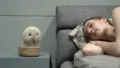
- A Robot That Puts Claude's Presence on Your Desk
- What Makes Starbond Vox Interesting
- The Idea of Feeding Tokens
- It Can Be a Clock and It Can Sleep
- Display Modes and Custom Characters
- Funding Status and Price Feel
- How It Differs From Similar Products
- Points to Check Before Backing
- Comparison With Mia, the Chatty AI Cat Robot
- Summary
A Robot That Puts Claude's Presence on Your Desk
Starbond Vox is a small AI pet robot designed for people who use Claude often.
The Kickstarter project name is "Starbond Vox: Build Your Own Claude AI Pet Robot." The idea is to show what Claude is doing, thinking, waiting to approve, and spending in tokens through a small physical companion on your desk instead of only through logs on a screen.

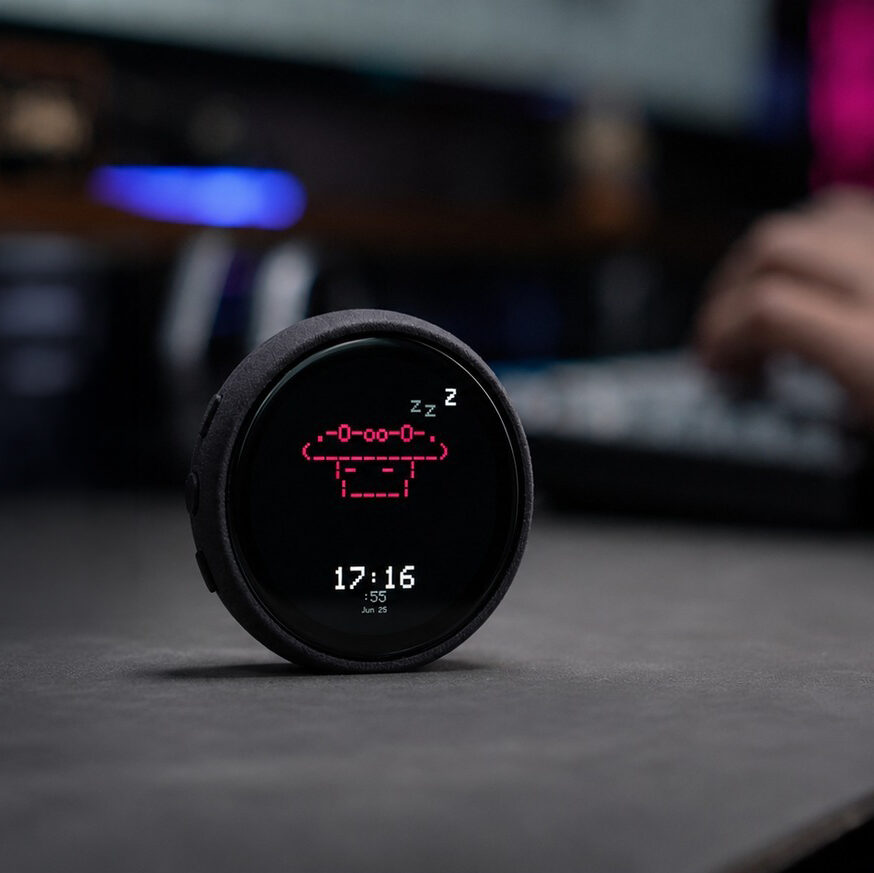
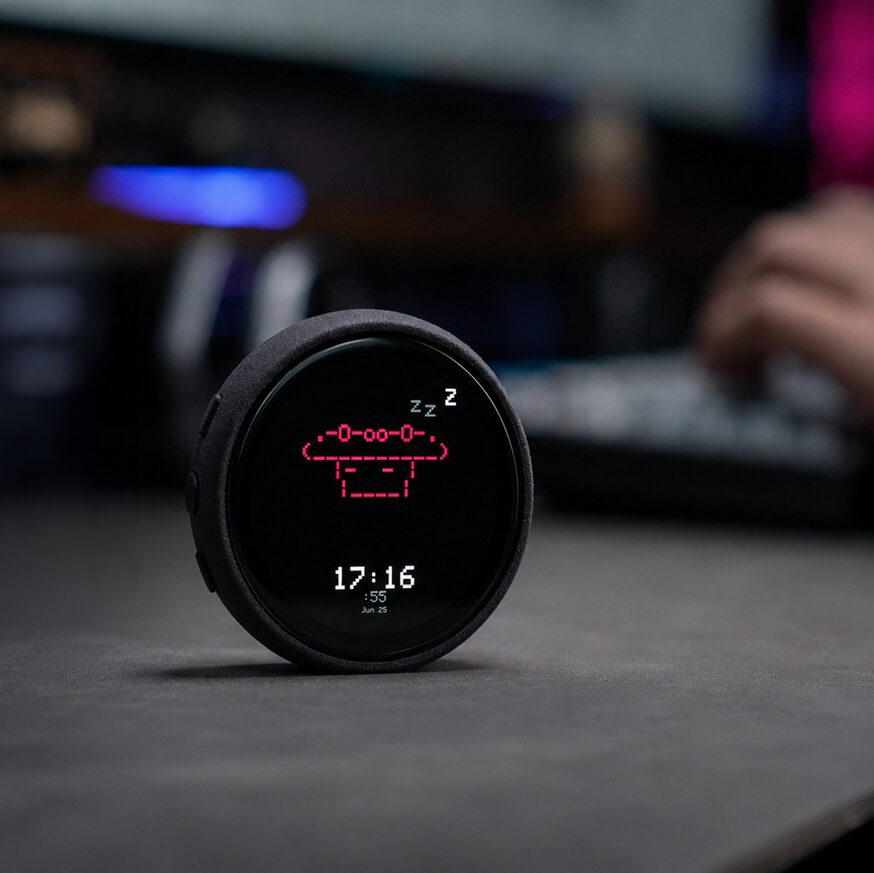
Image source: STARBOND / Kickstarter / Modern g
Kicktraq lists features such as Claude Sync, Tool Approval, Token Feeding, Mood Hearts, Energy Bars, Up to Lv.255, GIF Characters, Desk Clock, Sleep Mode, OTA, and Deep Sleep.

The important point is that Starbond Vox should not be treated as a family conversation robot. It is a desk gadget for Claude users. It is meant to make AI work feel more visible, more playful, and a little more present. If you want a broader view of this category, our AI desk companion robot comparison helps place Mia, Lepro Ami, Cubie, and similar products in context.
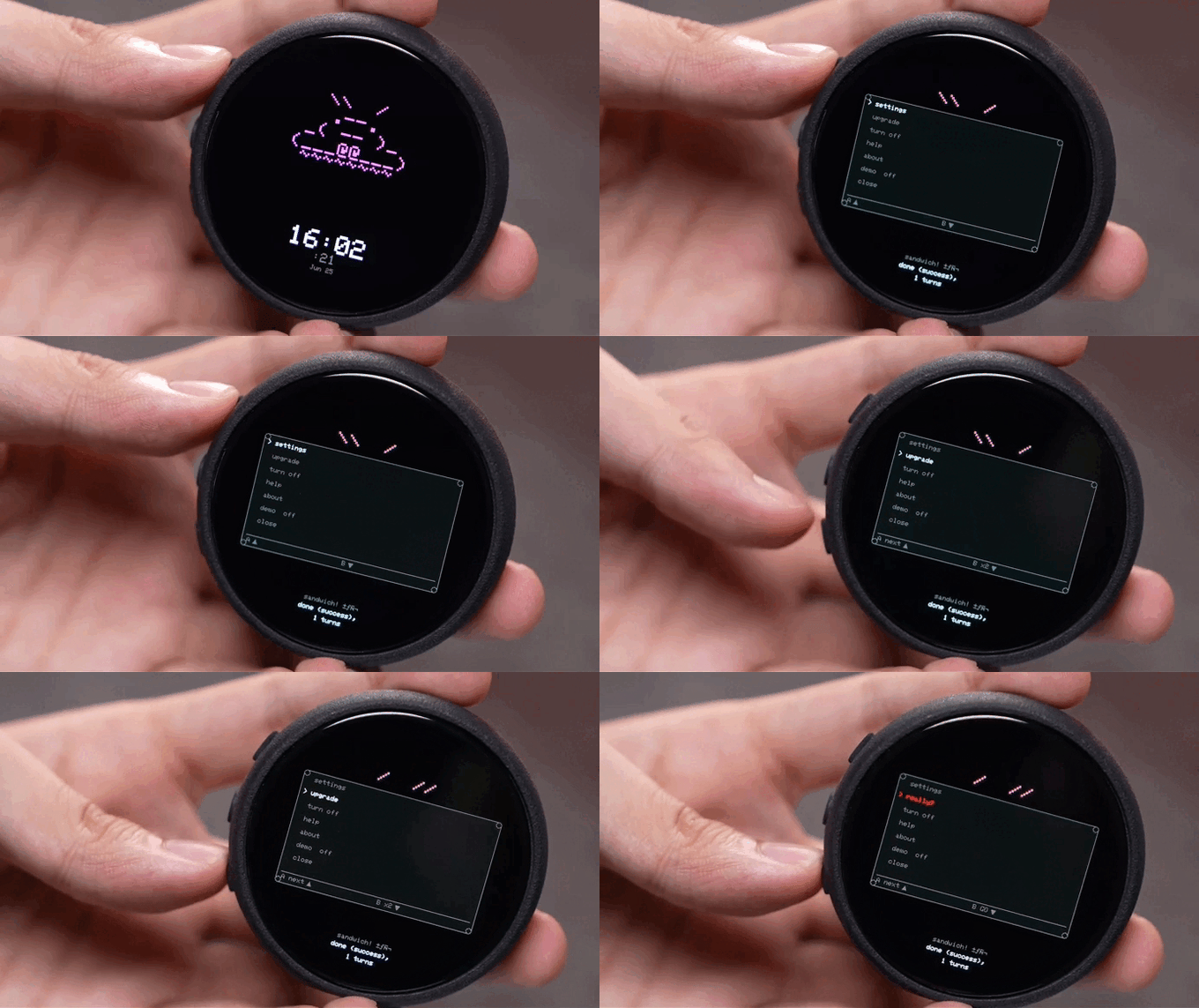
Modern g describes concrete hardware and software details such as a 1.85-inch round touch screen, A/B buttons, USB/Bluetooth connection, three display modes, custom GIFs, OTA updates, and MCP support.
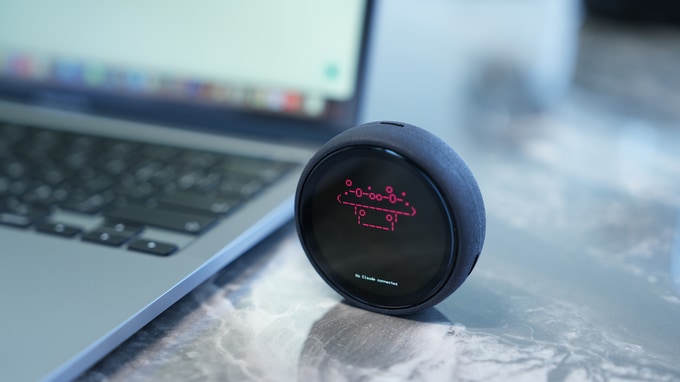
Image source: STARBOND / Kickstarter
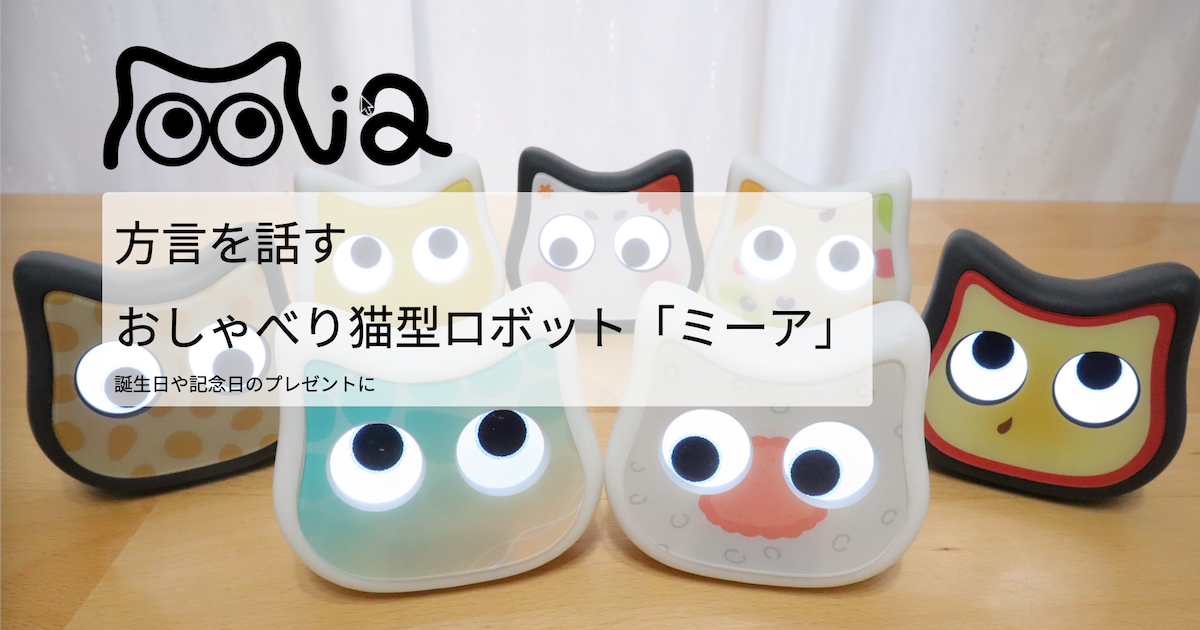
👇 Mia, the chatty AI cat robot with Japanese dialects
What Makes Starbond Vox Interesting
The most interesting part of Starbond Vox is that it tries to turn AI work into a pet that grows.
When you use Claude, much of the work happens inside a screen. Logs scroll, approvals appear, tasks finish, and you give the next instruction. That flow is useful, but it can also feel abstract.
Starbond Vox gives that flow a small body. It reacts when AI is working, grows as tokens are used, and changes state when approval is needed. If this is implemented well, it becomes more than a notification device. It becomes a desk companion for AI work.
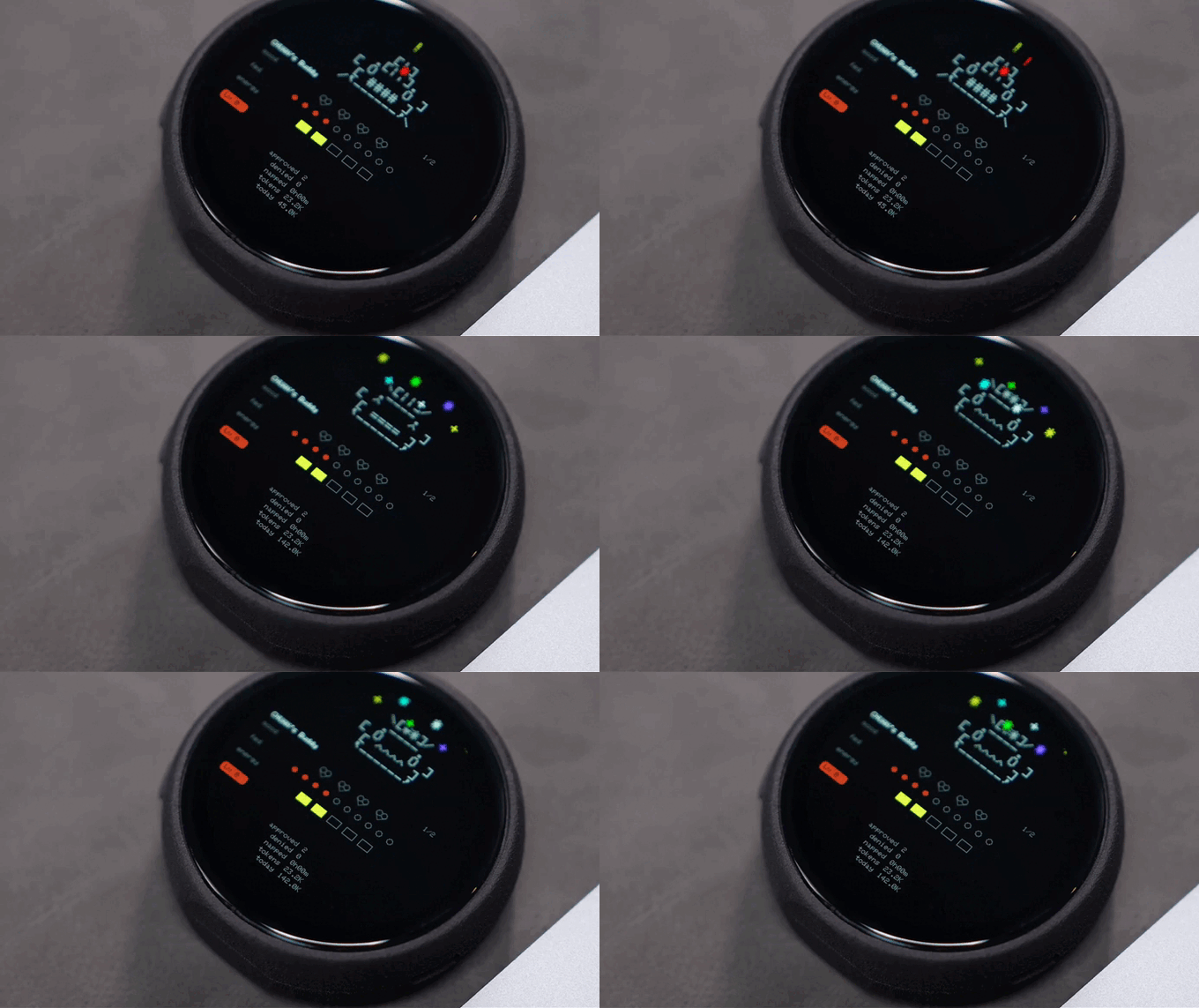
Tool Approval is also worth watching. When people use AI agents, there are moments when a human must approve command execution or file changes. If Vox can show approval waits and handle physical approval actions, it could become part of the workflow, not only a cute display.
Modern g introduces a flow where the A button approves and the B button rejects. If approval and rejection are reflected in the pet's expression, it becomes a small interaction during work rather than just another button.
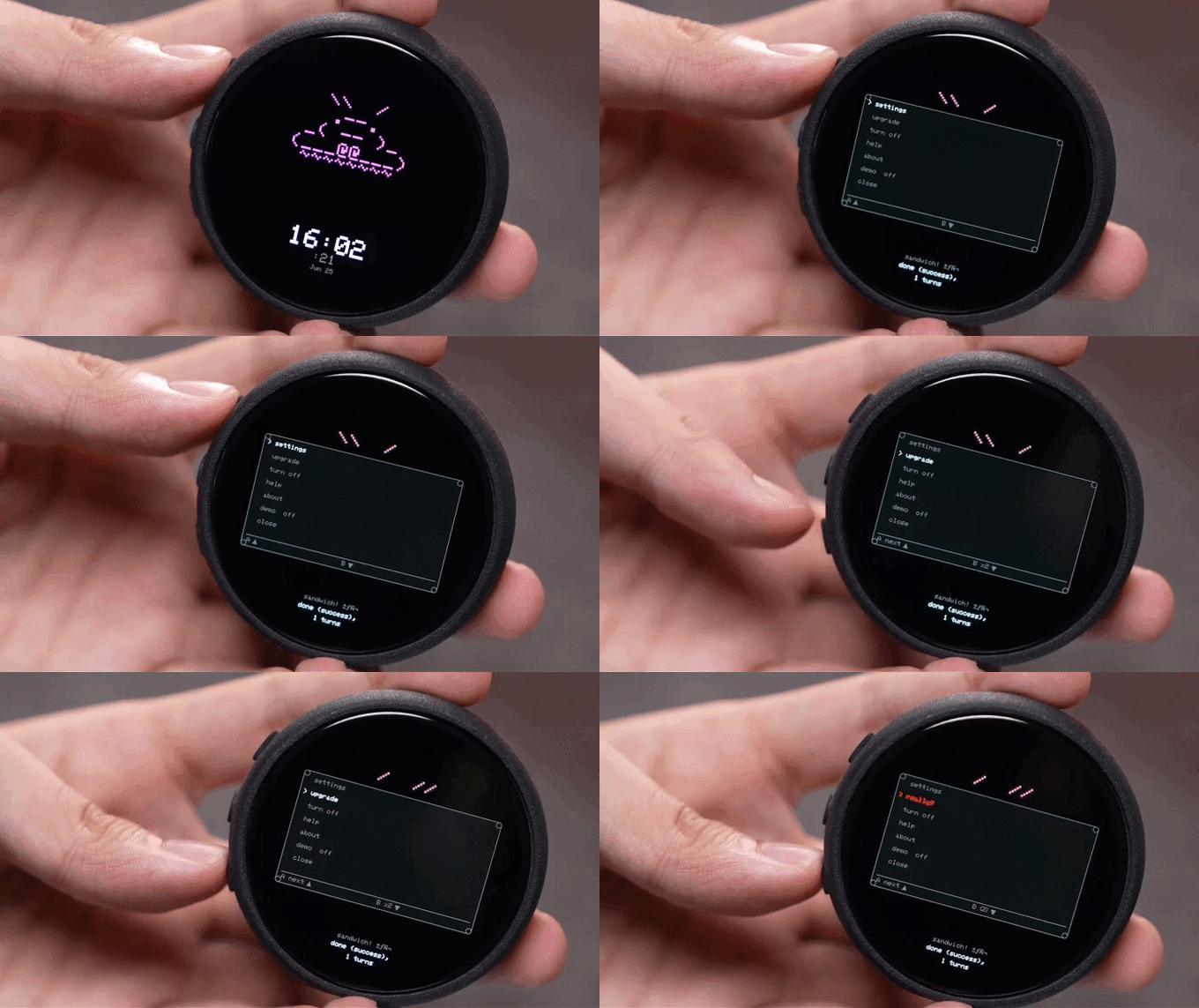
Safety matters here. What is being approved? How are dangerous actions shown? How are accidental approvals prevented? If this part is weak, the concern can outweigh the cuteness. If you are interested in physical AI agent robots more broadly, compare it with our FrontierX Aura review. Aura is about a moving home AI agent, while Vox is more focused on making AI work status visible.
The Idea of Feeding Tokens
Token Feeding and Lv.255 show that Starbond Vox is trying to turn AI usage volume into a growth mechanic.
You ask Claude to work. Tokens are consumed. Vox changes state. The more you use it, the more it grows. Modern g says Vox levels up every 50,000 tokens and can grow up to level 255.
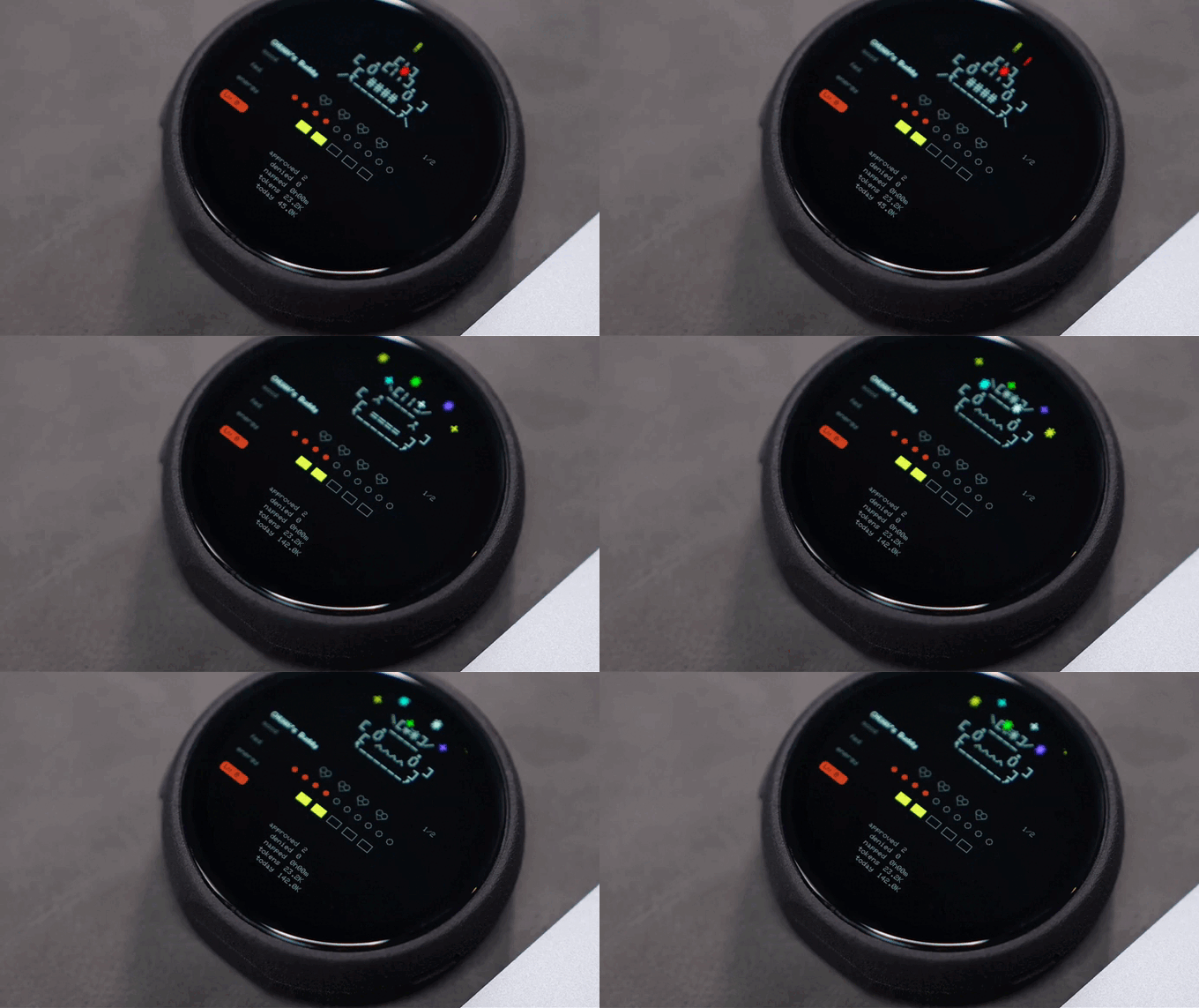
This is a gamified view of AI work. Instead of ending as a number, the amount of work becomes growth for a small desk pet. People who use Claude heavily may find that easy to get attached to. If you are comparing physical AI companions built around ChatGPT conversation and emotional expression, our OUROBOT review is also relevant. Vox is different because it focuses less on conversation and more on AI work progress, token use, and approval states.
A similar software idea is Tokodachi. Tokodachi reacts to Claude Code and Codex sessions and grows based on token usage as a desktop pet.
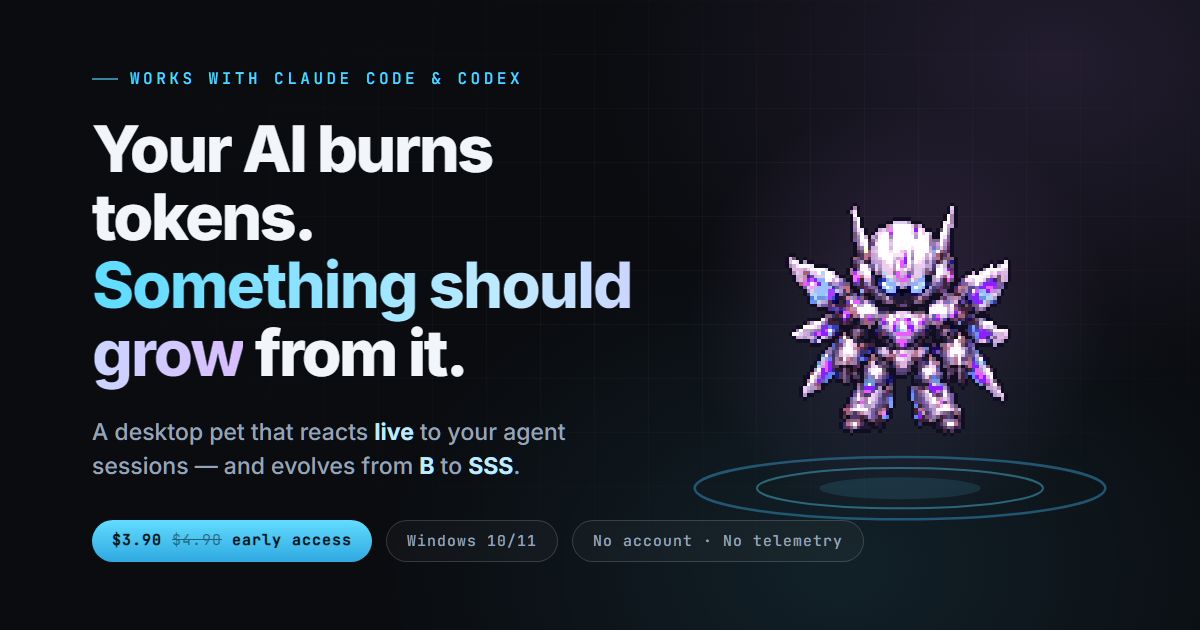
Starbond Vox takes that kind of idea and turns it into a physical device. It stays in your peripheral vision. It does not disappear when you close a window. That physical presence is the main value.
It Can Be a Clock and It Can Sleep
Starbond Vox is not only a device that moves during AI work.
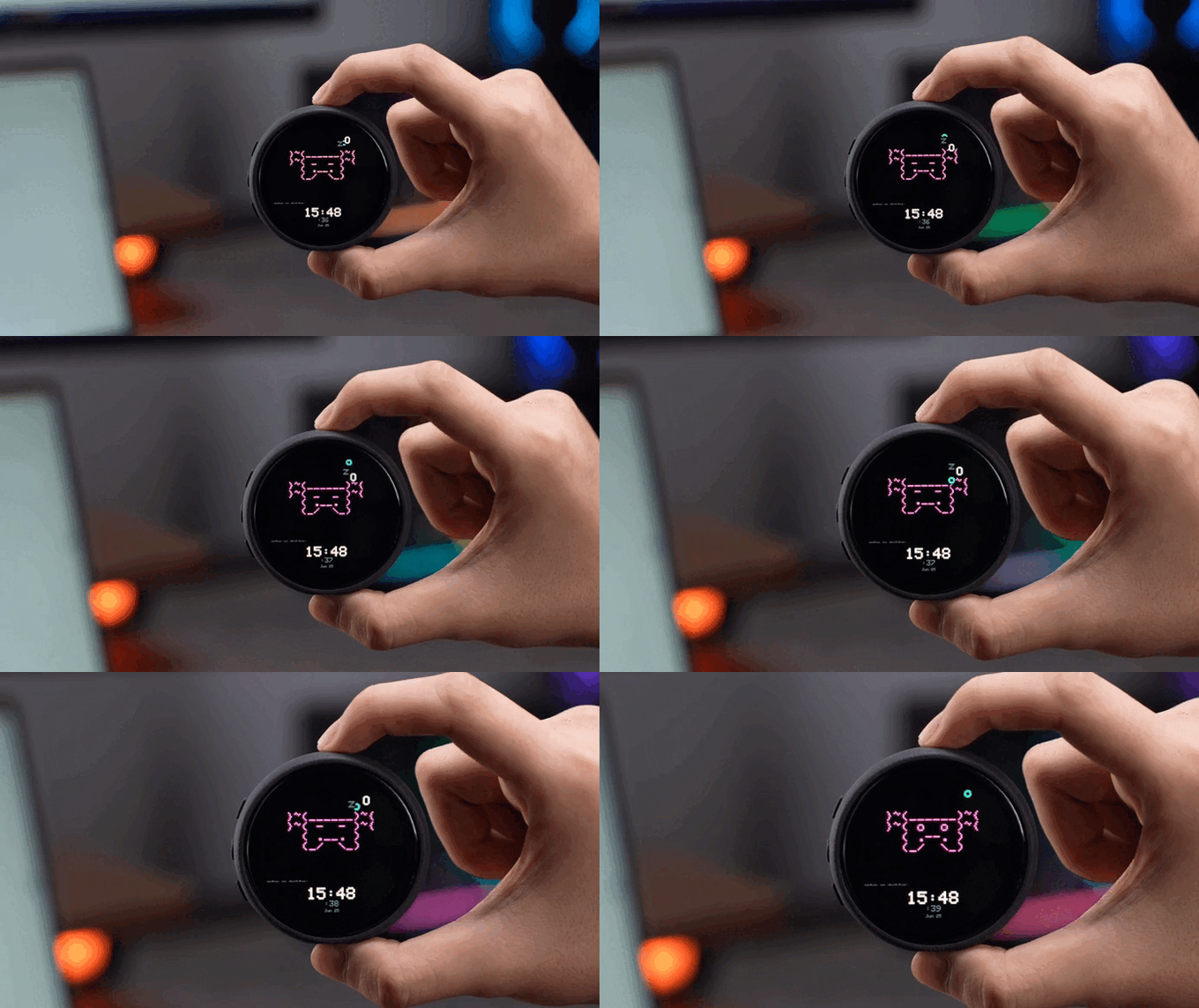
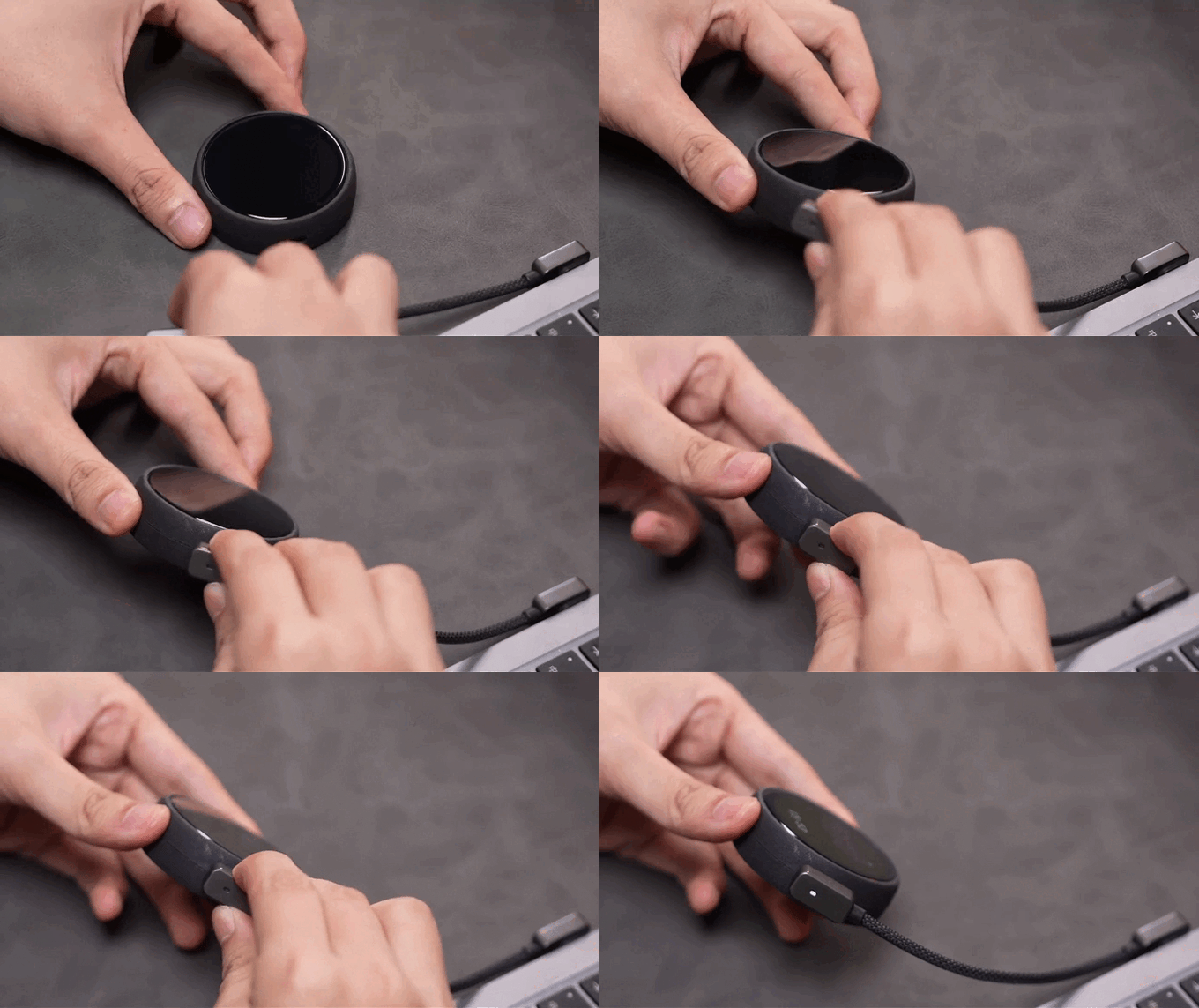
Modern g also describes an energy bar, nap mode, and desk clock mode. When it runs for a long time, energy decreases and the display becomes sleepy. When connected by USB and Claude is idle, it can work as a desk clock. These details give the device a reason to stay on the desk even when you are not actively using AI.
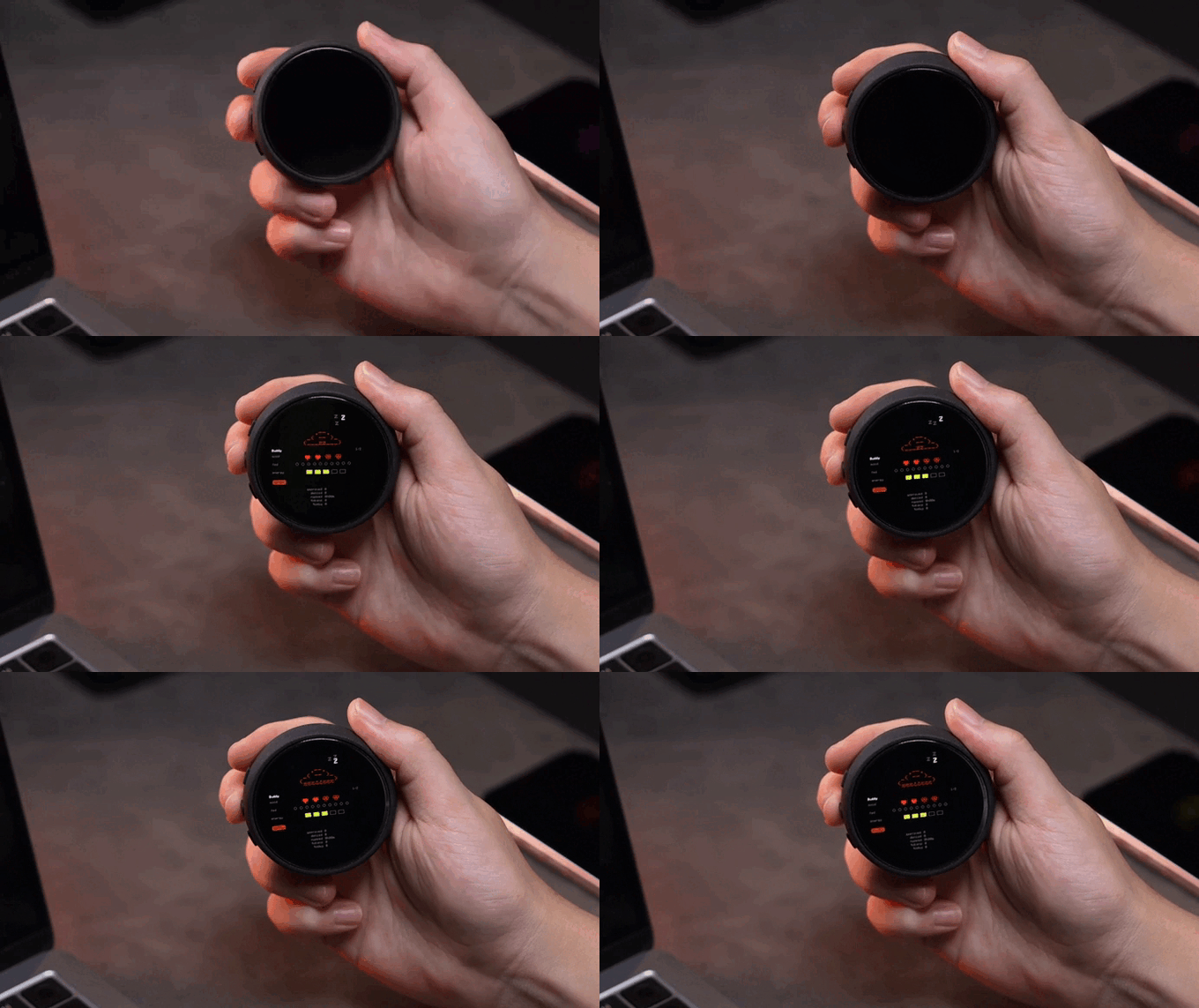
Clock functionality is simple, but it matters for a desk gadget. A device that stays on the desk should not feel useless when the main feature is idle. Starbond Vox seems to understand that.
Display Modes and Custom Characters
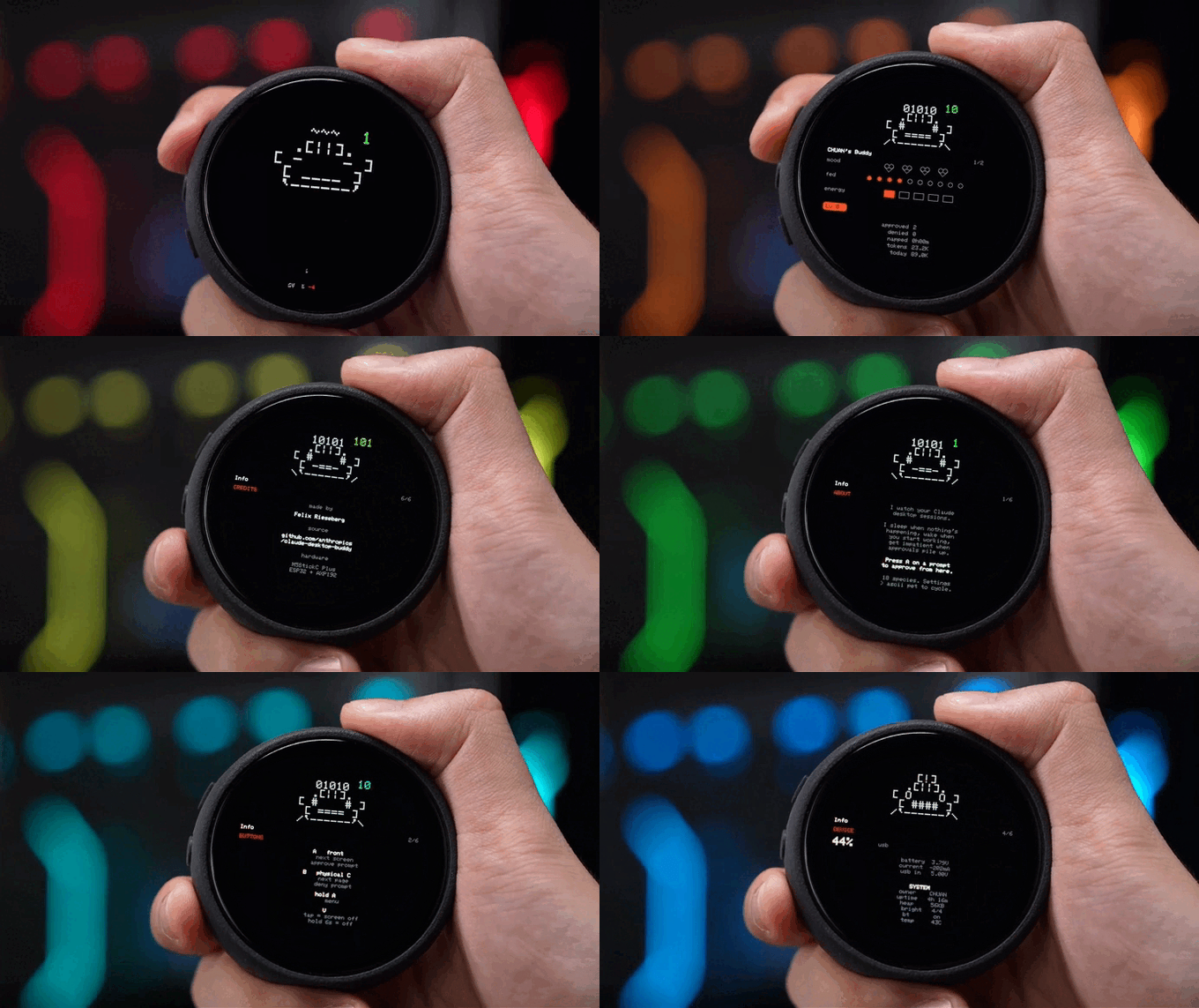
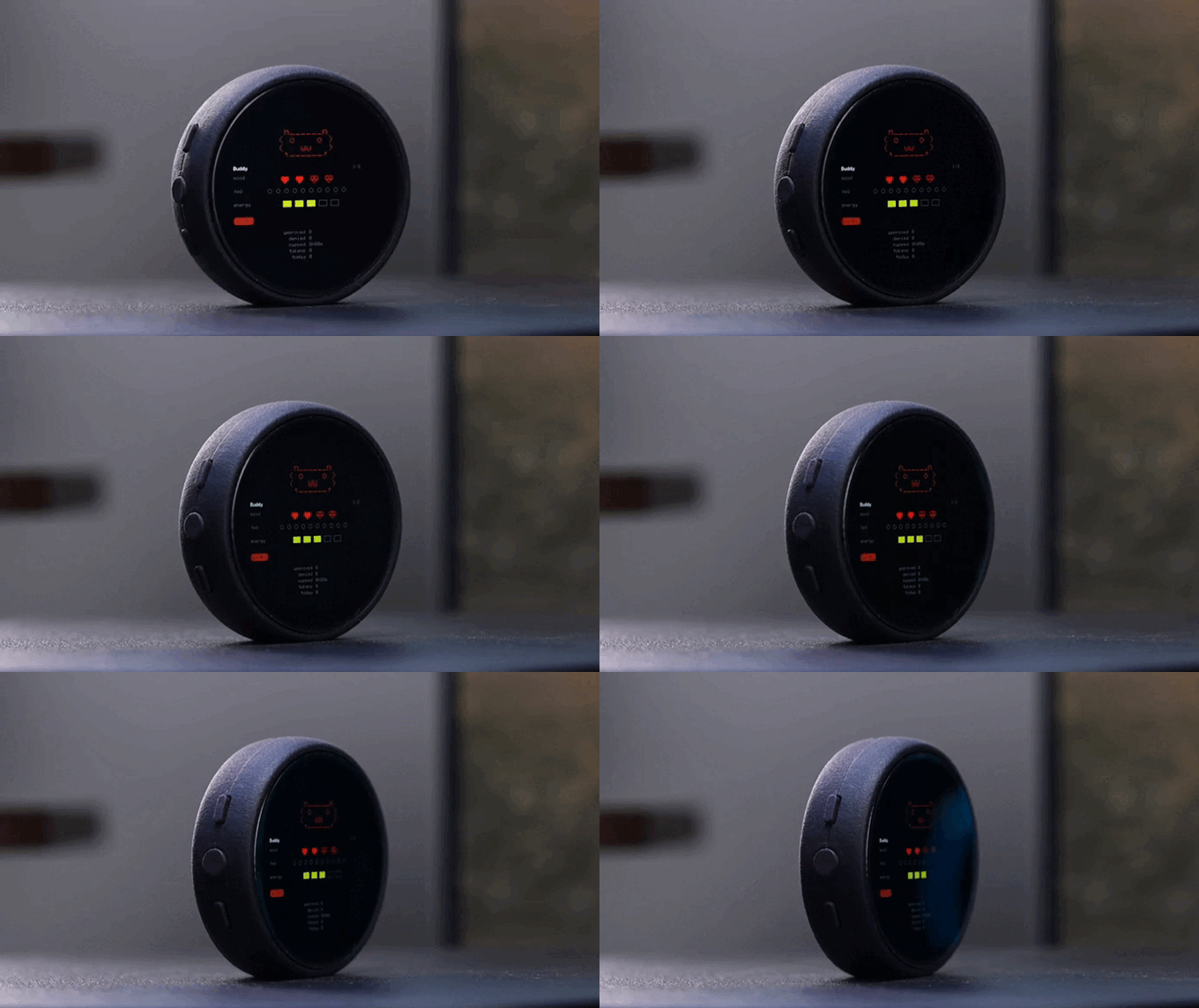
Three display modes are introduced: NORMAL, PET, and INFO.
NORMAL appears to be for checking Claude status, PET is more about mood and level, and INFO is for settings and help. If the A button can switch modes, it should be easy to use status display while working and pet display while taking a break.
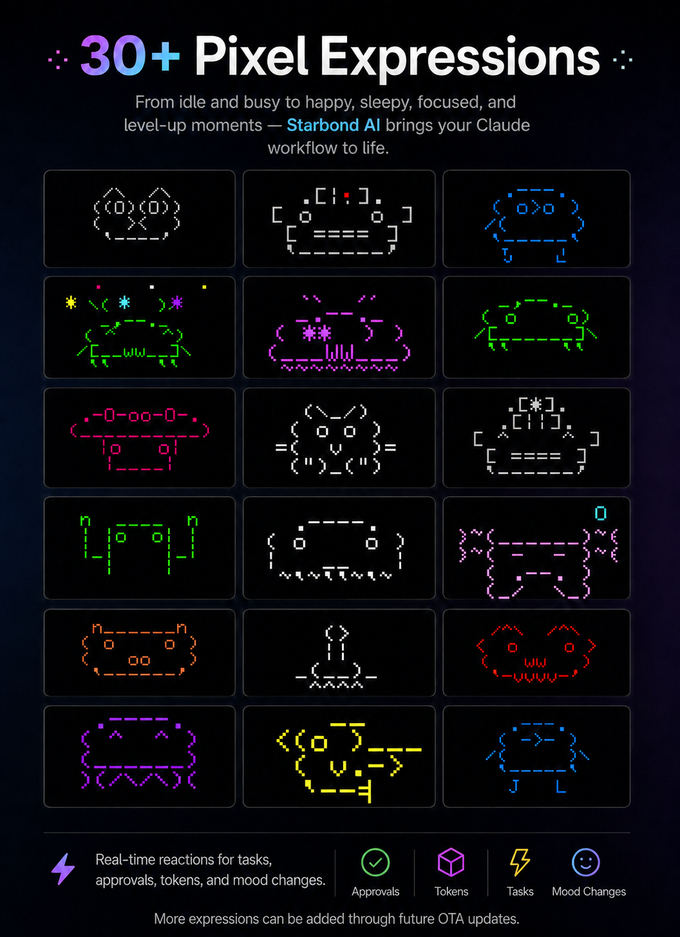
Character customization is another Vox-like feature. It can show simple ASCII-style displays or GIF characters, and custom GIFs can be sent from the desktop side. If the look can match your desk environment, it may be easier to keep using than a plain notification terminal.
Funding Status and Price Feel
The Starbond Vox Kickstarter campaign runs from July 9, 2026 to August 8, 2026.
At the time checked on Kicktraq, the project showed $3,864 pledged against a $3,000 goal, 25 backers, and 128% funding. The average pledge was about $155. At $1 = 160 yen, that is about 24,800 yen.
BackerKit also lists the project as a funded and active Kickstarter project.

At this price, it is more natural to compare Starbond Vox with niche desk gadgets for AI workers than with Mia or general home conversation robots. It is not a luxury robot, but because it is a Kickstarter product, the real cost depends on shipping, delivery timing, included items, and support.
Modern g lists a price of 16,060 yen on its product page. Since that is an external purchase guide, anyone considering it should still check the Kickstarter reward details, shipping fee, and delivery timing.
How It Differs From Similar Products
PixClaw is a small desk pet for AI agents that mentions OpenClaw and Anthropic's Claude Desktop Buddy protocol.
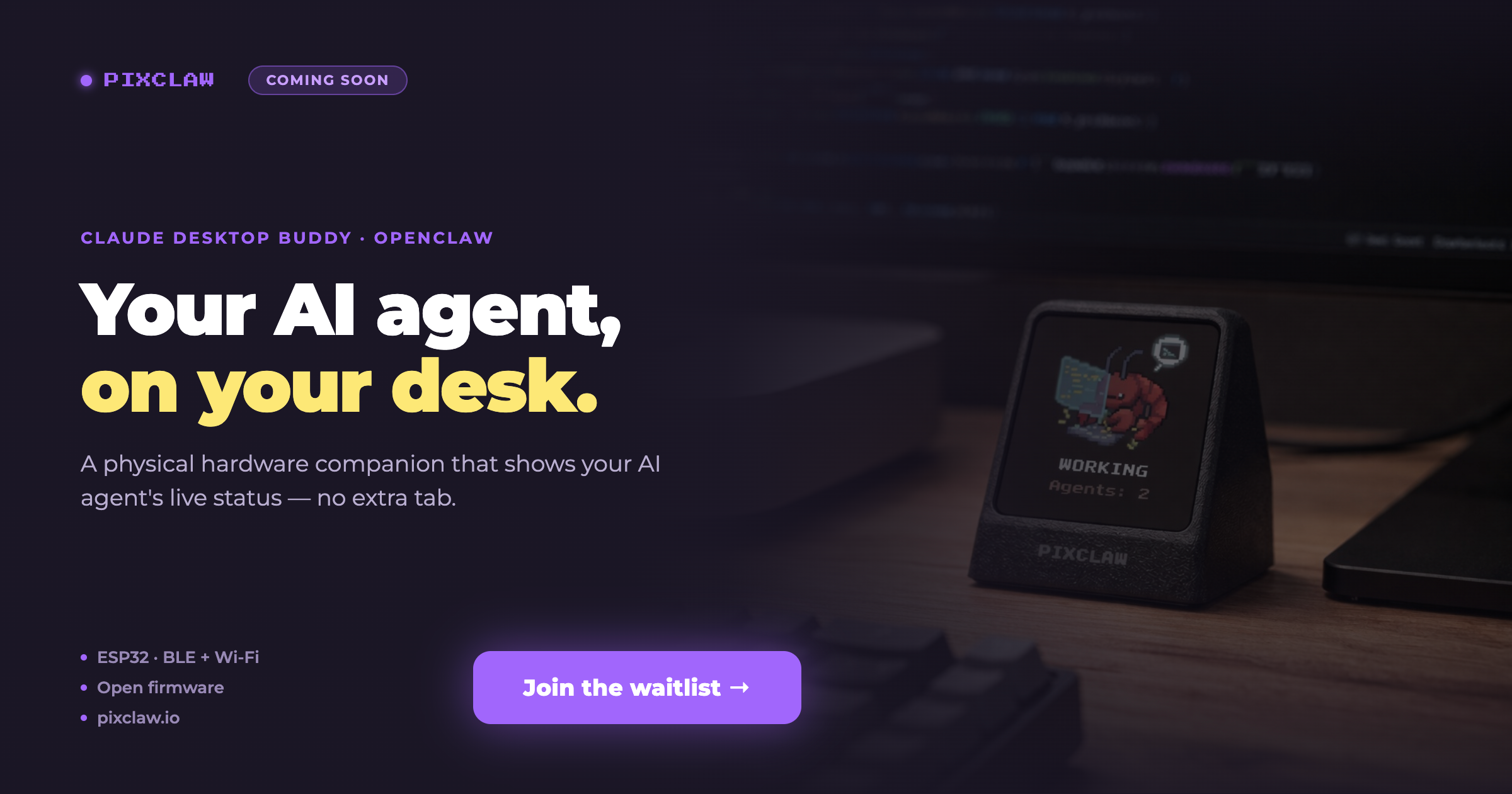
PixClaw emphasizes open firmware and looks developer-friendly. Starbond Vox is more strongly framed around the Claude work experience itself, with Claude Sync, Tool Approval, Token Feeding, and Mood Hearts.
Clyde on Desk and Tokodachi are software desktop pets.

Software pets are easy to install and have no shipping or hardware failure. Starbond Vox is the opposite. Its value is that it physically sits on your desk. It remains visible even when windows are closed.
Even within desk AI robots, products differ sharply. In our Kubee review, Kubee is more about far-field voice pickup, face detection, and monitoring. Vox is more about Claude status display, token growth, and Tool Approval than cameras or calls.
Points to Check Before Backing
The main concern is supported environments.
"Claude support" can mean Claude Desktop, Claude Code, API, browser use, MCP integration, or several other patterns. If it does not match the environment you use every day, the physical pet may end up as only a clock.
People who mainly use Codex or ChatGPT should also be careful. Starbond Vox is clearly presented around Claude integration, so it may not work the same way with other AI tools.
Usability from Japan is another point. Check shipping to Japan, shipping fees, radio certification, warranty, support for initial defects, Japanese instructions, and assembly difficulty. It is in the DIY Electronics category, so tools and assembly steps also matter.
Kickstarter is not normal online shopping. Specification changes and shipping delays can happen. This product is best for people who can enjoy that kind of project risk.
Comparison With Mia, the Chatty AI Cat Robot
Starbond Vox and Mia are both small robots that can sit on a desk. Their roles are very different.
| Item | Starbond Vox | Mia |
|---|---|---|
| Type | DIY Claude-connected desk pet | Chatty AI cat companion robot |
| Main value | AI work status, Tool Approval, token growth | Daily voice prompts, dialects, expressions, family communication |
| Intended users | Developers and AI workers who use Claude | People living alone, families, older adults, children, and cat lovers |
| Conversation | Centered on Claude connection, not family daily conversation | Designed for Japanese voice interaction |
| Japanese support | Unconfirmed | Easy to use in Japanese |
| Dialects | Unconfirmed | Supports all 47 Japanese prefectural dialect styles |
| Expressions and reactions | Mood Hearts, Energy Bars, GIF Characters, nap mode | 100+ expressions |
| Daily support | Mainly AI work approval and status display | Google Calendar integration, weather voice prompts, daily speech |
| Expandability | DIY, OTA, USB/BLE, and MCP are emphasized | Focused on easy home use |
| Price range | Average pledge about $155, around 24,800 yen | From 9,800 yen including tax |
| Best fit | People who want to see AI work as a physical pet | People who want affordable daily voice prompts and comfort |
Starbond Vox fits a desk where Claude is used often. It can make development, writing, and research feel a little more playful by showing AI work status as a small companion.
Mia is not aimed at AI workers. It is a robot for hearing a friendly voice in daily life. It speaks in 47 Japanese dialect styles, reacts with expressions, and creates everyday prompts through Google Calendar integration and weather voice notifications. It is also easier to use for children and family conversation. For more detail, see Mia's two-way conversation mode, Google Calendar robot reminders, and weather-speaking robot features.
If you want an AI work pet beside Claude, Starbond Vox is the more natural fit. If you want a Japanese-speaking cat robot that talks to you every day, Mia is the clearer choice.
👇 Mia, the chatty AI cat robot with Japanese dialects
Summary
Starbond Vox is a niche desk AI pet robot made for people who use Claude.
Claude Sync, Tool Approval, Token Feeding, Mood Hearts, Energy Bars, GIF Characters, Desk Clock, and OTA support all point toward one idea: making AI work visible, growing, and physically present on your desk.
It is not a home conversation robot. It is best for people who use Claude daily, want to see AI work as a physical pet, and are comfortable with DIY gadgets and Kickstarter risk.
Starbond Vox is an "AI work companion." Mia is a "daily voice companion." Starbond Vox fits a developer's desk. Mia fits family life, older adults, and everyday conversation. Both are small desk-friendly robots, but the choice depends on whether you want to see AI tool status or add more voice interaction to daily life.
👀 You may also like:
👉 2026 Guide: AI Pet Robots for Elderly Loneliness – A Comparison of 10 Companion Robots
👉 2026 Edition: 9 Recommended Pet Robots Under $150 – Cheap, Cute, and Healing Models
👉 Monthly and Maintenance Costs of Pet Robots: Moflin, LOVOT, Mia, and More
👉 Mia – Your Chatty AI Cat Companion Robot with 100+ Expressions