What Is BUDDY?
BUDDY is a companion robot developed by Blue Frog Robotics in Paris, France.
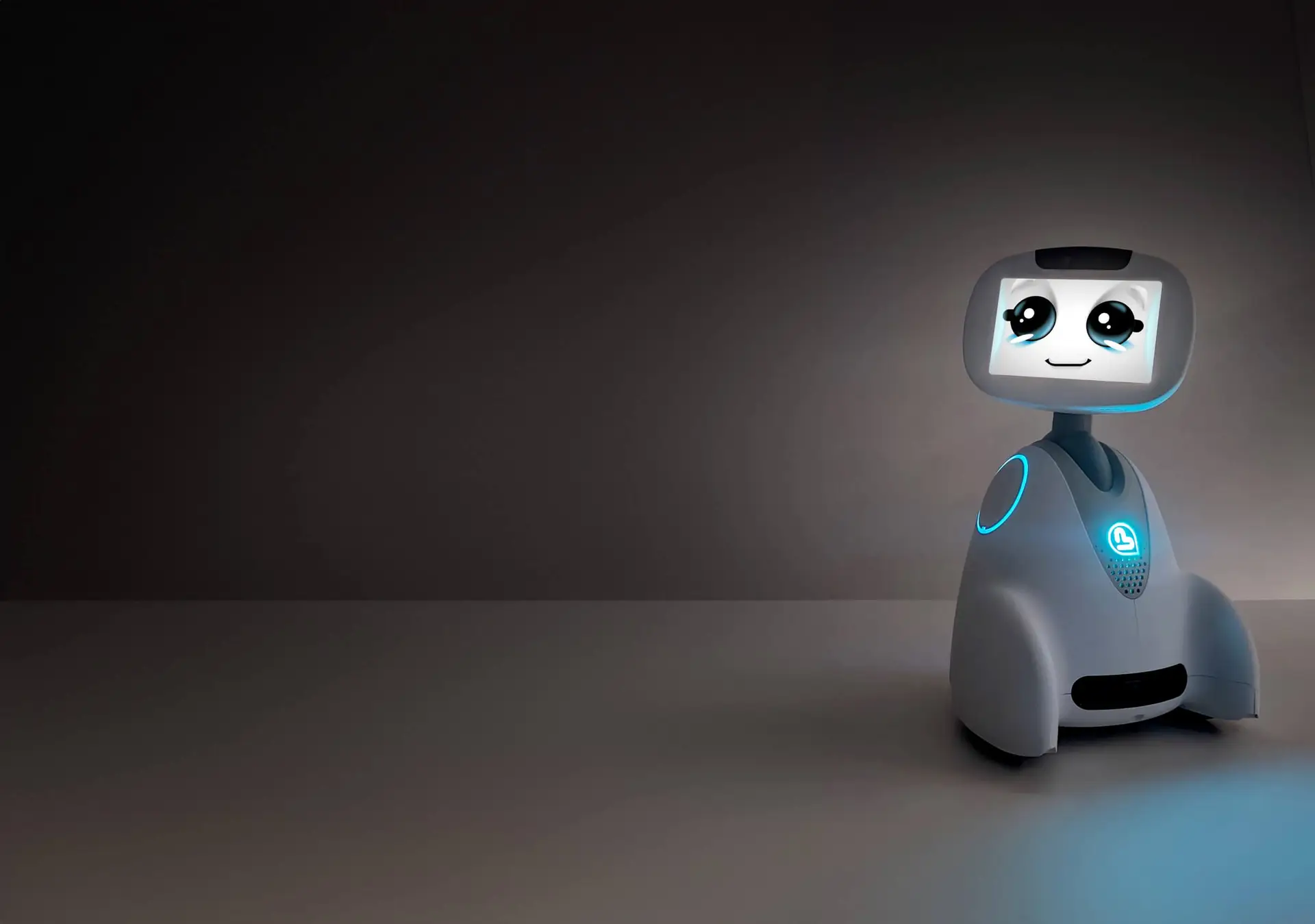
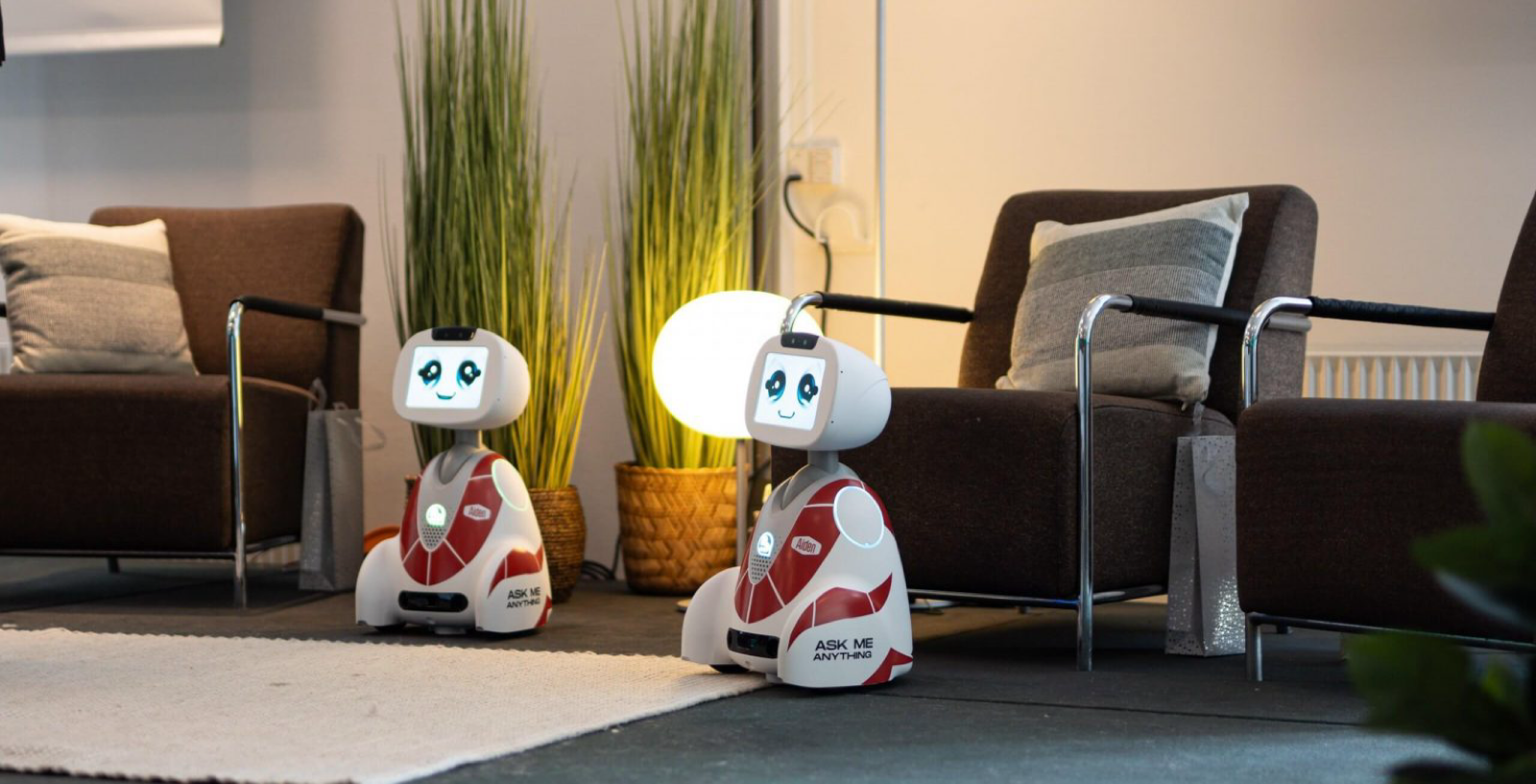
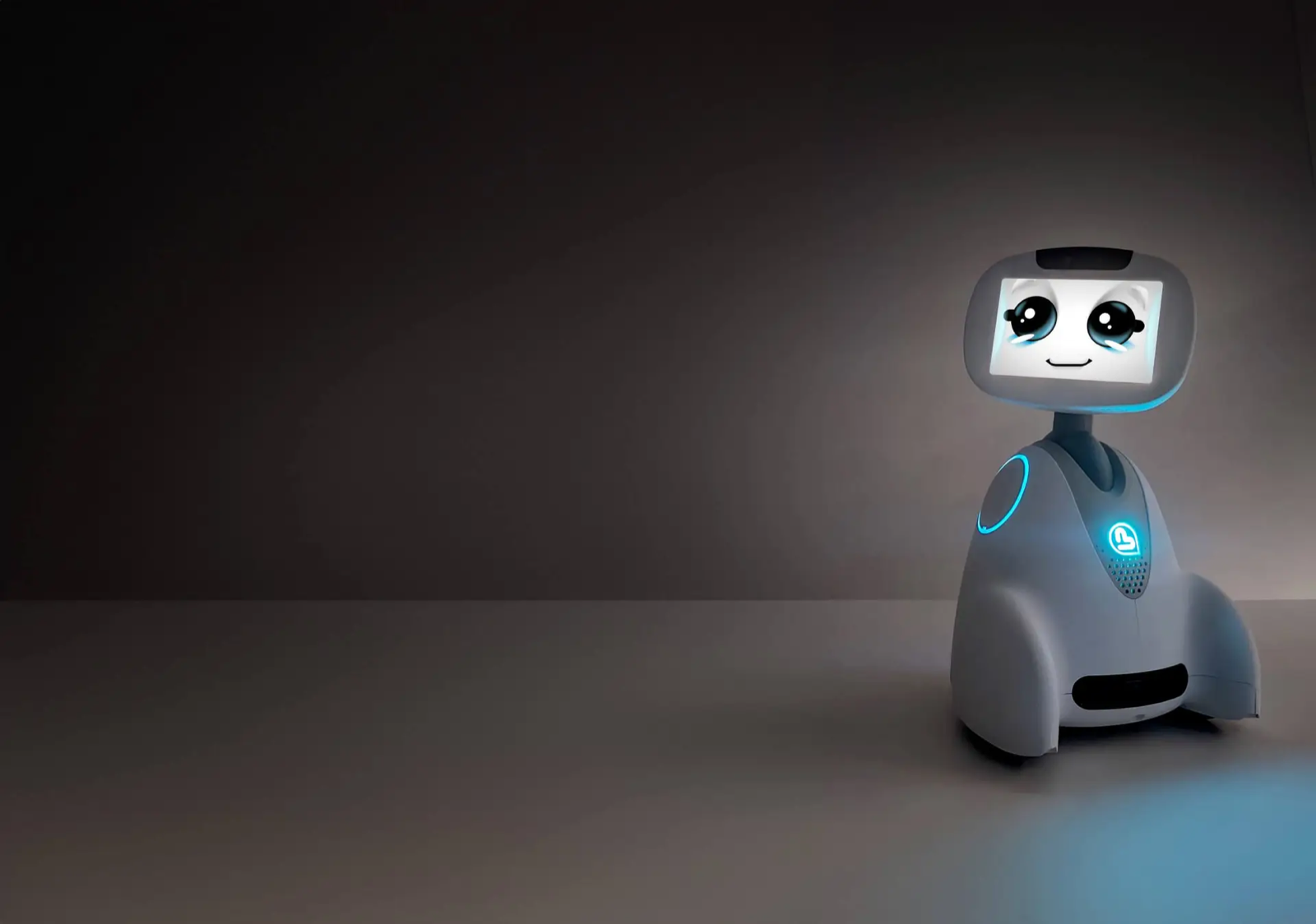
It has a small wheeled body topped with a tablet screen that serves as its face. Its large on-screen eyes show joy, surprise, sadness, and other emotions.
Around 2015, BUDDY drew wide attention through crowdfunding as a robot for the family. It never became widely available as a home product, and it is now offered to schools, care homes, and reception or event venues.
Key Points
At a Glance
- An expressive companion robot from Blue Frog Robotics in France
- A wheeled body with a tablet face that shows emotions through its eyes
- Now offered for four uses: education, senior care, inclusion support, and reception
- Supports telepresence, ChatGPT-based conversation, reminders, cognitive stimulation, and entertainment
- An Android-based SDK lets organizations customize it
- Official pricing is by quote; distributors list about 2,500 to 3,600 euros plus an annual license
- As of November 2026, no official sales in Japan could be confirmed
Strengths
- Very expressive eyes that children and older adults find approachable
- Clear uses, such as connecting hospitalized children with school or care home residents with family
- Deployments in French schools, hospitals, and commercial venues
- The SDK allows each facility to customize conversations and guidance
Concerns
- Not sold for homes, and not priced for casual personal purchase
- Annual license and support fees are extra
- No Japanese language support or Japanese sales and repair channel could be confirmed
- Case studies and partners are mainly in France
Quick Verdict
BUDDY is less a pet robot for the home and more a robot that connects people and lifts the mood in shared settings.
It combines expressive eyes, telepresence, conversation, reminders, and cognitive games, and it is used for classroom participation by hospitalized children, recreation in care homes, and visitor reception.
However, it requires a quote and an annual license, and it is not officially sold in Japan. If you are looking for a robot that talks to a family member at home in Japanese, an affordable option such as Mia is more realistic.
What BUDDY Can Do
Blue Frog Robotics presents BUDDY for four uses.
Education: Helping Hospitalized Children Join Class
For education, BUDDY offers telepresence, personalized learning content, schedule management, and ChatGPT-based conversation.
A key focus is helping children who cannot attend school. In France, the education ministry's TED-i program uses telepresence robots so hospitalized or recovering children can join their class, and BUDDY is used in this context.
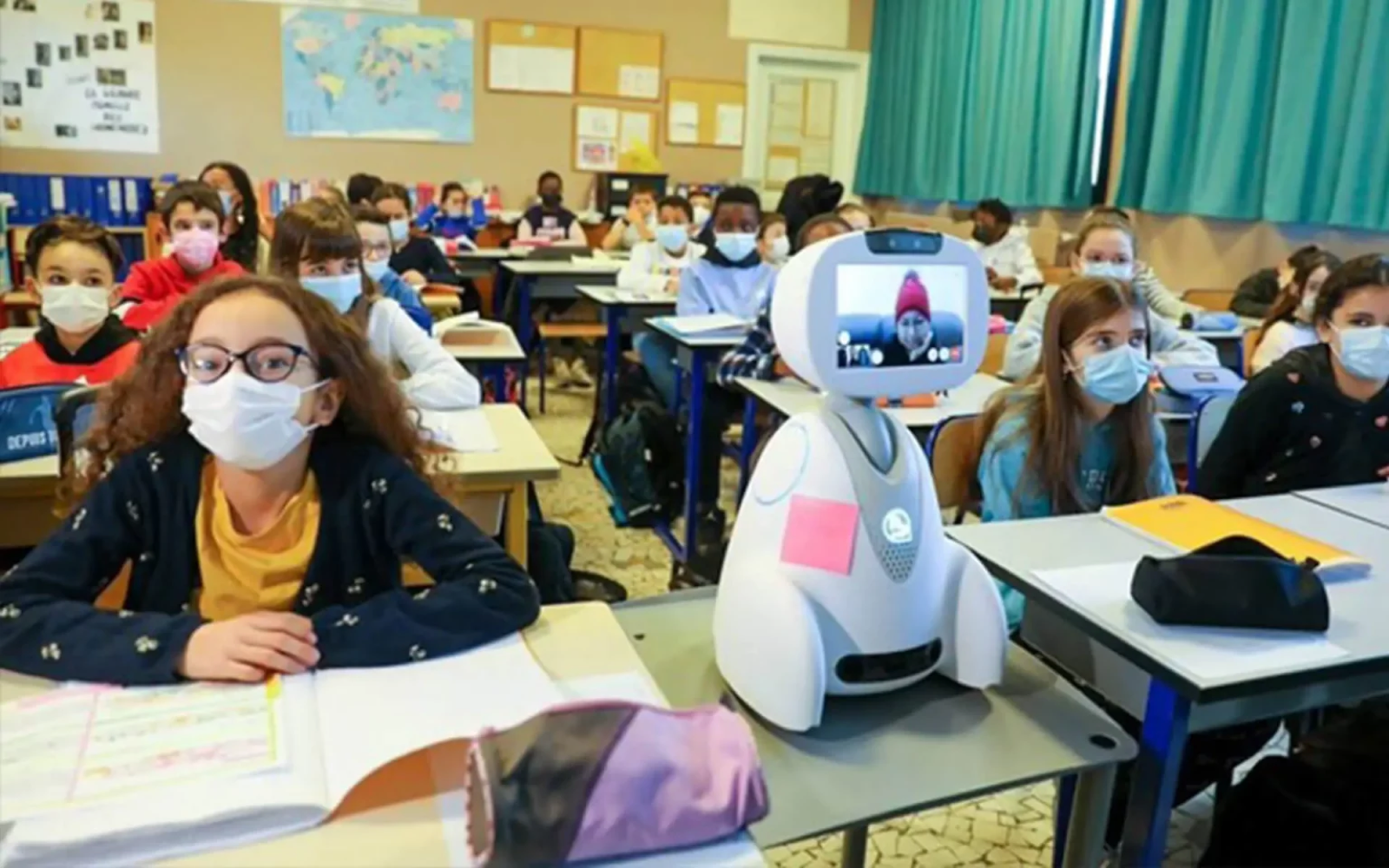
No Isolation's AV1 serves the same purpose. AV1 does not show the child's face in the classroom, while BUDDY can show the child on its screen and also offers conversation and learning content.
Seniors: Connecting with Family and Stimulating the Mind
For senior care, BUDDY supports telepresence, ChatGPT-based conversation, reminders, cognitive stimulation, and entertainment. Residents can video-call family, enjoy quizzes and music together, and receive reminders.
Effects vary from person to person. It is best seen as a source of daily enjoyment and conversation, not a replacement for medical or care services.
Inclusion Support
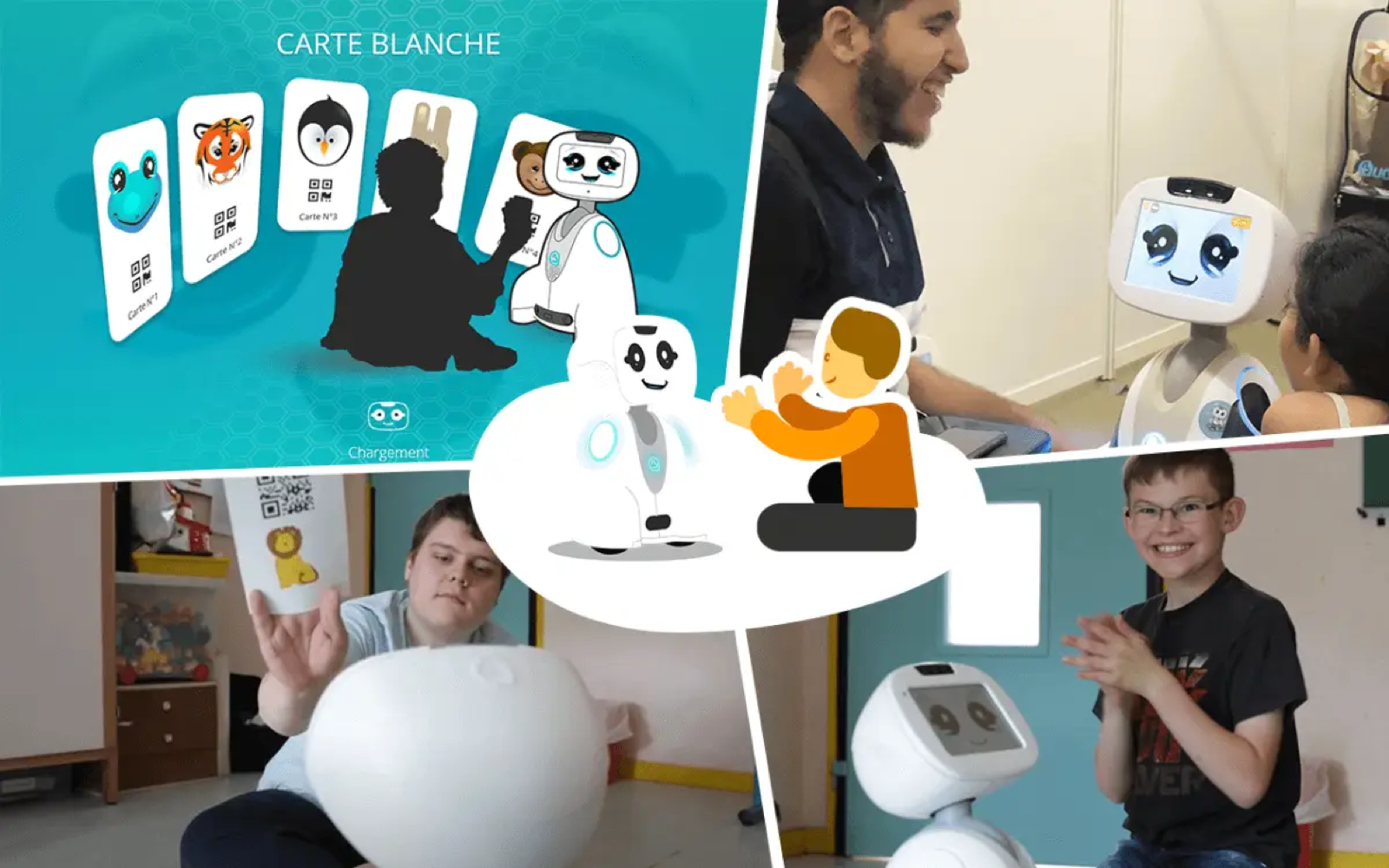
BUDDY is also used to support autistic children and people with special educational needs. Its large, easy-to-read eye expressions are seen as a way to practice social interaction.
Reception and Events
In commercial venues and events, BUDDY guides visitors and acts as a receptionist or concierge. Blue Frog Robotics highlights cases with Galeries Lafayette and the energy company EDF.
Pricing and How to Buy
BUDDY pricing is not listed on the official website and is quoted on request.
Distributor pages list the professional BUDDY Pro+ at roughly 2,500 to 3,600 euros, with separate annual license and support fees (one example is about 480 euros per year). The SDK may be sold separately. Prices vary by configuration, timing, and seller, so contact Blue Frog Robotics or a distributor.
As of November 2026, no official sales or Japanese language support in Japan could be confirmed.
How BUDDY Compares with Similar Robots
NUWA Kebbi
Kebbi, from Taiwan's NUWA Robotics, is used in education, care, and reception in Japan. Its uses are similar to BUDDY's, but Kebbi has an official Japanese site and Japanese-language support.
ElliQ
ElliQ is a companion robot for seniors at home. BUDDY interacts with many people in a facility, while ElliQ is designed for one older adult every day.

Comparison Table
| Comparison | BUDDY | NUWA Kebbi | ElliQ | Mia |
|---|---|---|---|---|
| Main setting | Schools, care homes, reception | Education, care, reception | Seniors at home | Voice prompts and conversation at home |
| Form | Wheeled body with expressive face | Small humanoid | Tabletop head plus tablet | Cat-shaped tabletop robot |
| Conversation | ChatGPT-based | Yes | Yes | Voice conversation |
| Telepresence | Yes | Depends on model | Video calls | No |
| Price | Quote plus annual license | Quote | Device plus monthly fee (US) | From 9,800 yen incl. tax |
| Sold in Japan | Not confirmed | Yes | No | Yes |
| Japanese | Not confirmed | Yes | No | Yes, 47 dialects |
BUDDY vs. Mia
Both BUDDY and Mia express feelings and talk to people, but they differ in setting and scale.
BUDDY supports shared settings such as schools and care homes with telepresence and learning content, and it requires a quote and license contract.
Mia is a cat-shaped AI companion robot that speaks to each person at home. It starts at 9,800 yen including tax, and its basic features work without a monthly fee. It supports voice conversation, facial expressions, voice prompts in 47 Japanese dialects, schedule reminders through Google Calendar integration, weather information, and 15 English characters.
For a robot shared in a facility, consider BUDDY or Kebbi. For a conversation partner next to you or your family at home, Mia is the easier choice.
FAQ
Can I buy BUDDY for my home?
BUDDY is currently offered to schools, care homes, and businesses. It drew attention as a family robot in the past, but it is not a typical consumer purchase today.
Does BUDDY speak Japanese?
As of November 2026, no information on Japanese support could be confirmed.
How much does BUDDY cost?
Official pricing is by quote. Distributors list the professional BUDDY Pro+ at about 2,500 to 3,600 euros, with separate annual license fees in some cases.
Summary
BUDDY is a French companion robot that expresses emotion through its eyes. After attention as a family robot, it is now used in schools, care homes, inclusion support, and reception.
It is strong at connecting people, from classroom participation for hospitalized children to conversation, cognitive games, and family video calls in care homes. However, it requires a quote and an annual license, and it is not officially sold or supported in Japanese in Japan.
If you want a robot that talks to you or your family every day at home, Mia is an easy choice at 9,800 yen including tax, with support for 47 Japanese dialects.
You may also like:
👀 You may also like:
👉 2026 Guide: AI Pet Robots for Elderly Loneliness – A Comparison of 10 Companion Robots
👉 2026 Edition: 9 Recommended Pet Robots Under $150 – Cheap, Cute, and Healing Models
👉 Monthly and Maintenance Costs of Pet Robots: Moflin, LOVOT, Mia, and More
👉 Mia – Your Chatty AI Cat Companion Robot with 100+ Expressions