- What Makes a Good Home Robot Gift for Older Parents? Comfort and Practicality in the Latest Models
- Types of Home Robots
- 6 Recommended Home Robots for 2026
- Pet Robot Prices and Costs
- Recommendations by Situation
- Give Comfort and Peace of Mind With a Home Robot
- FAQ
- Summary
What Makes a Good Home Robot Gift for Older Parents? Comfort and Practicality in the Latest Models
Pet robots and communication robots are increasingly popular as gifts for older parents. For people who live alone, or who would like more conversation and comfort in their day, a home robot can become something close to a family member.
This article picks six recommended products from the 2026 lineup, focusing on pet robots and communication robots, and looks at them in terms of practicality, comfort, how easy they are to talk to, and check-in features.
One update to note: in August 2026, the cat-shaped robot Mia gained a Conversation Model that answers when you talk to it. By November 2026 it also remembers what you told it, lets you choose its voice and tone, and can chat in English. See the Mia section below for details.
Looking for a gift for Respect for the Aged Day (Japan, September)? See this guide:

Types of Home Robots
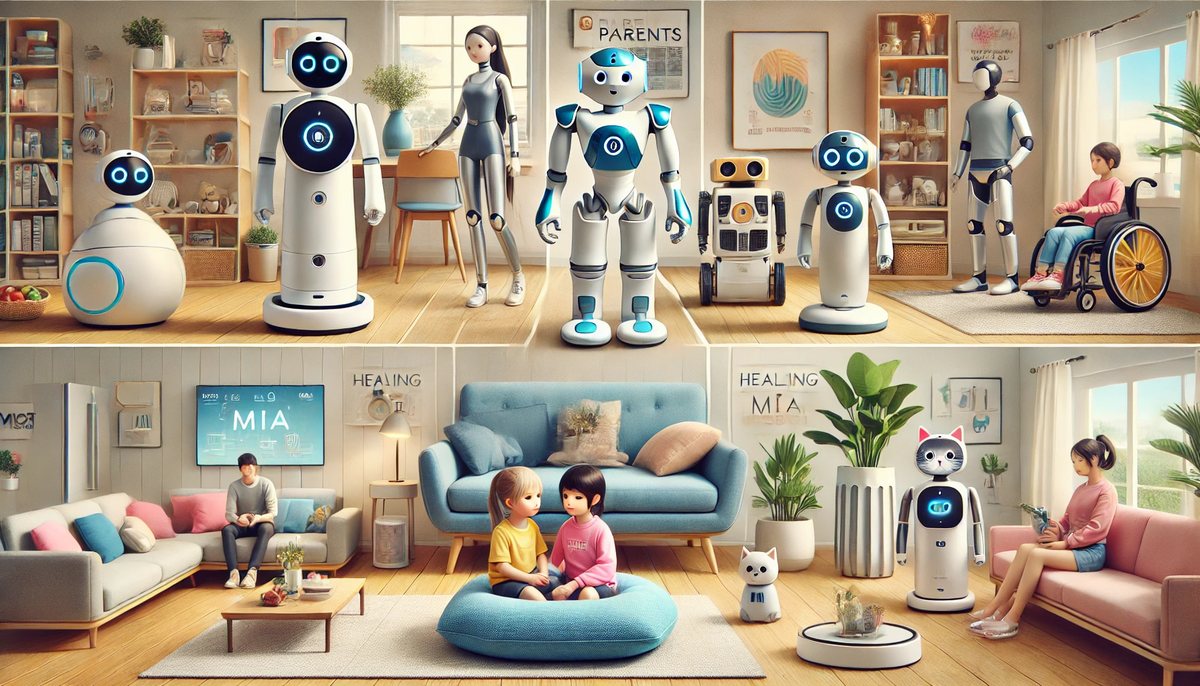
“Home robot” covers many kinds of devices. Here are the main types worth knowing when choosing a robot for an older adult.
Human-Like Robots
These robots look like people. With advanced AI, they can hold natural conversations and show expressions, which can feel close to talking with a real person. They may suit older adults who often feel lonely.
Pros:
- Strong communication: natural conversation and emotional expression allow deeper interaction.
- Familiar: their human form can make them easier to accept.
Cons:
- High price: advanced technology tends to make them more expensive than other types.
- Complex to operate: more features can mean more difficult operation.
Animal-Like Robots
These robots look like dogs, cats, or other animals. Their charming looks and movements offer comfort in homes where a real pet is not possible. Many react when stroked or make animal sounds, giving an experience close to a real pet.
Pros:
- Comfort: many people find them soothing just to look at and touch.
- Easy: no feeding or care needed.
Cons:
- Limited functions: they can do less than humanoid robots.
- Attachment: some people find it harder to bond with them than with a real pet.
Communication-Focused Robots
These robots specialize in conversation. Answering questions and making small talk can ease an older adult’s loneliness. Some models also include check-in or health-related features.
Pros:
- Conversation partner: they are available to talk whenever the user wants.
- Check-in features: some help families confirm that a parent is active.
Cons:
- Repetition: conversations can become similar over time.
- Privacy: check how personal information and conversation data are handled.
Other Types
There are many other kinds of robots too. Cleaning robots and serving robots, for example, can reduce housework and support an older adult’s daily life.
6 Recommended Home Robots for 2026
LOVOT: Warmth Like a Living Creature
- Features: A comfort-focused communication robot. It reacts to people’s movements and voices with pet-like gestures.
- Why we recommend it: It is simple for older adults to use and is designed to ease loneliness as a member of the family.
- Price: 599,500 yen (LOVOT 3.0) or 449,900 yen (LOVOT 2.0), plus a monthly fee from 9,900 yen
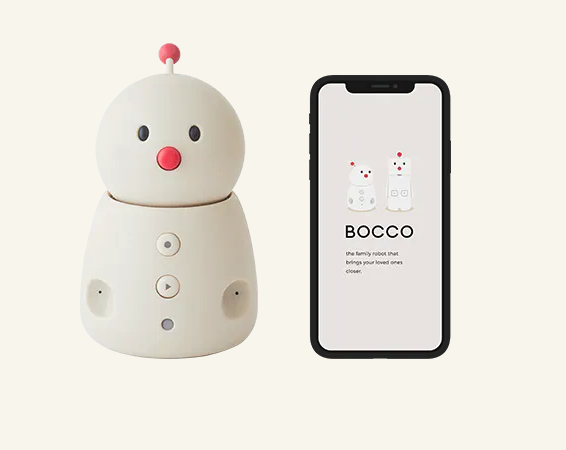
BOCCO emo: Voice Messages and Remote Check-Ins
- Features: A communication robot for voice messages and remote use, with family messaging and check-in features. Its built-in motion sensor detects movement, and if no movement is detected for a set time (such as 12, 24, or 48 hours), family members are notified through the app, so they can notice early if something is wrong.
- Why we recommend it: Well suited to checking in on parents who live apart. Simple operation supports everyday communication.
- Price: 59,400 yen (tax included)

Moflin: A Fluffy AI Comfort Pet
- Features: Moflin’s biggest appeal is its look. Its guinea-pig-like shape and soft fur make people want to hold it. It also learns from daily interaction, and its personality and emotions gradually change. Its personality settles in about 50 days, which many owners compare to raising a pet.
- Why we recommend it: A quiet, cuddly companion for people who want gentle comfort rather than complex conversation.
- Price: 59,400 yen (tax included)

Petit Qoobo: A Cushion Robot With a Moving Tail
Features: A cushion-shaped comfort robot with a tail that responds when stroked, much like a pet. Petit Qoobo also has a gentle heartbeat you can feel when you hold it, a small vibration that feels like holding a pet and helps people relax.
Why we recommend it: Comfort for homes where a pet is not possible. No operation needed; just touch it.
Price: 14,300 yen (tax included)
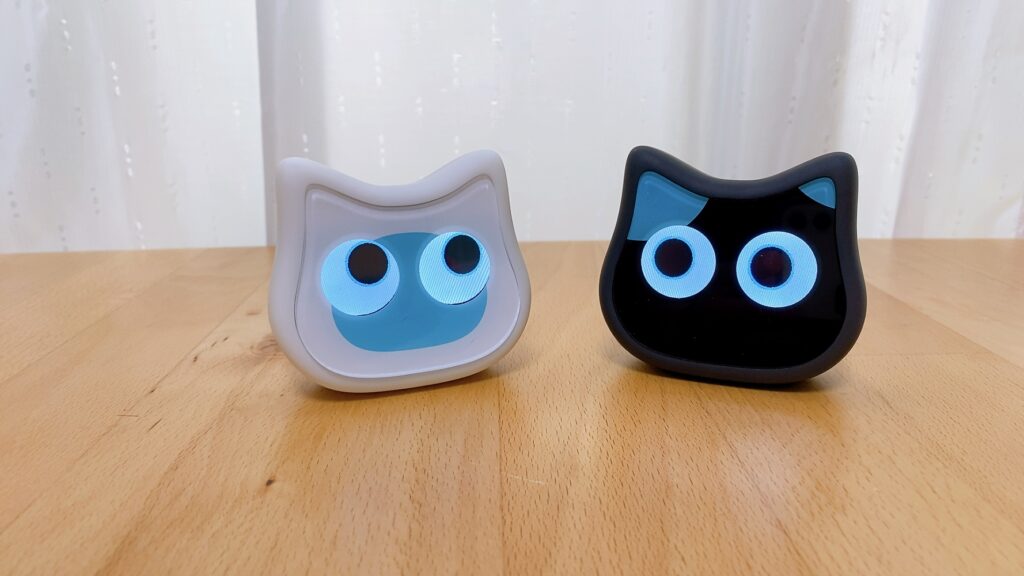
Mia: A Cat-Shaped AI Pet Robot That Speaks 47 Japanese Dialects
Features: A chatty AI cat robot that speaks all 47 Japanese dialects. Cute movements and distinctive dialects make for fun moments of conversation, and Google Calendar integration helps with schedules.
Beyond the 47 dialects, Mia has a range of personalities, from standard to sarcastic, meddlesome, romantic, and airheaded.
Why we recommend it: A design that everyone from older adults to children can enjoy, bringing comfort and convenience to the whole family at an affordable price.
Price: US$149 for the Standard Model and US$199 for the Conversation Model on the English store (conversation mode is $2/month). In Japan, from 9,800 yen.
The Conversation Model answers when you talk to it
The Conversation Model, launched in August 2026, replies when you talk to it. If you want your parent to have a conversation partner, this is the model to choose. As of November 2026, it can:
- Talk in English: speak English and Mia answers in English, with 7 English voices to choose from. She switches between Japanese and English automatically. (English conversation voices)
- Remember what you told her: family names, plans, favorite things, and things that happened, brought up in later conversations. After a plan’s date passes, she asks how it went. You can review and delete these memories in the app, and she does not keep health, money, or address details. (What Mia remembers)
- Choose her voice and speed: 15 voices you can preview, and speaking speed from 0.8x to 1.2x. (Voice and speed)
- Polite or casual, and two personalities: a gentle polite tone or a casual, friend-like tone. White Mia is easygoing and Black Mia is the reliable one. In Japanese, replies can also be in the Osaka or Hakata dialect. (Tone, dialect, and personality)
- Alarms by voice: say “Set an alarm for 7” or “Wake me up in 30 minutes,” and tap her head to stop it. (Using the alarm)
- A weekly letter for family: every Sunday at 6 p.m., family members get a short note with the days Mia was petted and how many times and minutes she chatted. What was said is never sent. (Mia’s weekly letter)
On the English store, the Conversation Model is US$199 (the Standard Model is US$149), and conversation mode needs the $2/month Premium plan, with up to 5 hours of conversation per month. In Japan, the Conversation Model is 22,800 yen (white) or 23,800 yen (black) including tax at the current sale price, with conversation mode at 300 yen per month. Dialect voice prompts, weather, Google Calendar reminders, and family voice messages all work as before.
Get the Conversation Model: Mia Conversation Model (White) / Mia Conversation Model (Black) (official store)

Learn more about Mia:
👉 Meet Mia, the talking cat robot: features, models, and prices
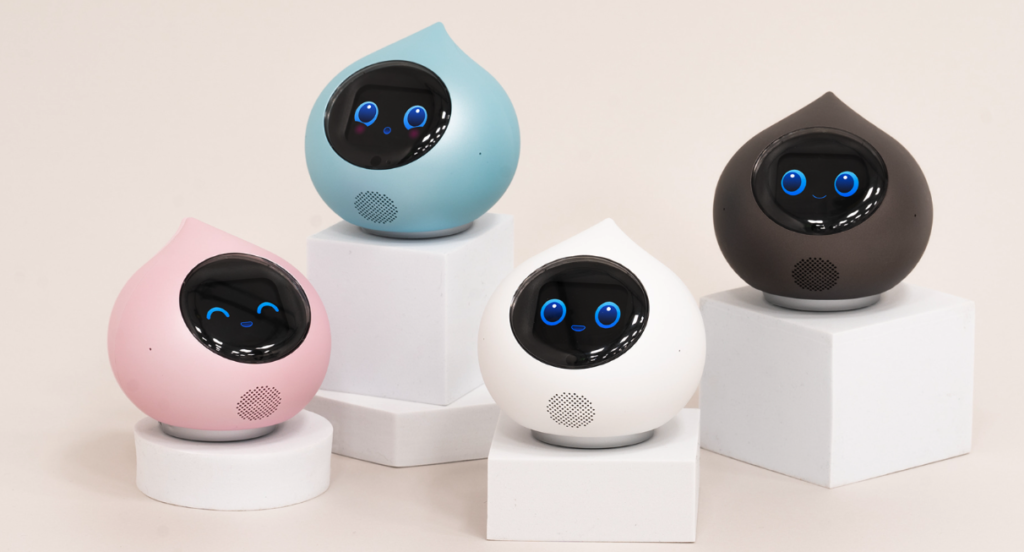
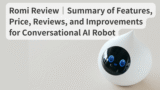
Romi: A Communication Robot With Conversation AI
Features: A communication robot with conversation AI for enjoying everyday chats and easing loneliness.
Romi uses deep learning trained on tens of millions of conversations, so it can follow the flow and context of a conversation and generate fitting replies. It also holds back while the other person is speaking and listens, which makes the exchange feel closer to a conversation between people.
Why we recommend it: Natural conversation makes it a real conversation partner, especially for parents who live alone.
Price: 98,780 yen including tax (89,800 yen before tax) plus a monthly plan of 1,958 yen including tax (1,780 yen before tax)
Pet Robot Prices and Costs
Prices vary by features and brand. Use the table below as a guide.
| Product | Main features | Price |
|---|---|---|
| LOVOT | Charming movement and comfort | 599,500 yen (LOVOT 3.0), 449,900 yen (LOVOT 2.0), plus from 9,900 yen per month |
| BOCCO emo | Voice messages and check-ins | 59,400 yen |
| Moflin | Fluffy look, evolving emotions | 59,400 yen |
| Petit Qoobo | Huggable comfort cushion | 14,300 yen |
| Mia | Dialect voice prompts and calendar reminders (the Conversation Model also answers and remembers) | US$149 (Standard), US$199 (Conversation Model, $2/month). In Japan, from 9,800 yen |
| Romi | Communication robot with conversation AI | 98,780 yen plus 1,958 yen per month (tax included) |
When buying, look beyond the device price and factor in monthly fees and optional features.
Recommendations by Situation
Home robots fit many different situations. Here are our picks for each.
Easing an Older Parent’s Loneliness
- Our picks: LOVOT, Romi
- Why: LOVOT’s lifelike warmth can ease loneliness, and Romi’s wide-ranging conversation makes it a good talking companion.
Checking In on Family Who Live Apart
- Our pick: BOCCO emo
- Why: Voice messages and motion-sensor check-ins help families confirm that a parent who lives apart is doing fine.
Comfort When a Real Pet Is Not Possible
- Our picks: Moflin, Petit Qoobo
- Why: Moflin offers pet-like comfort, and Petit Qoobo is reassuring to hold.
Creating Moments of Conversation and a Daily Rhythm
- Our picks: Romi, Mia
- Why: Romi and Mia’s Conversation Model reply when you talk to them, which creates small moments of conversation each day. Mia’s Google Calendar reminders and voice-set alarms can help with remembering plans and keeping a daily rhythm. Pet robots are not medical devices and are not intended to prevent or treat dementia.
Reducing Housework
- Our picks: cleaning robots (such as Roomba)
- Why: Cleaning robots clean rooms automatically and can greatly reduce the work of keeping a home tidy.
Give Comfort and Peace of Mind With a Home Robot
Home robots now cover a wide range of needs, from cleaning to comfort to check-ins. Compare the six robots in this article and choose the one that best fits your parents’ lifestyle.
Mia, the chatty cat robot that speaks Japanese dialects, can also make a distinctive gift for parents. A thoughtfully chosen robot can be one more way to stay close as a family.
FAQ
Here are answers to common questions about home robots.
How long do home robots last?
It depends on the type, how often it is used, and how it is maintained, but around 3 to 5 years is a common guide. Some manufacturers offer part replacement and repair services.
Are home robots safe?
Most home robots are designed with safety in mind. If there are small children or pets in the home, take care that small parts are not swallowed and fingers are not pinched. Some products include safety notes or safety features.
Where can home robots be used?
Most are used indoors. Some can be used outdoors, but avoid direct sunlight and rain. Some products also need Wi-Fi.
What should I do if a home robot breaks?
Contact the manufacturer’s support center first. Repairs may be free within the warranty period; outside it, repairs are usually paid.
How should I choose a home robot?
Consider purpose, features, price, size, and ease of use. Check that it has the features you need, such as check-ins, conversation, or comfort, and think about where it will go and your budget.
Summary
This article introduced six home robots for older adults in 2026, with their features, how to choose, prices, and the situations each fits best. As a gift for a parent who lives alone or far away, a home robot can bring comfort and peace of mind to daily life. Choose the one that fits your situation and your parents’ needs.
You may also like: