- Do AI Pet Robots Really Need Conversation?
- Quick Takeaway: Conversation Is Useful, But Not Always Necessary
- Comparison Table: Talking Comfort vs Quiet Comfort
- Talking Comfort: Replies Can Reduce the Feeling of Being Alone
- Quiet Comfort: Silence Leaves Room for Emotional Interpretation
- In-Between Robots: Presence Can Matter More Than Conversation
- Growth: Learning Words or Changing Personality Can Create Attachment
- Cautions When Choosing by Conversation Ability
- 1. Conversational AI Often Requires Network Access and Monthly Fees
- 2. Start Friction Can Reduce Long-Term Use
- 3. Natural Replies Can Still Be Tiring
- 4. One-Way Prompts Can Be the Right Distance
- 5. For Children, Content and Caregiver Control Matter
- 6. For Older Adults, Ease of Use May Matter More Than Intelligence
- Which Type Should You Choose?
- Research Lens: People Read Social Meaning Beyond Words
- FAQ
- Conclusion: Choose by the Kind of Comfort You Want
Do AI Pet Robots Really Need Conversation?
When people compare AI pet robots and companion robots, one question comes up quickly:
Can it talk?
A robot that replies when you speak to it can feel more present than a silent device. It can answer questions, make small talk, read reminders, share weather updates, or deliver family messages. For many people, voice is what turns a robot from an object into something they can interact with.
But conversation is not the only way an AI pet creates attachment.
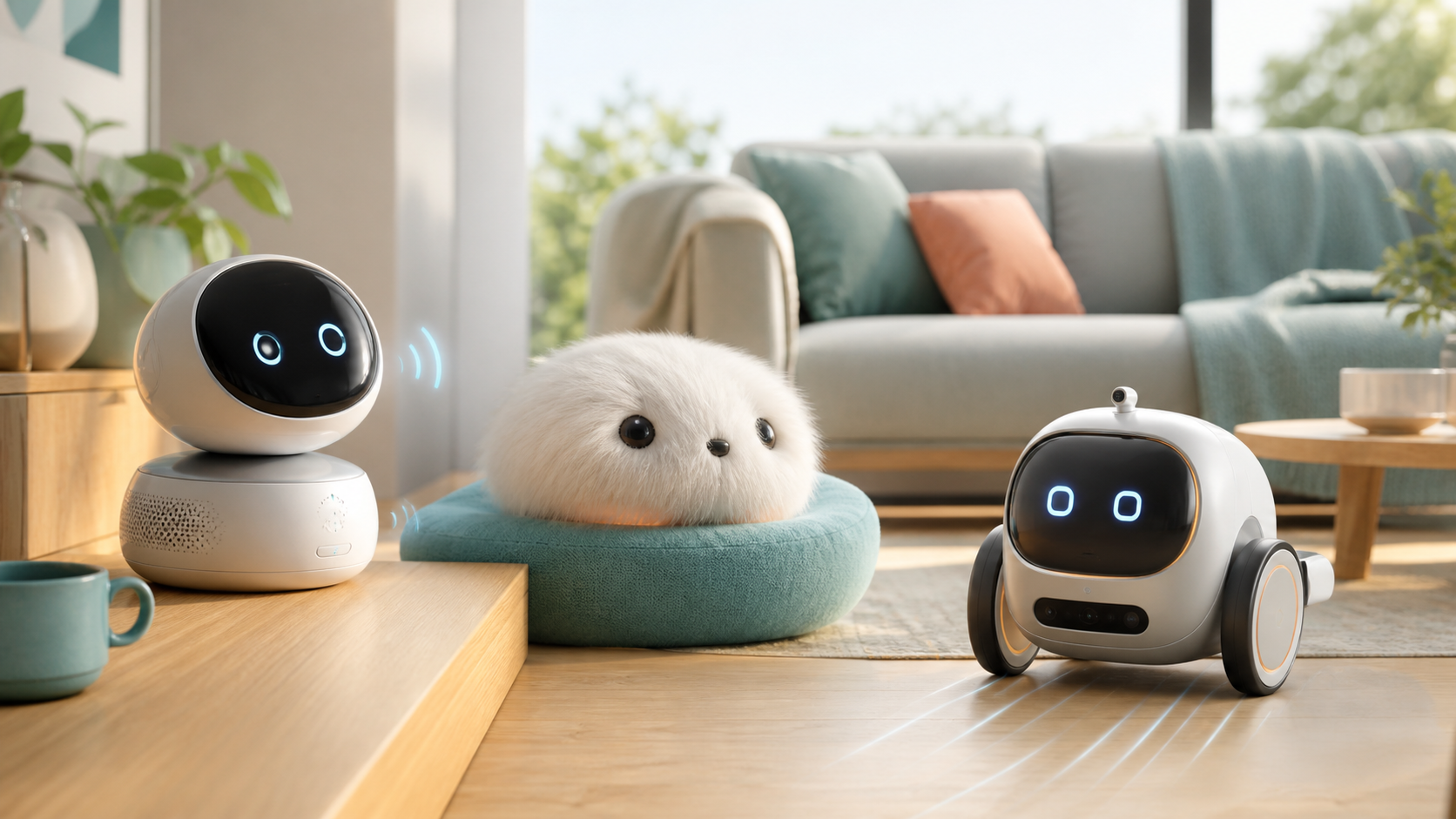
Moflin, Qoobo, and PARO show that a robot can feel comforting even without human-language conversation. Small sounds, tail movement, soft touch, body movement, and silence can leave room for the user to read emotion into the robot.
The real question is not whether an AI pet has the strongest conversation model. It is whether the robot responds at the right distance for the person using it.
This article compares talking comfort and quiet comfort across AI pet robots.
Quick Takeaway: Conversation Is Useful, But Not Always Necessary
Conversation can be valuable if you want:
- A small conversation partner during time alone
- Voice prompts for an older family member
- A robot a child can ask questions to
- A voice with personality, dialect, or character options
- A robot that replies instead of only reacting silently
But conversation may be less important if you want:
- A quiet presence on a desk, shelf, sofa, or bedside table
- A robot you can hold or stroke without needing to talk
- Comfort that comes from touch, movement, or ambiguity
- Fewer microphones, cloud features, or subscriptions
- Less effort before each interaction
Talking and non-talking AI pets are not better or worse versions of each other. They create comfort through different routes.
| Type | Attachment cue | Examples | Best for |
|---|---|---|---|
| Talking AI pets | Voice, replies, small talk, reminders, weather prompts | Mia, Romi, Loona, EMO, AIBI, ElliQ, Moxie | People who want conversation, voice prompts, or daily check-ins |
| Quiet AI pets | Touch, sound, tail movement, silence, holding comfort | Moflin, Qoobo, PARO, Tombot Jennie | People who want calm comfort and room for emotional interpretation |
| In-between robots | Short sounds, expressions, movement, limited conversation | LOVOT, aibo, EMO, Eilik | People who care more about presence and reactions than long conversations |
Comparison Table: Talking Comfort vs Quiet Comfort
| Product | Conversation | Voice / sound | Touch | Movement | How it creates attachment | Main cautions |
|---|---|---|---|---|---|---|
| Mia | Yes | Strong | Limited | No | Dialects, expressions, reminders, weather, family messages, conversation mode | Conversation mode requires a compatible model and subscription |
| Romi | Strong | Strong | Limited | No | Small talk, questions, daily conversation | Higher device and monthly cost |
| Loona | Yes | Medium | Medium | Yes | Expressions, movement, AI conversation | Camera, app, network, and privacy settings matter |
| EMO | Yes | Medium | Limited | Desktop movement | Expressions, voice response, desk presence | Experience may be English-first |
| AIBI | Yes | Medium | Limited | Wearable / desktop-style | Tiny AI pet presence, face recognition, short prompts | Check language, app region, and purchase terms |
| Eilik | Limited | Medium | Medium | Desktop movement | Expressions, touch response, playful short reactions | More reaction-focused than open conversation |
| Moflin | No | Sounds | Strong | Body movement | Holding, stroking, emotional and personality changes | No speech conversation or self-driving movement |
| Qoobo | No | No | Strong | Tail movement | Stroking and reading emotion into tail response | No face, speech, or reminders |
| PARO | No | Sounds | Strong | Head and eyelid movement | Calm comfort in care contexts | Different price and use context from consumer gadgets |
| LOVOT | Limited | Medium | Strong | Yes | Warmth, eyes, holding, autonomous movement | Price, subscription, and space |
| aibo | Limited | Medium | Medium | Yes | Dog-like movement, growth, reactions | Not the same as a real dog |
The important point is simple: do not choose only by whether the robot can talk.
A strong conversation robot can help build a speaking habit. A quiet or touch-based robot can make it easier for the user to project emotion into small reactions.
There is also a practical issue that is easy to miss: how hard it is to start a conversation.
Smart speakers usually require a wake word such as "OK Google" or "Alexa." AI pet robots may also require a voice trigger, button press, head tap, app mode, or other starting action. If that starting action does not fit the user's life, the conversation feature may be used less over time.
Talking Comfort: Replies Can Reduce the Feeling of Being Alone
The main strength of a talking AI pet is that it replies in words.
You say good morning. It answers. You ask about the day. It responds. You hear a reminder, weather update, short phrase, or family message. These small voice interactions can add rhythm to life, especially for people who live alone or older adults who benefit from gentle prompts.
Voice is a strong social cue. Names, replies, questions, encouragement, and backchannel responses can make a device feel more like something the user can address.
But conversation also takes energy.
Even with a robot, a person may have to think about what to say, whether the robot heard correctly, and how to respond to the answer. When someone is tired, busy, or about to sleep, two-way conversation can feel heavier than expected.
For some people, one-way prompts are a better distance. A robot that says something short, funny, seasonal, useful, or familiar without requiring a reply can be easier to live with. Weather, reminders, dialect phrases, and family messages can create a voice in the room without asking the user to keep a conversation going.
Mia: Voice, Dialects, and Daily Prompts
Mia is a cat-shaped AI pet robot. It starts at 9,800 yen including tax in Japan and is compact enough to place on a desk, shelf, or bedside table.
Mia is not only about open conversation. Its core features include 47 Japanese dialect styles, expressions, voice conversation, Google Calendar integration, weather notifications, and 15 English character voices.
For an older family member, reminders and weather prompts can support daily rhythm. For someone living alone, short phrases can make the room feel less silent. For children, English character voices and conversation mode can become a small play activity. For families, recorded messages and dialect voices can create conversation starters.
Mia does not move through the house like LOVOT or aibo. It is not a soft holdable robot like Moflin. Its strength is voice: dialect phrases, expressions, reminders, weather, family messages, and optional conversation.
This distance matters. Mia's conversation mode starts with a head tap, not a smart-speaker-style wake word. That avoids the need to say "Alexa" or "OK Google" every time, but it still means conversation does not start automatically. People who actively want to talk may like conversation mode. People who prefer to hear short prompts without needing to answer may be happier using Mia's standard voice prompts most of the time.

Romi: For People Who Want Conversation Itself
Romi is one of Japan's better-known conversation robots. It is built around small talk, questions, and daily verbal interaction.
Compared with Mia, Romi is more focused on the conversation experience itself. Mia combines voice prompts, dialects, reminders, weather, family messages, and conversation mode. Romi is easier to understand as a robot for people who want to talk regularly.
If conversation is the top priority, Romi is an important comparison point. The caution is cost. Its device price and monthly fee are higher than Mia's. That may be worth it for people who talk every day, but may feel too much for people who only want short voice prompts.
Loona: Movement, Expressions, and AI Conversation
Loona combines movement, expressions, and AI conversation in a small robot body.
It is not just a voice device. It can move, react, show facial expressions, and respond in ways that feel closer to a small animated pet. This places Loona between a moving AI pet and a conversation robot.
Loona may fit people who want both words and body language. The cautions are camera use, app setup, network requirements, and privacy settings.

EMO: A Moving Desktop AI Pet
EMO is an international desktop AI pet. It moves on a desk, changes expressions, responds to voice, and creates a small animated presence near the user.
It is not best understood as a pure conversation robot like Romi. EMO is more about the combination of expressions, movement, voice response, sensors, and gadget-like charm.
For this reason, EMO should be evaluated by a different question: "Do I want a small responsive presence on my desk?" rather than "Can it hold the longest conversation?"
If you plan to use EMO in Japan, check language support, app availability, purchase route, warranty, wireless compliance, and repair options.
AIBI: A Tiny AI Pet for Your Hand or Desk
AIBI is smaller and more portable than EMO. It fits the category of tiny AI pets that can sit on a desk, travel with the user, show expressions, recognize faces, and respond with short interactions.
AIBI is not mainly about deep conversation. It is closer to a small personal companion with a screen face, short reactions, and a gadget-like daily presence.
This can be appealing because it feels more personal than a smart speaker. A small robot with a face and short voice response can feel like "my little pet" rather than a general-purpose assistant.
For Japanese users, language support, app region, warranty, and import support matter. It should not be judged in exactly the same way as a domestic Japanese-language companion robot.

ElliQ: A Voice Companion for Older Adults
ElliQ is an English-language companion robot for older adults. It combines conversation with wellness prompts, medication routines, family connection, entertainment, and daily engagement.
It is not shaped like a dog or cat. It is closer to a voice-first companion that speaks into daily life.
ElliQ is useful as a comparison because it shows one strong use case for conversational robots: older adults who benefit from repeated prompts, social interaction, and structured routines.
For Japanese readers, the main cautions are language, region availability, subscription terms, family connection features, and support coverage.


Moxie: Conversation and Learning for Children
Moxie is an international robot built around children's conversation, social-emotional learning, stories, reading, and parent-guided use.
It is closer to an educational companion than a general household pet robot. Its value depends on whether the child wants to speak to it and whether caregivers can manage content, time, and settings.
Moxie is a useful example because it shows that conversation can support learning, not only companionship. At the same time, it is not the same buying decision as choosing a quiet comfort robot or a Japanese-language family robot.

Quiet Comfort: Silence Leaves Room for Emotional Interpretation
As conversational AI improves, it is easy to assume that non-talking robots are outdated.
That is not necessarily true.
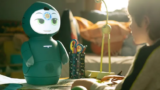
A quiet AI pet leaves room for interpretation. Sounds, tail movement, body movement, eye movement, and soft touch can make the user read emotion into the robot.
Real dogs and cats do not explain everything in words either. People read emotion through posture, distance, sounds, and movement. Quiet AI pets work in a similar emotional space.
Moflin: A Holdable AI Pet That Does Not Need Speech
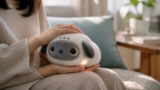
Moflin creates attachment through soft touch, sounds, small body movements, and changes in emotion or personality.
It is not a robot for human-language small talk. The user holds it, strokes it, speaks to it, and watches how it reacts.
This lack of conversation can be a strength. Some people feel more comfortable with a small reaction in their hands than with an AI system that keeps answering in words.

Qoobo: A Tail Is Enough to Suggest Feeling
Qoobo is a cushion-like robot with a tail.
It has no face, no speech, and no complex conversational AI. The experience is simple: you stroke it, and the tail moves.
That small tail movement can still feel emotionally meaningful. Users may read it as relaxed, pleased, playful, or needy. The robot is not literally feeling those emotions, but its ambiguity lets people project meaning into it.
Qoobo is a clear example of why advanced conversation is not required for attachment.

PARO: Calm Touch Matters More Than Conversation
PARO is a seal-shaped therapeutic robot.
It is not a small-talk AI. People hold it, stroke it, hear its sounds, and respond to its gentle movements.
In care settings, simple and calm interaction can be more valuable than complex conversation. A robot that talks too much may be tiring for some users. A robot like PARO can be easier to approach because the interaction is slower and more physical.

In-Between Robots: Presence Can Matter More Than Conversation
Some AI pet robots are neither pure conversation robots nor fully quiet touch objects.
LOVOT and aibo create attachment through movement, eyes, warmth, growth, and care routines more than long verbal conversation. EMO, AIBI, and Eilik create smaller moments of presence through expressions and reactions on a desk or in the user's hand.
For these robots, the key question is not "What can it say?" but "Does it feel present?"
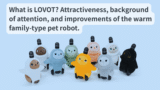
LOVOT: Looking, Approaching, and Being Held
LOVOT is not primarily a conversational AI robot.
Its attachment design comes from eyes, warmth, holding comfort, movement through the home, and the way it approaches people. Being looked at, approached, and held matters more than long verbal exchange.
If you compare LOVOT only as a conversation robot, it can look weaker than it is. If you want a family-like presence, it is a much stronger comparison point.
aibo: Dog-Like Behavior Can Matter More Than Words
aibo is also not a small-talk robot.
Its value comes from dog-like movement, reactions, growth, and play. When people see a dog-shaped robot, they expect dog-like behavior more than long conversation.
It is not a replacement for a real dog. But attachment to a robot dog cannot be measured only by conversation ability.

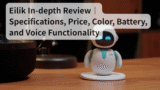
Eilik: Touch and Short Reactions on a Desk
Eilik is not mainly an open-ended conversation robot.
It is a desktop robot built around expressions, touch response, small movements, and playful short interactions. It fits people who want to touch a robot and see it react during work breaks or desk time.
Compared with EMO and AIBI, Eilik leans more toward nonverbal reactions. If a talkative robot feels tiring, this shorter interaction style may be easier to live with.
Growth: Learning Words or Changing Personality Can Create Attachment
Conversation is not the only voice-related axis. Growth is another one.
Furby-like toys are a useful example. They may begin with limited sounds, words, or reactions, then appear to change as the user plays with them. Different products handle learning differently, but the user experience is similar: the robot feels changed by shared time.
That is not the same as fluent conversation.
A robot that talks intelligently from the beginning is useful. A robot that gradually learns words, changes reactions, develops personality, remembers names, or adapts to routines can create a sense of being raised.
This growth axis deserves its own article because it includes memory, personality change, habit formation, nurture, cloud storage, subscriptions, and service shutdown risk. Good comparison examples include aibo, Moflin, LOVOT, Loona, EMO, AIBI, KATA Friends, and digital pet toys.

Cautions When Choosing by Conversation Ability
1. Conversational AI Often Requires Network Access and Monthly Fees
Open-ended conversation usually depends on cloud AI processing.
That means Wi-Fi, apps, accounts, monthly fees, usage limits, and server availability can all affect the experience.
Mia's conversation mode requires a compatible conversation model and a 300 yen monthly premium service in Japan. Standard Mia features such as dialect phrases, weather notifications, Google Calendar integration, and family messages can still be useful without treating free conversation as the only value.

2. Start Friction Can Reduce Long-Term Use
The quality of replies is only one part of the experience. The effort required to start talking also matters.
Smart speaker wake words are useful, but they must be said every time. Some people get used to this. Others feel awkward saying the phrase around family, forget the command, or stop trying if the device fails to respond.
AI pet robots can have similar friction: a voice trigger, button press, head tap, or app mode. If the starting action does not fit daily life, the conversation feature may fade into the background.
This does not make conversational AI pets a bad idea. A deliberate start action can prevent accidental activation and make the robot feel more controlled. The question is whether the user can remember and perform the action naturally.
Mia starts conversation mode with a head tap rather than a wake word. That may be easier for some people, but it is still an intentional action. For older adults or children, the operation should be simple enough to remember.
3. Natural Replies Can Still Be Tiring
Talking robots can feel comforting because they answer.
But talkative robots do not fit everyone. Older adults, children, and busy adults may sometimes prefer quiet. Bedrooms, workspaces, and care settings need volume control, notification control, and a way to stop interaction easily.
When choosing an AI pet, do not ask only "How much can it talk?" Also ask, "Can it stay quiet when I need quiet?"
4. One-Way Prompts Can Be the Right Distance
The value of voice is not limited to two-way conversation.
For many people, a robot that says a short line, tells the weather, reads a reminder, or shares a family message may be easier to use every day than a robot that expects active conversation.
One-way prompts do not require the user to think of a topic or answer back. They create a voice in the room without demanding attention.
Mia's dialect phrases, weather notifications, Google Calendar integration, and family messages fit this style. Some users may use conversation mode occasionally, while relying on short prompts most of the time.
5. For Children, Content and Caregiver Control Matter
If children use an AI pet for conversation, natural replies are not enough.
Age range, caregiver settings, personal information, recorded data, app setup, and time limits all matter. A child can ask open questions, so families should understand what the robot can discuss and how adults can manage use.

6. For Older Adults, Ease of Use May Matter More Than Intelligence
For older adults, a robot's intelligence is not the only factor.
Daily usability matters more: app burden, starting method, speech volume, hearing clarity, Wi-Fi behavior, and whether family members can help with setup.
Mia may fit people who benefit from short dialect phrases, reminders, weather prompts, and family messages. Romi may fit people who actively want broader conversation. PARO and Moflin may fit people who prefer touch and calm reaction over verbal exchange.

Which Type Should You Choose?
If You Live Alone and Want the Room to Feel Less Silent
Voice may help.
Short phrases in the morning or after coming home can change the feeling of a room. Mia, Romi, Loona, EMO, and AIBI are useful comparison points depending on whether you want Japanese daily prompts, deep conversation, movement, or a desk companion.

If You Are Choosing for an Older Parent
If the person likes talking, a conversational robot such as Mia or Romi may be useful.
But operation burden matters. Short reminders, weather prompts, and family messages may be enough. If touch feels more comfortable than speech, Moflin, PARO, or Joy for All Companion Pets may be better candidates.

If You Want an AI Pet for a Child
Conversation can be fun, but safety and long-term engagement matter.
Mia, Romi, and Moxie are useful when conversation is central. Loona, aibo, EMO, AIBI, and Eilik are useful when movement and expressions matter. Moflin and Qoobo fit children who may enjoy holding, stroking, or reading emotion into simple reactions.

If You Want Quiet Comfort During Work or Before Sleep
A non-talking or low-talking robot may fit better.
Some people do not want a robot asking for attention while they work or rest. Moflin, Qoobo, PARO, LOVOT, and Eilik are worth comparing if touch, calm reaction, or small desk presence matters more than conversation.
Research Lens: People Read Social Meaning Beyond Words
Research should not be used to claim that any specific product will work for everyone. It is more useful as a lens for understanding why conversation, silence, movement, and touch can all create attachment.
Voice Can Trigger Social Responses
The Computers Are Social Actors idea, often called CASA, argues that people can respond socially to computers and media.
For AI pets, voice, names, replies, questions, and backchannel responses are strong social cues. This helps explain why Mia or Romi can feel more like something the user addresses rather than a passive device.

People Read Intention Into Movement and Reaction
Research by Tremoulet and Feldman shows that people can read animacy and intention into simple moving objects.
This helps explain why Qoobo's tail, Moflin's body movement, PARO's sounds, and LOVOT's approach behavior can feel meaningful even without fluent speech.
Attachment to Robots Has Benefits and Risks
Research on robot attachment discusses potential benefits such as companionship and support, along with risks such as overdependence, privacy concerns, and mismatched expectations.
This balance matters especially for conversational AI pets. The more natural a reply feels, the more easily the user may treat the robot as a social partner. Cost, data handling, usage time, and family involvement should be considered realistically.

FAQ
Do AI pet robots need conversation ability?
No. Conversation helps if you want a talking partner, reminders, or daily voice prompts. But if you want touch, quiet presence, or emotional interpretation, a non-talking robot may fit better.
How are conversational AI pets different from smart speakers?
Smart speakers are mainly for information and device control. AI pet robots add shape, expressions, movement, voice personality, touch, or character design so users can relate to them more like companions.
Are wake-word robots less likely to be used?
Sometimes. A wake word, button press, head tap, or app mode can become a small barrier. But deliberate activation can also prevent accidental listening. The key is whether the starting action feels natural for the user.
Are one-way voice prompts valuable?
Yes. Weather updates, reminders, seasonal phrases, dialect lines, and family messages can create comfort without requiring the user to answer. For some people, that distance is easier to live with than open conversation.
Can a non-talking AI pet still create attachment?
Yes. Moflin, Qoobo, and PARO create attachment through touch, sound, tail movement, body movement, and ambiguity. Silence can make it easier for the user to project emotion.
Is Mia a conversational AI pet?
Mia is a cat-shaped voice companion robot. Its conversation model supports voice conversation, while Mia also includes 47 Japanese dialect styles, expressions, Google Calendar integration, weather notifications, and 15 English character voices. Standard and conversation models differ, so choose the conversation model if open two-way conversation is important.
Conclusion: Choose by the Kind of Comfort You Want
Conversation is useful.
For people living alone, older adults who benefit from prompts, children who enjoy questions, and families who want voice messages, talking features can create real value.
But conversation is not always the best form of comfort.
Talking requires effort: starting the interaction, choosing a topic, listening, and responding. Wake words, head taps, and app modes can also become small barriers in daily life.
Moflin, Qoobo, and PARO show that quiet robots can create attachment through touch and ambiguity. LOVOT and aibo show that movement, warmth, and growth can matter more than speech. Mia shows a middle path: two-way conversation when wanted, but also dialect phrases, reminders, weather updates, and family messages that work as one-way voice prompts.
Use this table as a practical starting point.
| Desired experience | Best type | Examples |
|---|---|---|
| A short daily talking partner | Conversation / voice prompt type | Mia, Romi |
| Dialects or family messages | Daily voice prompt type | Mia |
| Voice without needing to reply | One-way prompt type | Mia |
| Watching personality change over time | Growth / nurturing type | aibo, Moflin, LOVOT, Loona |
| Conversation plus movement | Moving conversation type | Loona, EMO |
| International tiny AI pet experience | Desktop / hand-sized type | EMO, AIBI, Eilik |
| Holding something calming | Touch-based type | Moflin, PARO, LOVOT |
| Quiet presence nearby | Non-talking type | Qoobo, Moflin |
| Dog-like behavior | Animal-shaped robot type | aibo, Tombot Jennie |
Some people need a robot that talks. Some people need one that stays quiet. The best AI pet is not the one with the most advanced conversation model, but the one whose distance feels comfortable every day.

👀 You may also like:
👉 2026 Guide: AI Pet Robots for Elderly Loneliness – A Comparison of 10 Companion Robots
👉 2026 Edition: 9 Recommended Pet Robots Under $150 – Cheap, Cute, and Healing Models
👉 Monthly and Maintenance Costs of Pet Robots: Moflin, LOVOT, Mia, and More
👉 Mia – Your Chatty AI Cat Companion Robot with 100+ Expressions