Introduction
As robot technology advances, robots are becoming a natural part of everyday life. Home robots and communication robots are getting attention both for making daily life more convenient and for offering emotional support.
This article looks at what life with robots is like, with concrete examples. One update to note: in August 2026, the cat-shaped robot Mia gained a Conversation Model that answers when you talk to it, so living with a robot can now include real conversation. See the Mia section below.
Examples of Home Robots
Cleaning Robots: Saving Time and Effort
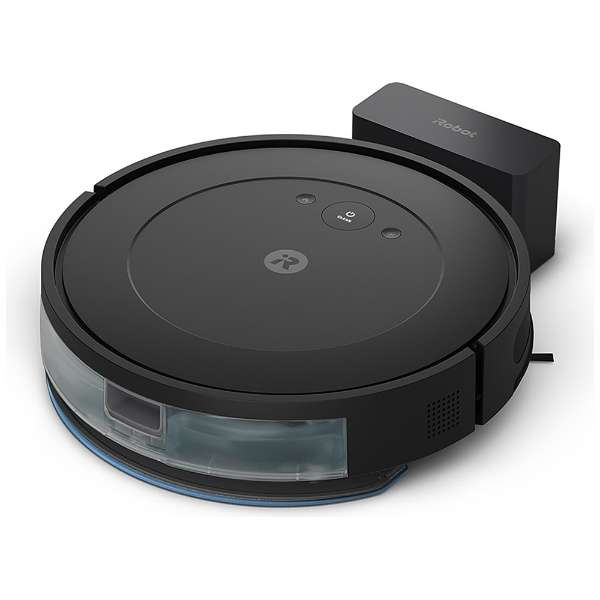
Cleaning robots are one of the most widespread kinds of home robots. Roomba and the Roborock Q7 Max+, for example, clean rooms automatically and pick up pet hair and dust. The Roborock Q7 Max+ can both vacuum and mop, which is especially handy in homes with pets.
- Strength: Automating cleaning frees up time for other things.
- Example: Helps busy households and homes with pets stay clean.
Roomba

Roborock Q7 Max+
LOVOT: A Robot for Emotional Support
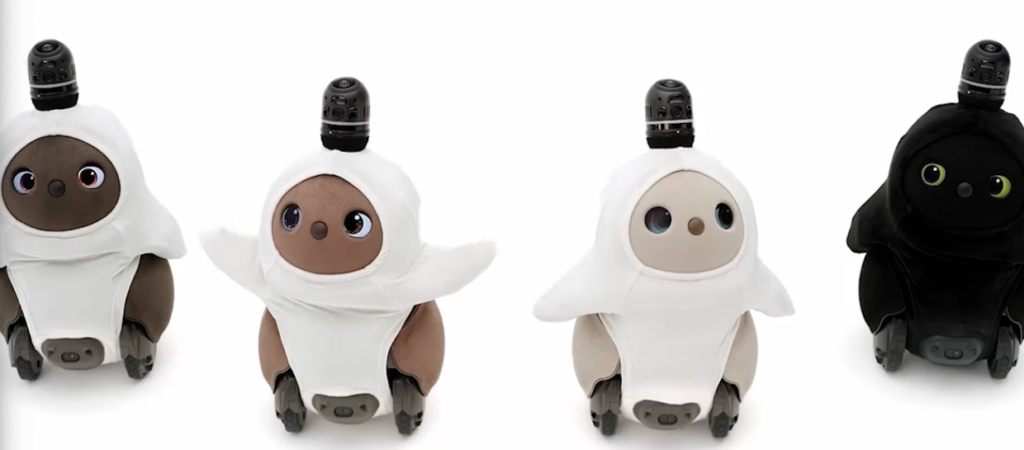
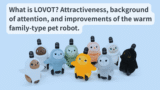
LOVOT is a robot with a warm feel and lifelike movement, designed “to be loved.” Its personality changes as it interacts with people, and it offers comfort to older adults and people who feel lonely. Its lifelike reactions can put people at ease.
- Strength: Helps ease loneliness and offers emotional support.
- Example: A reassuring presence in the daily life of an older adult living alone.
Communication Robots
Pepper: Care and Support in Facilities
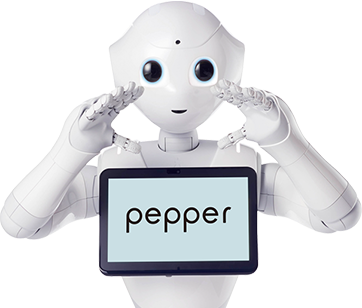
Pepper, developed by SoftBank, has been used in care facilities and commercial spaces for recreation and wellness activities. By talking with people, it aims to support emotional care and better communication.
- Strength: Supports users through wellness features and recreation.
- Example: Encourages residents to interact with each other in care facilities.
BOCCO emo: A Robot That Strengthens Family Bonds
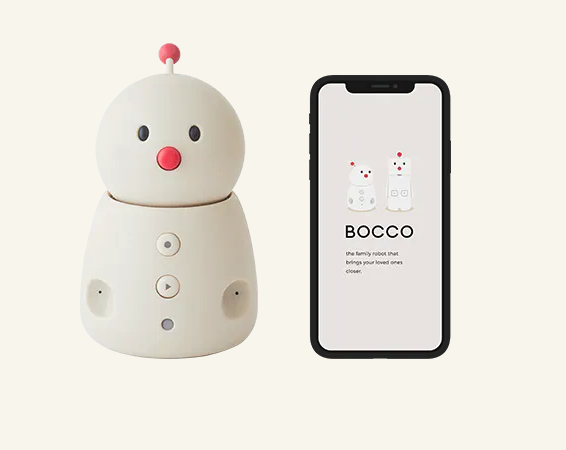
BOCCO emo is a family robot that passes messages between family members. Voice recognition makes sending and receiving messages easy, and its temperature and humidity sensors help keep an eye on the living environment.
- Strength: Makes family contact smoother and helps monitor the home environment.
- Example: Exchanging messages when family members are out.

Mia: A Chatty Cat-Shaped Robot That Speaks Dialects
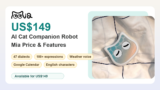
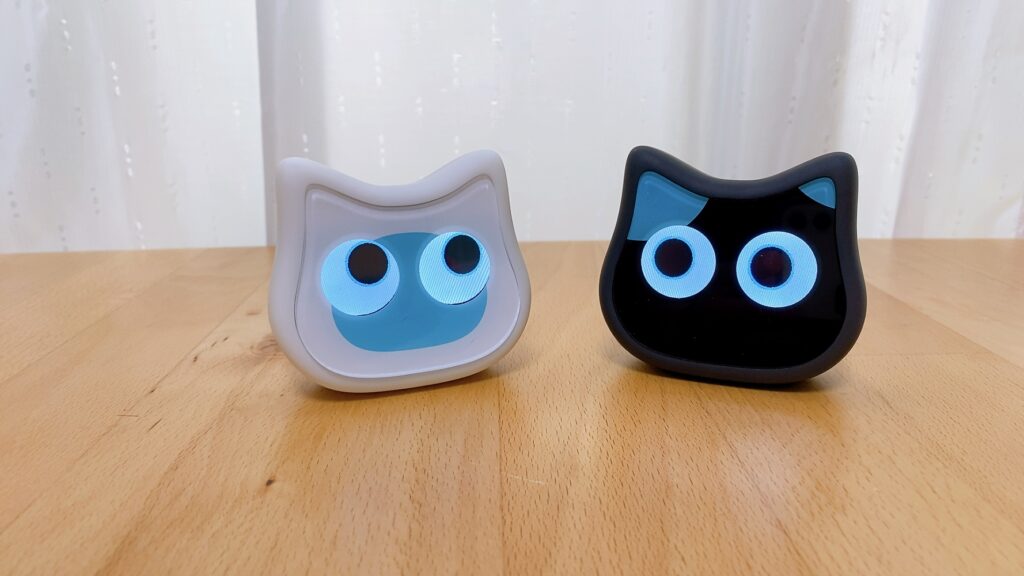
Mia is a cat-shaped robot that brings friendly conversation in Japanese dialects. It is compact enough to sit on a desk or in the living room without getting in the way, and it gives weather updates and reminders. It adds comfort and motivation at home or at the office.
- Strength: Friendly dialect voices create a relaxed atmosphere.
- Example: Sharing the morning weather and marking the start and end of work time.
The Conversation Model answers when you talk to it
The Conversation Model, launched in August 2026, replies when you talk to it, so you can actually talk with your robot. As of November 2026, it can:
- Talk in English: speak English and Mia answers in English, with 7 English voices to choose from. She switches between Japanese and English automatically. (English conversation voices)
- Remember what you told her: family names, plans, favorite things, and things that happened, brought up in later conversations. After a plan’s date passes, she asks how it went. You can review and delete these memories in the app, and she does not keep health, money, or address details. (What Mia remembers)
- Choose her voice and speed: 15 voices you can preview, and speaking speed from 0.8x to 1.2x. (Voice and speed)
- Polite or casual, and two personalities: a gentle polite tone or a casual, friend-like tone. White Mia is easygoing and Black Mia is the reliable one. In Japanese, replies can also be in the Osaka or Hakata dialect. (Tone, dialect, and personality)
- Alarms by voice: say “Set an alarm for 7” or “Wake me up in 30 minutes,” and tap her head to stop it. (Using the alarm)
- A weekly letter for family: every Sunday at 6 p.m., family members get a short note with the days Mia was petted and how many times and minutes she chatted. What was said is never sent. (Mia’s weekly letter)
On the English store, the Conversation Model is US$199 (the Standard Model is US$149), and conversation mode needs the $2/month Premium plan, with up to 5 hours of conversation per month. In Japan, the Conversation Model is 22,800 yen (white) or 23,800 yen (black) including tax at the current sale price, with conversation mode at 300 yen per month. Dialect voice prompts, weather, Google Calendar reminders, and family voice messages all work as before.
Get the Conversation Model: Mia Conversation Model (White) / Mia Conversation Model (Black) (official store)

👉 Meet Mia, the talking cat robot: features, models, and prices
Benefits of Living With Robots
Saving Time and Effort
Automating cleaning and everyday chores lets family members focus on other things. Sharing housework with a robot makes daily life more efficient.
Emotional Support
Companion robots can ease loneliness and encourage communication. They can be a source of emotional support, especially for older adults and people living alone.
Safety and Efficiency
In care facilities and medical settings, robots can help with check-ins and reduce the burden on staff. At home, sensors and cameras can also help improve safety.
Summary
Life with robots is not only more convenient and comfortable; robots can also offer emotional support. Cleaning robots, communication robots, and other kinds each enrich daily life in their own way.
As technology continues to evolve, an even wider range of robots will become part of our lives. Choose a robot that fits your lifestyle and see what it adds to your day.
You may also like: